A federal judge clears the way for UFC on the South Lawn — and a separate warning lands at the White House about fuel prices
Hours apart on 12 June 2026, a federal judge refused to block a UFC card scheduled for the White House lawn, and oil executives warned the administration that gasoline prices will climb further.
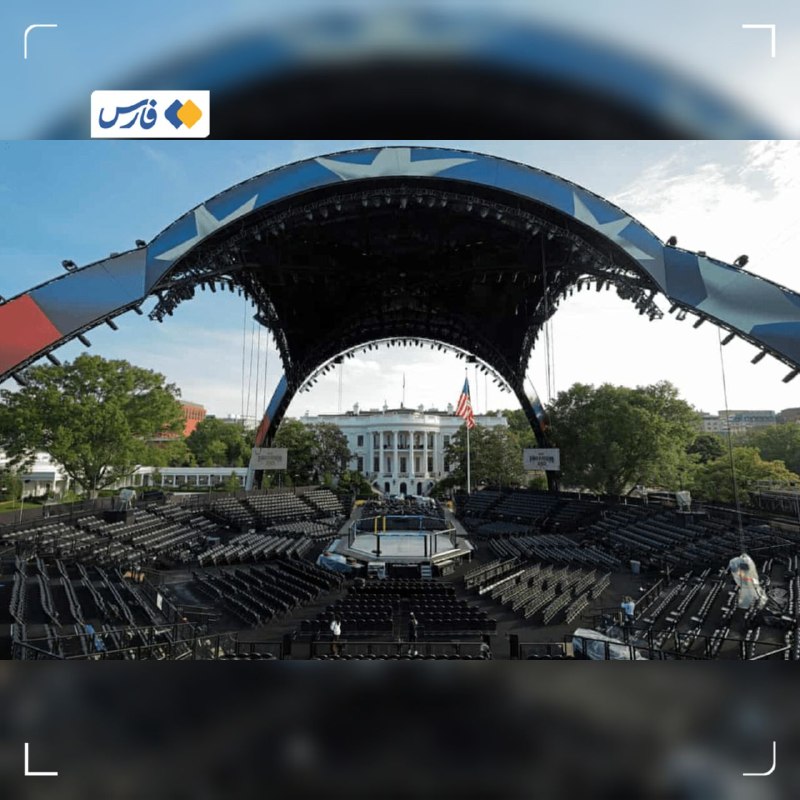
At 17:05 UTC on 12 June 2026, a federal judge in Washington refused to block the UFC Freedom 250 mixed-martial-arts event planned for the South Lawn of the White House, clearing the way for the card to proceed on the date the Trump administration had scheduled. The ruling, reported the same hour across financial-data terminals and confirmed by Al Jazeera's breaking-news desk at 18:32 UTC, ends — for now — a legal effort that had threatened to derail one of the more unusual spectacles in modern presidential history: a pay-per-view fight card staged on the executive mansion's grounds.
The decision did not arrive in a vacuum. Roughly five hours earlier, the White House had absorbed a separate piece of unwelcome economic news: oil executives were warning that gasoline prices would get worse, not better, through the summer driving season, according to a Washington Post report circulated by the Unusual Whales account at 12:17 UTC. Read together, the two items sketch a White House operating on two tracks at once — one projecting pageantry and political theatre, the other managing a fuel market that refuses to behave.
The court ruling and what it leaves open
The judge's reasoning, as summarised in the Polymarket wire at 17:05 UTC and Al Jazeera's bulletin at 18:32 UTC, was narrow. The legal challenge did not succeed in establishing grounds for an injunction before the event date, and the court declined to freeze the card on the record before it. Both outlets framed the fight as scheduled for the president's birthday, a detail that has done much of the political work of the story in partisan coverage.
What the ruling does not do is resolve the underlying questions the lawsuit had raised — about the use of public grounds for a privately produced sporting event, about security costs absorbed by taxpayers, and about the precedent set when a sitting president effectively becomes the host of a commercial fight card. Those questions will return, in some form, the next time a White House seeks to use its physical campus for an event with a private revenue model attached.
A counter-read is worth registering. The plaintiffs' theory, that converting the South Lawn into a venue for a major-league sports promotion crosses a line the courts will not tolerate, was always going to face a high bar. Federal courts are reluctant to enjoin executive-branch scheduling decisions, particularly on compressed timelines, and the more procedurally orthodox outcome — letting the event go forward and litigating the principle afterwards — was always the likeliest path. On that reading, the judge did not endorse the South Lawn card so much as decline to interrupt it.
The fuel warning in the background
At 12:17 UTC, the same Thursday morning, the Unusual Whales account flagged a Washington Post report that oil executives had warned the White House that gasoline prices would rise further. The substance, as paraphrased through that channel, is that the industry does not see the recent softness at the pump as the start of a sustained decline; refining margins, summer-blend transitions, and the usual geometry of peak driving demand are all pushing in the direction of higher retail prices.
The political geometry of that warning is uncomfortable. A White House staging a televised fight card on the South Lawn is also a White House that, in roughly five months, will face voters who notice the sign at their local station. The two stories ran in parallel on the same day, and the contrast did the White House no favours: spectacle in the foreground, an unfriendly economic signal in the background.
There is a plausible counter-frame. Retail gasoline prices move on a long list of inputs — crude benchmarks, refinery utilisation, distribution bottlenecks, state tax regimes — and a single executive-suite warning is not, by itself, a forecast. Industry executives have, in recent memory, also been wrong about the direction of prices, and the Washington Post's framing, filtered through a financial-data account, is one step removed from the executives themselves. The honest reading is that the warning is consistent with a market that has not yet stabilised, not a guarantee of where the national average lands in August.
What the day reveals about the administration's operating style
The two stories, taken together, are a clean illustration of the White House's preferred posture in 2026: project image, absorb the warning. The UFC card is image-making at industrial scale — a globally televised event staged on federal grounds, the kind of scene that compresses a political message into a single frame. The fuel warning is the kind of problem that does not compress; it appears on price signs, on commutes, in household budgets.
The pattern is not new, but its simultaneity is striking. In a single business day the administration received a court ruling that let it keep its set piece and an industry warning that the macroeconomic backdrop will not co-operate. The ruling is unambiguous; the warning is contingent. That asymmetry is itself the story: the things the White House can control — venue, programme, optics — it can control with a court's blessing, and the things it cannot — the price of a barrel and the refining decisions that turn it into pump prices — it can only take warnings about.
What to watch next
Three things to keep an eye on, all of which will resolve in days rather than months. First, the UFC card itself: whether it proceeds on schedule, what the actual security and logistical footprint looks like, and whether any post-event accounting surfaces the cost to the federal government. Second, the next weekly gasoline print: if the executives' warning tracks, retail prices will move higher through late June and July, and the political reaction will be prompt. Third, the follow-on litigation: the judge cleared the way for the event, not for the principle, and the underlying complaint is not going away.
A note on what remains uncertain. The court ruling is reported through a prediction-market wire and an Al Jazeera breaking-news bulletin; the full written order, with its reasoning, will tell us more than the headline did. The oil-exec warning is filtered through the Washington Post via a financial-data account; the underlying industry views are presumably broader and more textured than a single line summary. Both stories will firm up over the next 48 hours. The broader picture — a White House that wants to be seen as producing memorable television, in a country where the price of driving to that television is also rising — is already clear.
Desk note: wire reporting on the court ruling carried the event as confirmed-to-proceed; Monexus frames it as a procedural non-block rather than a judicial endorsement, and pairs it with the same-day fuel warning to make the political backdrop visible.
Wire provenance
This editorial synthesis draws on the following public wire/social posts:
- https://x.com/polymarket/status/
- https://x.com/unusual_whales/status/
- https://en.wikipedia.org/wiki/Ultimate_Fighting_Championship