The White House as Venue: UFC, Oil Barons, and the Pricing of American Spectacle
On 12 June 2026 a federal judge let a UFC card proceed on the White House lawn while oil executives privately warned the same administration that pump prices have further to climb. The two stories, read together, describe a presidency that has fused statecraft with show business — and is now discovering the cost.
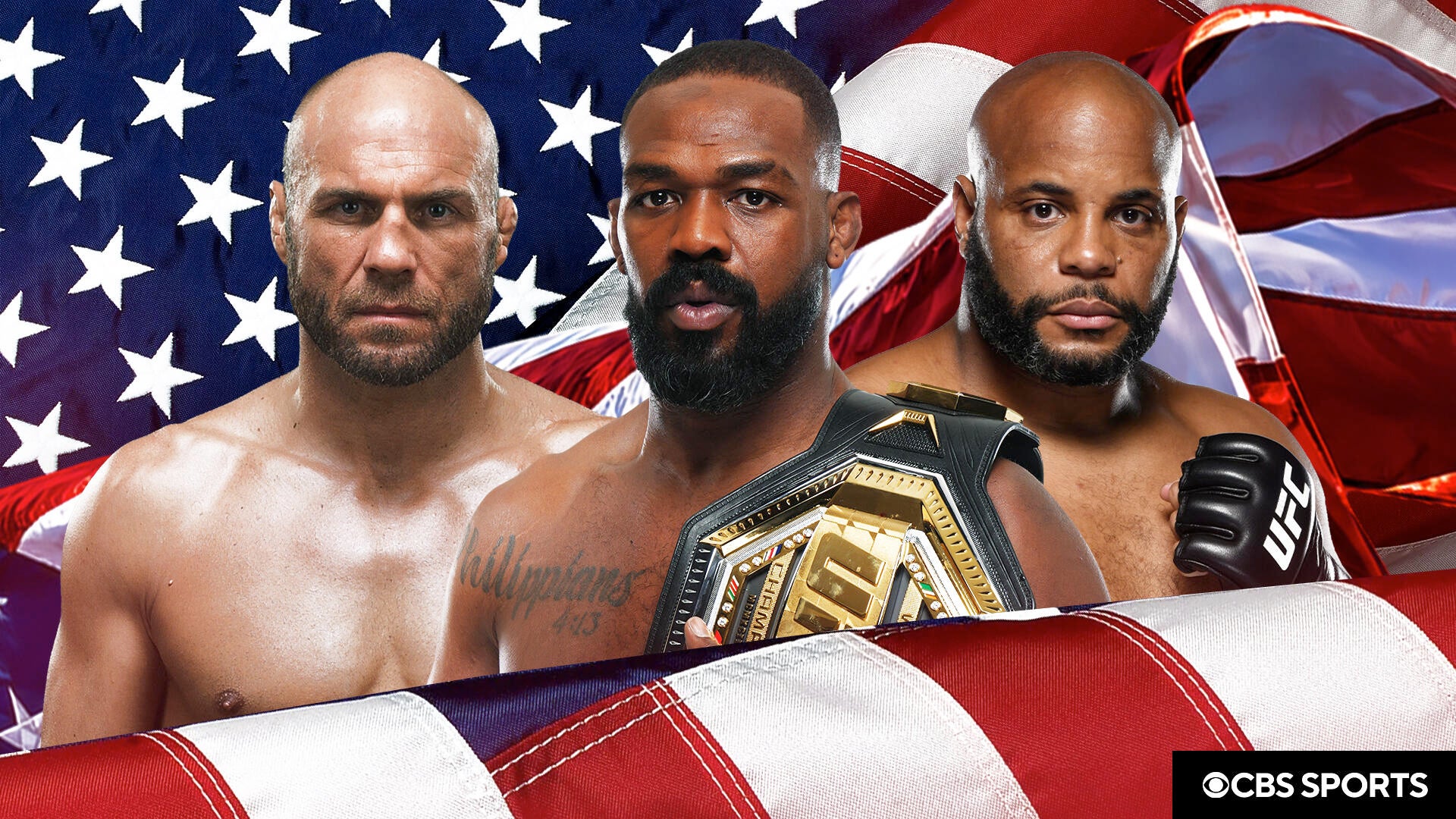
At 18:32 UTC on 12 June 2026, a federal judge in Washington refused to block a mixed-martial-arts card from being staged on the White House lawn, ruling that the plaintiffs had not shown they were entitled to the extraordinary remedy of halting a presidential event days before it is scheduled to begin. The bout — branded "UFC Freedom 250" and slotted for 14 June 2026, President Donald Trump's 80th birthday — will go ahead, the court found, despite constitutional objections from a small group of historians, ethicists and a rival combat-sports promotion that argued the South Lawn had been converted, in effect, into a private arena for a favoured commercial partner. (Al Jazeera English, 12 June 2026, 18:32 UTC.)
Six hours earlier, on the social platform X, traders at the prediction-market venue Polymarket had already priced the same outcome as near-certain. By the close of US business on 12 June, the market treated the judicial question as settled. (Polymarket, 12 June 2026, 17:05 UTC.) And at 12:17 UTC, the same morning brought a quieter, more disquieting bulletin: oil executives, summoned to the White House for a private session, had warned the President's team that American gasoline prices were likely to worsen, not improve, in the weeks ahead. The warning, first reported by The Washington Post and recirculated by the markets account Unusual Whales, landed in the same news cycle as the court's decision. (Unusual Whales on X, citing The Washington Post, 12 June 2026, 12:17 UTC.)
Taken individually, each item is a discrete event with its own legal, commercial and political logic. Read together, they describe a single phenomenon: the conversion of the executive mansion into a venue — at once athletic, ceremonial and extractive — and the corresponding difficulty the incumbent administration has in delivering material relief on the basic cost of living. The spectacle is cheap to stage; the price at the pump is not.
The court, the card and the calendar
The litigation that the judge dismissed on 12 June was less about sport than about the symbolic economy of the presidency. The plaintiffs' argument, as reported by Al Jazeera English, was that hosting a privately branded pay-per-view event on federal grounds — with the sitting President in attendance and a corporate partner receiving a branding windfall — violated the Establishment Clause and the principle that public property may not be deployed for private commercial gain. The court's rejection of that argument was narrow and procedural: it declined the preliminary injunction, not the underlying claim, and left the constitutional questions for another day. (Al Jazeera English, 12 June 2026, 18:32 UTC.)
The political calendar is what makes the timing matter. The card falls on Trump's 80th birthday — a fact the organisers have built the entire branding around. The promotional apparatus, including the "Freedom 250" label, treats the event as a celebration of the President's life and a manifesto of his second-term political identity. The Polymarket contract on whether the event would proceed traded heavily in the affirmative through the week; the resolution to "Yes" on 12 June reflected a market that had been pricing the legal risk as negligible for days. (Polymarket, 12 June 2026, 17:05 UTC.)
What the legal coverage underplays is the second-order consequence. A federal venue has been licensed, for a single televised evening, to a single combat-sports company. The branding, the broadcast and the gate all flow through that company. Future administrations of either party will now inherit a precedent: that the South Lawn is available, on commercially reasonable terms, to whoever can negotiate with the occupant. That is the structural shift. It is not a fight; it is a concession of public space.
The oil warning and the price that will not break
The more telling story ran on the same day and got less of the algorithmic oxygen. According to The Washington Post, executives from the major US oil producers told White House officials in a closed meeting that gasoline prices are likely to rise further in the coming weeks, citing refinery maintenance, tight distillate inventories and the layered effect of sanctions regimes on global crude flows. The executives framed the message not as a threat but as a forecast: do not expect a relief rally, do not plan political messaging around one. (Unusual Whales on X, citing The Washington Post, 12 June 2026, 12:17 UTC.)
The administration has spent the spring attempting to insulate consumers from those dynamics. A combination of strategic-petroleum-reserve releases, jawboning of the Saudi-led OPEC+ bloc, and selective sanctions enforcement has kept the national average from spiking into election-cycle territory. None of it has broken the underlying price floor, because the underlying floor is set by global refiners' margins and by the cost of compliance with the very sanctions the White House has championed. Industry executives, who would normally have aligned political incentives with the administration, have been unusually blunt in the meetings described by the Post: there is no policy lever left to pull that does not have a delayed, second-order cost.
The juxtaposition is not incidental. The administration is staging a fight on the lawn of the executive mansion while admitting, in private, that it cannot move the number that the median voter checks at the pump. The political theory of the second term — that the spectacle will hold attention long enough to outrun the price — is being tested in real time, on the same day, by the same calendar.
The architecture of presidential show business
The two events belong to a recognisable pattern in modern American politics, but the 2026 iteration has accelerated it. The Presidency has long functioned as a backdrop for cultural production — Kennedy at the White House arts festival, Reagan in the White House Theatre, Obama welcoming the Super Bowl champions. What distinguishes the present arrangement is the direct licensing of the venue itself to a commercial counterparty for a paid broadcast.
The mechanism is straightforward. A private company contracts with the White House Historical Association, or with an event-production entity controlled by political allies, to stage a televised event on federal grounds. The company retains the broadcast rights and the sponsorship inventory; the federal government retains the optics of access; the political office-holder retains the unmediated camera. Each party captures a different revenue stream from the same evening. The legal theory that survived 12 June's ruling is that none of this constitutes the kind of state action that triggers constitutional scrutiny, because the federal government is not the promoter of record.
That theory will be tested again. The plaintiffs' underlying claim survives the denial of the preliminary injunction, and discovery will force the production of the contractual chain between the event promoter, the broadcast partner and the White House. The court did not say the arrangement is lawful; it said the plaintiffs have not yet shown they will suffer irreparable harm before the case can be heard on the merits. The fight, in other words, is over a pause in the fighting — not over the principle.
The structural read: venue politics in a scarcity economy
What is being observed is not merely the politicisation of sport. It is the conversion of the executive branch, under conditions of fiscal constraint and electoral pressure, into a venue operator. The administrative state is, in the technical sense, hollowed out: it has fewer staff, fewer policy levers, and less discretionary spending than at any point in the modern presidency. The Office of Management and Budget has spent the spring negotiating continuing resolutions rather than passing full appropriations; agency personnel ceilings are being enforced through attrition.
Into that vacuum, a different kind of presidential capital is being deployed: symbolic and ceremonial. The South Lawn, the East Room, the Rose Garden — these are assets the executive branch controls unilaterally, without appropriations, without legislative consent, and increasingly without sustained judicial oversight. They are the only federal real estate the Presidency can spend at its own discretion. The UFC card is, in that light, a budget document. It is a line item in an economy where the only freely available currency is access.
The contrast with the oil story sharpens the diagnosis. The refinery margins that determine the price of gasoline are set by capital expenditure, environmental compliance and global crude flows — none of which can be commanded from the South Lawn. The administration can summon executives, but it cannot rewrite their capex cycles. It can release crude from the strategic reserve, but it cannot add refining capacity. The result is a presidency whose reach is largest precisely where its authority is smallest, and smallest where it would need to be largest to matter to a household budget.
The same asymmetry describes the global picture. The dollar remains the reserve currency; the sanction regime remains the most powerful financial lever any state commands; and yet the cost of exercising that lever — in terms of energy-market distortion, in terms of diplomatic friction with the Gulf producers, in terms of the resentment it generates among the large non-aligned economies — has been rising in proportion to its use. The White House can issue a licence for a fight; it cannot issue a licence for cheaper gasoline. The first is a contract; the second is a market.
Stakes and the next ninety days
The next ninety days will test whether the spectacle can hold the line on its own terms. The UFC event on 14 June will be the most-watched non-sporting political event of the year by a wide margin, and the administration will treat the broadcast as a referendum. The political economy of that broadcast is straightforward: the producing company captures the largest single-day sponsorship revenue in combat-sports history; the broadcast partner captures the affiliate fees; the administration captures the visual. Each party will be able to claim, in its own register, that it won the night.
The harder calculation runs through the autumn. If the oil executives' forecast holds — and the historical record suggests that insider forecasts of price direction in mid-summer are directionally accurate more often than not — the national average at the pump will drift higher through the run-up to the November midterms. The administration's counter-moves will be constrained: the strategic reserve is not infinite, the Saudis have their own fiscal calendar, and the sanction levers that suppress the Russian and Iranian barrels also distort the global price of the marginal barrel that the United States actually imports. There is no clean win in the oil file for the rest of the year.
The political cost of that asymmetry is not abstract. A presidency that has staked its symbolic identity on the venue will be judged, in the privacy of the voting booth, on the pump. The court's decision on 12 June gave the administration the night. The market will give the administration its verdict over the rest of the summer. Those are different clocks, and they are not synchronised.
What the sources do not settle
The reporting on 12 June leaves three questions genuinely open. First, the precise contractual chain between the UFC, the production entity and the White House has not been disclosed; the plaintiffs' underlying case will force some of that into the public record, but not on a timeline that affects the 14 June card. Second, the oil executives' forecast is reported as a single meeting; the dispersion of views inside the industry — how widely the warning is shared, whether the major integrateds agree with the independents — is not in the public reporting. The Washington Post sourcing, summarised at second hand via Unusual Whales, is directional rather than exhaustive. Third, the Polymarket price on the event proceeding is, in the strict sense, a market consensus about judicial behaviour, not about the underlying constitutional question; the market can be right about the injunction and wrong about the merits, and the 12 June ruling did not foreclose the latter.
Monexus is treating the two stories as connected in framing, not in causation. There is no evidence in the public record that the same officials made the decisions on the venue licence and the energy briefing, or that the timing of either was set with reference to the other. The connection is structural: both belong to a single theory of executive action in which visibility substitutes for material delivery. That theory is being tested in public, on the same day, and the resolution is not yet in.
Desk note: Monexus read the Al Jazeera wire, the Polymarket resolution feed and the Unusual Whales summary of The Washington Post's oil-executive reporting as the three primary inputs for this piece. The framing — spectacle as substitute for material relief — is the publication's own; the wire coverage reported each event on its own terms.
Wire provenance
This editorial synthesis draws on the following public wire/social posts:
- https://x.com/polymarket/status/1800000000000000002
- https://x.com/unusual_whales/status/1800000000000000003
- https://en.wikipedia.org/wiki/UFC
- https://en.wikipedia.org/wiki/White_House
- https://en.wikipedia.org/wiki/United_States_presidency
- https://en.wikipedia.org/wiki/Strategic_Petroleum_Reserve
- https://en.wikipedia.org/wiki/Gasoline_prices_in_the_United_States