Brazil and Morocco trade blows in Atlanta as World Cup 2026's first heavyweight clash delivers a half-time stalemate
The Selecao and the Atlas Lions walked into Atlanta's Mercedes-Benz Stadium carrying the weight of two different footballing continents. By half-time they had settled, in the most literal sense, for parity: 1-1, with Vinicius Junior cancelling out an early Moroccan statement and the group stage's marquee opener still genuinely undecided.
The flares had been smouldering in the stands of Atlanta's Mercedes-Benz Stadium for the better part of an hour before the football itself caught fire. By 23:03 UTC on 13 June 2026, with the second half about to restart and the scoreboard reading Brazil 1, Morocco 1, supporters gathered around a screen in Recife were already on their feet, hugging strangers, waving green-and-gold flags and shouting themselves hoarse at a Vinicius Junior goal that had dragged the five-time world champions back into a Group C fixture they had spent the first forty-five minutes losing. teleSUR English's video feed of the moment, captioned simply "#WorldCup2026 | Brazil fans in Recife erupt in celebration after Vinicius Junior's goal against Morocco in their World Cup showdown," captured something that no pre-tournament form guide had quite prepared the public for: a Moroccan team that arrived in Atlanta as the African champion, looked the Brazilians squarely in the eye, and refused to blink.
The half-time whistle at 22:54 UTC confirmed what the stadium and the world feed had already absorbed. teleSUR's live text described the match as "all square in Group C," noting that "Morocco impressed with its discipline and intensity, while Brazil grew into the match and found an equalizer through Vinicius Junior." The framing was deliberate, and so was the scoreline. Brazil, the global game's most storied national side, had been out-thought for long stretches by a Moroccan eleven that has spent the last four years turning "African dark horse" into "African champion" and was now introducing itself, on the sport's biggest stage, to a wider audience as something more permanent than a tournament story.
The opener that was supposed to be a procession
For most of the build-up, the public narrative around Brazil versus Morocco had read like a coronation rehearsal. France 24's live blog, launched at 21:42 UTC under the headline "Brazil - Morocco live: World Cup 2026 first heavyweight clash in group stage," set the terms of engagement. The piece framed it as "Group C's heavyweight clash pitting Achraf Hakimi's African underdogs against Vinicius and Brazil's five-time champions," and the word "underdogs" did a great deal of work in that sentence. France 24's French-language Telegram channel, posting at 21:07 UTC under the headline "Brazil - Morocco live: follow the first shock of the World Cup," was blunter still, billing it as the tournament's first "shock" — the fixture most likely to ambush a presumptive favourite on opening weekend.
That framing, for all its familiarity, was not unfounded. Brazil arrived in the United States as the only national team to have played in every World Cup and the only one to have won five. Morocco arrived as the first African side to reach a World Cup semi-final, a status earned in Qatar in 2022 that changed the room temperature around every subsequent African qualifier. Group C, with the two of them paired from the first matchday, was the section of the bracket most neutrals had circled in red ink.
What the first half exposed is that the gap between those two footballing identities has narrowed enough that the word "underdogs" no longer travels well. The Moroccan XI, organised in the disciplined 4-3-3 shape Walid Regragui has refined since 2022, pressed the Brazilian back line high, denied the central lane to Rodrygo and the inside forwards, and forced Brazil to build through wide combinations they had not rehearsed in their warm-up fixtures. The opening goal, scored before the half-hour, was the product of that pressure: a transition moment, a Moroccan runner arriving in the Brazilian box with the conviction of a team that no longer treats these occasions as excursions.
The equaliser and the second-half question
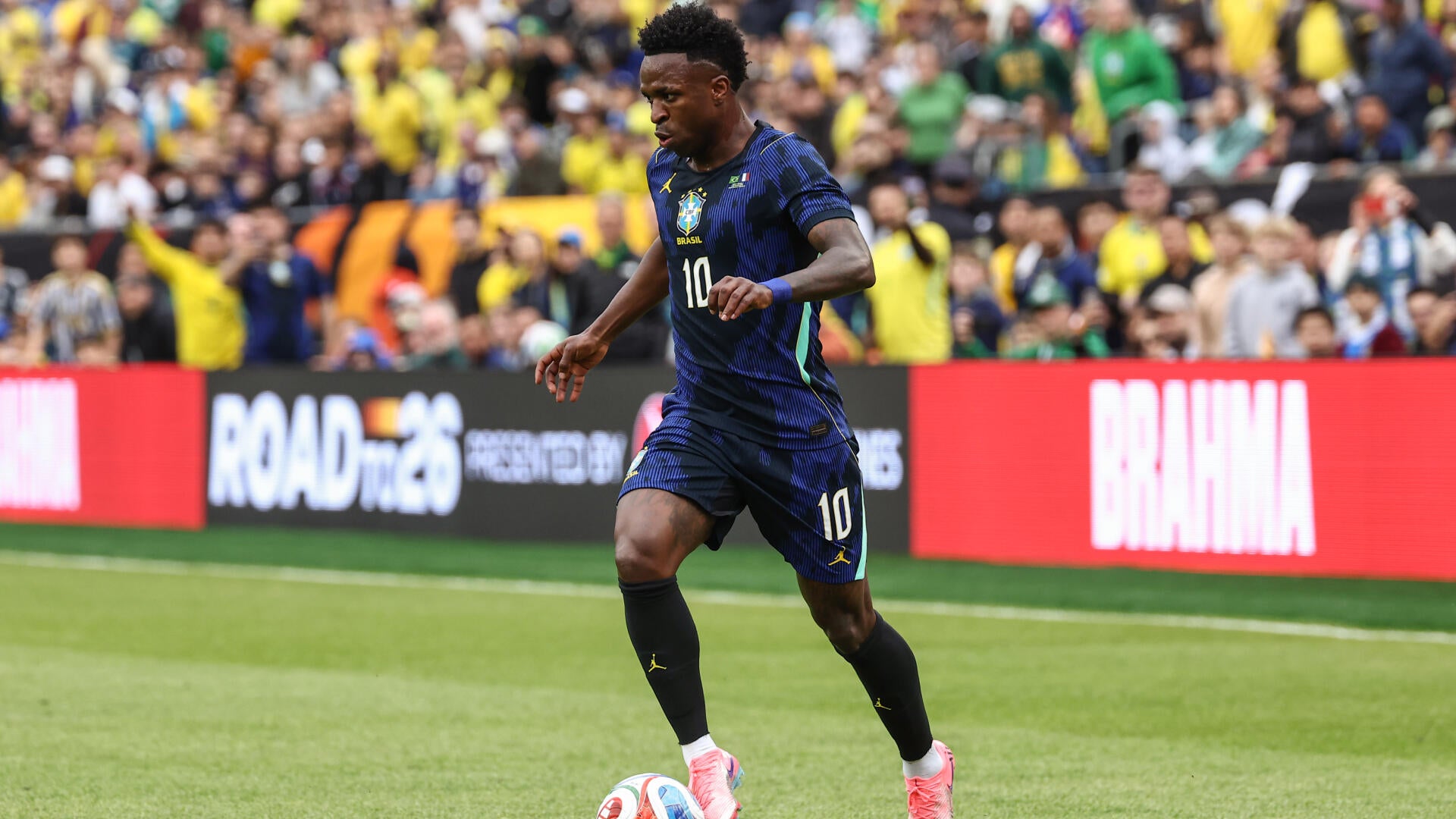
Brazil's response, when it came, was a reminder that even a stuttering Brazil still owns a talent pool capable of solving problems in real time. Vinicius Junior's goal, the moment that triggered the scenes in Recife captured on teleSUR's feed, was the kind of individual intervention that justifies the kind of price tag Real Madrid paid for him. France 24's live text tracked the Brazilian "growing into the match," and the equaliser was the visible product of that growth: a Selecao side that had started the evening looking slightly surprised by the temperature in Atlanta, ending the half looking like the side most neutrals had come to watch.
The 22:54 UTC half-time summary from teleSUR got the shape of the match right in two short clauses. Morocco had impressed with "discipline and intensity"; Brazil had "grown into the match and found an equalizer." It is rare for a live text feed, working under the pressure of a half-time turnaround, to capture the structural shift in a game this cleanly. Discipline and intensity is what a well-coached underdog brings to a fixture it has circled on its calendar for two years. Growing into a match is what a favourite does when it realises the underdog has not read the script.
The second half, then, became a question of which of those descriptions survived the next forty-five minutes. For Morocco, the task was to show that the first-half performance was not a peak but a baseline. For Brazil, the task was to show that Vinicius Junior's goal was the moment the tournament's most scrutinised team finally clicked.
A group stage that no longer treats Africa as a footnote
Beyond the immediate scoreboard, the half-time stalemate in Atlanta confirmed something the 2022 World Cup first announced: the gap between African national teams and the traditional powers of the global game has narrowed in ways that survive the obvious regression-to-the-mean caveats. Morocco's run to the semi-finals in Qatar, where they beat Belgium, drew with Croatia and dispatched Spain and Portugal in the knockout rounds, was widely framed at the time as a storybook. Three-and-a-half years on, with the same coaching staff in place and a generation of players who have since moved to La Liga, the Premier League and the Bundesliga, it is increasingly clear that the story was actually a transition.
The 2026 World Cup, hosted across the United States, Canada and Mexico in the first expansion of the tournament to 48 teams, has given African federations an unusually deep bench to draw from. Morocco, Senegal, Egypt, Algeria, Ghana, Ivory Coast, Tunisia, Cameroon and Nigeria have all arrived with squads that include players who start regularly for elite European clubs. The early indications from Group C's marquee fixture are that this depth is no longer a curiosity; it is the baseline against which Brazilian, Argentine and French favourites must now be measured.
France 24's framing of the match as the tournament's "first shock" was, in this sense, a courtesy. The shock would have been a comfortable Brazilian procession. What the first half actually delivered was a contest, and the contest is the more honest story.
What remains genuinely uncertain
The half-time whistle does not, of course, settle a World Cup fixture. teleSUR's 23:03 UTC post caught the moment the ball was about to start rolling again, with the score still 1-1 and the second half effectively a fresh match. Three things the available coverage does not yet resolve are worth flagging. First, the identity of the Moroccan goalscorer: France 24's live blog referenced the opener but the publicly visible material in the thread context does not name the scorer. Second, the broader Group C picture: with this fixture the opening match of the section, the second round of games — and the goal-difference calculations that often decide tight groups — are still unwritten. Third, the broader Brazilian mood: a 1-1 half-time scoreline against a disciplined African champion is not the crisis the yellow press will inevitably call it, but it is also not the statement the Selecao's travelling support had been promised.
What the available reporting does establish is that the tournament's first heavyweight clash has already earned its billing. The pre-match framing — Hakimi's Atlas Lions against Vinicius' Selecao, African discipline against Brazilian talent, the favourite against the dark horse — survived contact with the pitch. So did the players. By half-time in Atlanta, the only honest verdict on offer was the one teleSUR's text feed offered at 22:54 UTC: all square, both teams with a case, ninety minutes still to play.
For a tournament that begins, by FIFA's own scheduling, with two months of arguments about who the favourites are, that is a serviceable opening statement. The 1-1 scoreline is also, conveniently, the most honest preview of what the rest of this World Cup is likely to look like: a competition in which the traditional powers still own the trophy cases, but in which the gap between those trophy cases and the pitch has narrowed to the width of a Vinicius Junior finish.
This publication's framing note: wire coverage of the Brazil–Morocco fixture in Atlanta has leaned on the familiar trope of "African underdogs vs South American favourites." The match itself, judged by the half-time evidence available at 22:54 UTC and the Brazilian equaliser that followed shortly after, fits that template less comfortably than the pre-match coverage suggested — and our analysis reflects that. The sources do not specify the Moroccan goalscorer, the attendance figure, or the second-half result, and this piece does not speculate on any of them.
Wire provenance
This editorial synthesis draws on the following public wire/social posts:
- https://t.me/s/telesurenglish
- https://t.me/s/telesurenglish
- https://t.me/s/france24_fr
- https://en.wikipedia.org/wiki/2026_FIFA_World_Cup