Brazil and Morocco trade blows in World Cup 2026 opener as Group C delivers early heavyweight test
Vinicius Junior's stunning equaliser rescued a 1-1 draw for Brazil against a Morocco side who showed they belong on the World Cup's biggest stage, in the first heavyweight clash of the 2026 group stage.
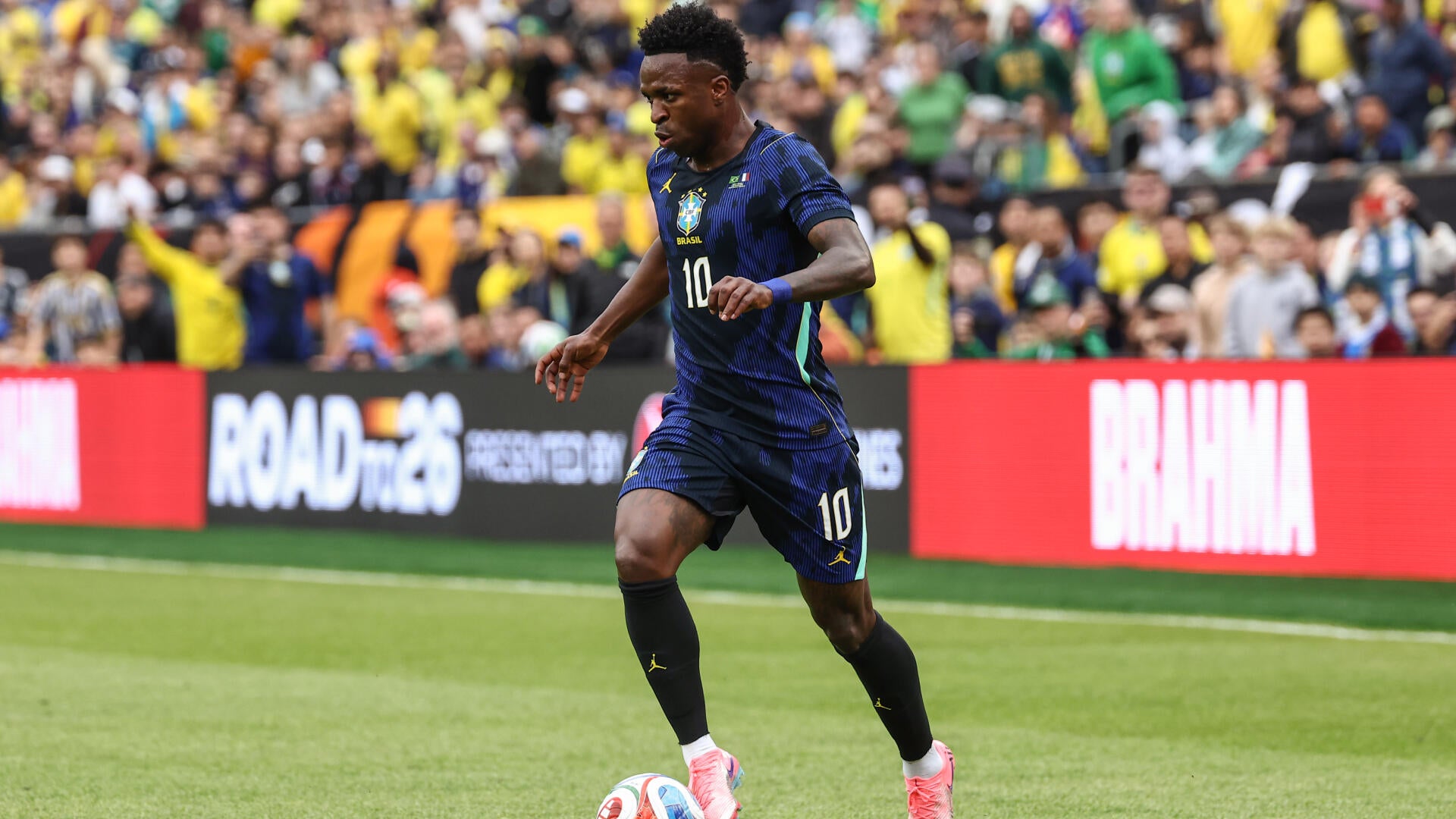
Brazil and Morocco played out a 1-1 draw in the opening heavyweight clash of World Cup 2026 on 13 June 2026, a result that did less than the scoreline suggests to settle the question of who controls Group C. Vinicius Junior's second-half strike — broadcast by Iran's Tasnim news agency with the breathless caption "Super goal from Brazil to Morocco by Vinicius" — cancelled out an early Moroccan lead and spared the five-time champions an opening-night embarrassment in front of a global audience estimated to run into the hundreds of millions.
The match carried a weight that friendlies and qualifiers cannot manufacture. It is one thing for an African side to compete at a World Cup; it is another to face the most-decorated national team in the history of the competition and to do so without deference. Morocco arrived in the United States as the first African nation to reach a World Cup semi-final, a status earned in Qatar in 2022, and as the standard-bearer for a Confederation of African Football contingent that, for the first time, will have nine representatives at the finals. Brazil arrived as a team still searching for a centre-forward, still retooling around a generation of attackers who came up short in 2022, and still carrying the peculiar anxiety of a federation that measures itself in trophies.
The shape of the night
France 24 framed the contest in plain terms before kick-off: "Morocco faces Brazil in their World Cup 2026 opening match, with Group C's heavyweight clash pitting Achraf Hakimi's African underdogs against Vinicius and Brazil's five-time champions." The wording matters. The Atlas Lions were cast as the underdog, but the description was already a courtesy — Qatar made clear that the gap between Morocco and the elite has narrowed to something more like a chasm that can be crossed on a good night than a wall.
The first half was contested more than it was controlled. Morocco struck first, on the counter and with a directness that has become a tactical signature under their head coach. Brazil equalised through individual brilliance, the kind of goal that does not require a system so much as a player with the nerve to attempt the spectacular in a stadium full of neutrals. The Tasnim highlight package, timestamped 22:40 UTC on 13 June 2026, is short on tactical context and long on spectacle — a single angle of the strike, no slow-motion breakdown, no touch-by-touch replay — but the headline is unambiguous: "Brazil 1 _ 1 Morocco."
The Hakimi moment, and what the referee saw
The game's most-discussed incident came in the second half. Achraf Hakimi, the Paris Saint-Germain full-back who has become the most visible face of the Moroccan project, produced a "rough tackle on Vinicius" that was, in the words of Tasnim's English-language newsroom, "not even declared a foul." The clip circulated on social media within minutes. It will be replayed on highlight reels for as long as this tournament is remembered, and the absence of a whistle will be argued over for at least that long.
There are two ways to read the non-decision. The first is that referees at this level are instructed to let physical contact in midfield go, particularly in a tournament opener where the authorities have signalled a desire for flowing football; under that reading, the Hakimi challenge was firm but not reckless, the kind of intervention that earns a captain's nod of approval rather than a card. The second is that the standard of protection afforded to Vinicius — who has been fouled more often than almost any player in Europe's top five leagues over the past three seasons — was lower than the standard a Brazilian forward of his profile might reasonably expect, and that the failure to intervene is itself a statement about how this World Cup intends to police the boundary between contest and violence.
The sources do not resolve the question. The France 24 live blog, which provided the most extensive real-time account available, treated the incident as a flashpoint without adjudicating it. Tasnim, an Iranian state-aligned outlet whose football coverage tends to favour individual moments over tactical architecture, foregrounded the challenge and the non-foul in successive posts. Neither outlet quoted the referee's post-match explanation, and the broadcast feed in circulation does not appear to include a pitchside microphone capture of the on-field conversation.
What the result does to the group
Group C is now the most-watched pool in the tournament, which is the only group at a World Cup that can credibly claim to contain two title contenders on day one. The draw leaves Brazil and Morocco level on a single point, with the next round of fixtures — against the group's other two entrants — likely to determine who finishes top and who travels through the bracket as a runner-up. The structural advantage of winning the group is significant: in a 48-team tournament expanded from 32, the seeding in the round of 16 is no longer a courtesy but a calculation, and top-of-group status steers a side away from the heaviest runners-up until at least the quarter-finals.
There is also a federation-level reading. Morocco's 2022 run changed the political economy of African football: federations from Senegal to Egypt to Nigeria now point to the Atlas Lions when arguing for investment, for diaspora-eligibility rules to be defended, and for a permanent place at the table of the sport's governing bodies. A draw against Brazil, on the opening night, in the first match of the tournament's first expanded edition, is the kind of result that compounds. Even a narrow defeat would have done something; a draw does more.
For Brazil, the reading is less comfortable. A draw with Morocco is not a crisis; it is, however, a reminder that the team that takes the field in 2026 is not the team that won in 2002, and that the margin between a generational forward line and a brittle one is often a single refereeing decision in a single group game.
Stakes and uncertainty
Three things remain unsettled. The first is the disciplinary fate of Hakimi's challenge: a post-match review by the governing body's officials could still produce a retrospective sanction, though the threshold for overturning an on-field non-decision is high. The second is Brazil's attacking shape: the team played without a recognised No. 9 for long stretches, and the head coach will be pressed in the coming days about whether that is a tactical choice or a constraint. The third is the tournament's broader competitive shape — a 1-1 draw on night one tells the betting markets almost nothing, but it tells coaches in the other seven groups everything about the standard they will need to match.
What the night established, beyond dispute, is that this World Cup will not be a procession. The Atlas Lions came to the United States to be more than a story, and on the evidence of 13 June 2026, they are. Brazil came to confirm a hierarchy, and on the evidence of the same evening, they will have to do that work themselves.
This article draws on live updates from France 24's English-language live blog and match-highlight posts from Tasnim News. Monexus has not had access to the full broadcast feed, post-match press conferences, or the referee's official explanation, and the editorial reading above is grounded only in the material cited.
Wire provenance
This editorial synthesis draws on the following public wire/social posts:
- https://t.me/tasnimnews_en
- https://t.me/tasnimnews_en
- https://t.me/france24_fr