Hezbollah's Drone Dossier: A Propaganda Routine That Still Bites
Two drone-strike videos in 24 hours, both dated to the same June 8 incident. The disparity between footage volume and verifiable battlefield effect says more about information warfare than the front line.
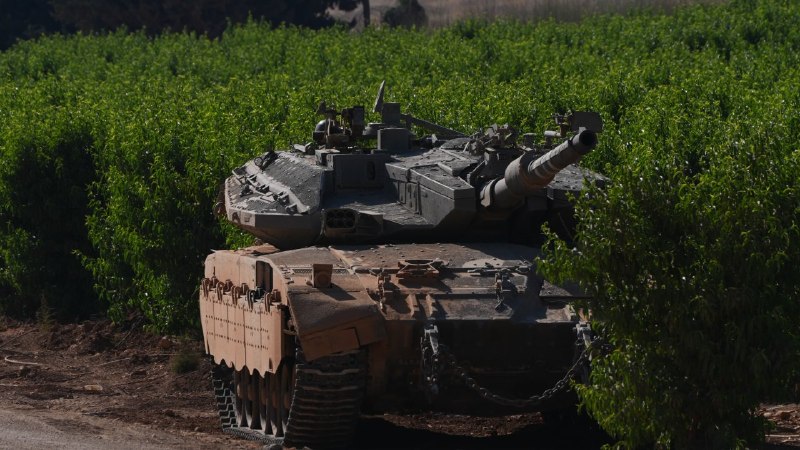
On the evening of 13 June 2026, two Telegram channels associated with Hezbollah-aligned media operations released nearly identical footage of an attack on an Israeli army command and control vehicle. The War Front Witness channel posted the clip at 20:58 UTC; the Iranian state broadcaster PressTV circulated the same claim at 20:15 UTC, both dated to a strike on 8 June. The geography is specific: the outskirts of Yahmor al-Shaqif, a town on the southern Lebanese side of the border, and the weapon is identified in both posts as an Ababil attack drone.
Five days of lag between event and release, two separate channels, and one underlying incident. The pattern is not unusual. It is the operational rhythm of an information front that has learned, over more than two decades, that footage carefully staged in time travels further than footage released in haste.
The video tells you less than the timing does
The clips themselves are short and visually similar: a tracked or wheeled Israeli vehicle in a roadside setting, the characteristic low-altitude approach of a loitering munition, an impact, dust. There is no verification in the public sources reviewed here that the strike produced a confirmed Israeli casualty or vehicle loss. PressTV's caption, "Hezbollah forces target an Israeli command and control vehicle in southern Lebanon with an Ababil attack drone," restates the group's claim rather than confirming it. War Front Witness goes further, asserting the targeting occurred "on June 8th" — an explicit attempt to anchor the footage to a specific, datable battlefield event.
That anchoring is the point. A drone strike video released the same day, with no corroborating Israeli or international press confirmation, would be ignored. A video tied to a specific past date, claiming a specific munition type, against a named vehicle category, is built to be cited.
Why the staggered release matters
Hezbollah-aligned media outlets understand the architecture of modern news cycles. Telegram channels aggregate; press pickups translate; the wire services that follow — including regional desks of Reuters, AFP and Al Jazeera — will check Israeli military briefings before running the claim. The five-day delay gives the originating channels a head start: by the time a Western editor is weighing whether to mention the footage, it has been on the timeline long enough to acquire the patina of fact.
This is not a Hezbollah monopoly. The same choreography runs in reverse from Tel Aviv, where the IDF Spokesperson's Unit circulates strike packages through Hebrew-language outlets and pre-coordinated English feeds within hours. The structural advantage goes to whichever side is publishing first, because the correcting voice is always slower than the original claim.
The Ababil itself is worth a beat. The family of Iranian-designed loitering munitions — produced by IRGC-linked manufacturers and supplied to a network of proxy forces — is well documented in open-source defence reporting. Its appearance in a Hezbollah video is a reminder that the group's drone inventory is, at the supply-chain level, an extension of Iranian defence industry.
The audience is not the IDF
A useful question to ask of any Hezbollah combat video is: who is this for? The Israeli army does not need Telegram to know whether one of its vehicles was hit on 8 June. Its operational logs, signals intelligence, and the after-action report of the unit involved already exist. The footage is for three other audiences: Lebanese Shia viewers who are the primary domestic constituency; foreign outlets that might pick up the clip under a "both sides" frame; and internal Hezbollah cadre for whom the persistent appearance of successful strikes serves as currency.
That third audience is the one worth watching. Hezbollah has been operating under intense Israeli kinetic pressure since late 2023, with senior figures eliminated, communications infrastructure degraded, and the group's patron in Tehran absorbed in its own succession politics. Under those conditions, a video claiming a successful strike on a command vehicle is not just a piece of evidence. It is a recruitment poster.
What the dominant framing misses
The standard Western wire frame treats each Hezbollah video as either confirmed strike or unverified propaganda, and moves on. That binary is too clean. The footage is doing two jobs at once. The first is a claim of military effect — which the available sources do not confirm. The second is a demonstration of organisational continuity — that the group can still produce, edit, and distribute a media product on a recognised cadence, with a recognised brand of munition, in a named town, under conditions of war.
Israeli military correspondents will, in due course, address the underlying incident. Until they do, the credible read is that something hit something near Yahmor al-Shaqif on 8 June; that Hezbollah has chosen 13 June to say so; and that the lag, the duplication across two channels, and the carefully supplied weapon nomenclature are the actual story.
Staff note: Monexus leads this item with the originating channel's own framing because the public record does not yet support stronger claims, and we explicitly note that the strike's outcome remains uncorroborated by Israeli or independent sources. The wire will likely run a single-line confirmation or denial inside 48 hours; we will update then.
Wire provenance
This editorial synthesis draws on the following public wire/social posts:
- https://t.me/wfwitness
- https://t.me/presstv
- https://en.wikipedia.org/wiki/Ababil_(UAV)