Hezbollah resumes rocket and artillery fire along the Lebanon border as Israeli shelling hits Nabatieh and Soor
Iranian-aligned outlets reported fresh Hezbollah rocket and artillery strikes on Israeli positions around Majdal Zone, hours after Lebanese media said Israeli artillery hit Nabatieh and Soor in southern Lebanon.
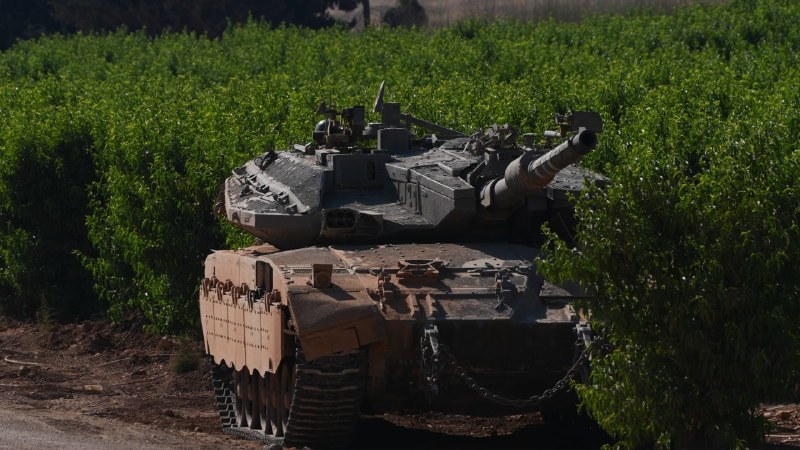
Hezbollah fired rockets and artillery at Israeli army positions around the town of Majdal Zone in southern Lebanon on the evening of 13 June 2026, according to Iranian state-aligned outlets, hours after Lebanese media reported Israeli artillery fire on the southern Lebanese cities of Nabatieh and Soor. The exchange marks one of the most concentrated flare-ups on the Lebanon front in recent weeks and underscores how a ceasefire architecture that has repeatedly been declared is still being tested by daily fire-and-counter-fire.
The pattern, on the evidence available at the time of writing, is reciprocal: an Iranian-aligned network reporting strikes from one side, and Lebanese outlets reporting counter-shelling from the other, with neither side's figures independently verifiable in real time. What is verifiable is the geography and the timing. Between approximately 20:56 UTC and 23:06 UTC on 13 June 2026, Hezbollah-aligned and Iranian state media published at least six separate claims of attacks on Israeli positions, with the Majdal Zone engagement dominating the late-evening cycle.
What the Iranian-aligned feed reported
Fars News, the English-facing wire of Iran's state broadcaster, reported at 23:06 UTC on 13 June 2026 that Hezbollah had launched heavy rocket and artillery attacks against Israeli army positions around Majdal Zone in southern Lebanon. Tasnim News, an outlet close to the Islamic Revolutionary Guard Corps, amplified the same claim eleven minutes earlier, at 22:55 UTC, with a video caption describing Majdal Zone as "under heavy fire from Hezbollah rockets." Jahan Tasnim, the outlet's Farsi service, ran the strike in a recurring banner format — "the continuation of crushing blows of the resistance to the military positions of the Zionists" — and specified that Hezbollah's Islamic Resistance in Lebanon had also targeted what it described as "the assembly and armored equipment of the Zionist regime" in the same area.
The Iranian-aligned reporting is consistent in narrative shape but light on verifiable specifics. None of the six items reviewed by this publication included casualty figures on the Israeli side, the type and number of projectiles used, or independent confirmation from Israeli, UN, or Lebanese state sources. The framing — "crushing blows of the resistance" — is the standard rhetorical register of the axis-of-resistance media ecosystem; it is propaganda in the literal sense, in that it is messaging produced by an interested party, but it is also the only public record of the incident that exists in the time window before wire services catch up.
What the Lebanese feed reported in return
The exchange is not one-directional. At 21:31 UTC on 13 June 2026, Jahan Tasnim also carried reporting from Lebanese media describing what it called "Zionist madness in South Lebanon" — Israeli artillery strikes on the cities of Nabatieh and Soor in southern Lebanon. The item does not specify casualties on the Lebanese side, the military targets struck, or whether the shelling was retaliatory or pre-emptive. It is, again, a single interested party's account of an event.
The structural point is that both sides of the border are absorbing fire on the same evening, and both sides are describing it as escalation by the other. Without independent verification — from UN Interim Force in Lebanon (UNIFIL) reporting, from Reuters or AFP stringers on the ground, or from Israeli and Lebanese official spokespersons — the most defensible reading is that the firing occurred, that the geography is plausible given the operational pattern of the past two years, and that the casualty and equipment-loss claims cannot be confirmed from the open-source record available at publication time.
Why the timing matters
The 13 June 2026 cluster sits inside a longer running pattern. The Israel–Hezbollah front has been governed, since late 2024, by a ceasefire arrangement that has been publicly declared finished, revived, declared finished again, and held together in practice by a combination of US and French pressure on Beirut and a quiet but ongoing rate of exchange of fire. The relevant structural fact is that the ceasefire never produced demilitarisation of the area south of the Litani River; it produced a reduction, not a termination, of hostilities. In a ceasefire-of-tension that lacks teeth on the verification side, the daily default becomes measured retaliation rather than full-scale re-escalation — and that is the lane the 13 June reporting appears to sit in.
Two other structural features are worth naming. First, the Iranian-aligned outlets are not simply reporting; they are coordinating messaging in real time. The "continuation of crushing blows" banner used by Jahan Tasnim at 20:56 UTC, 22:51 UTC, and across the cycle is the editorial equivalent of a metronome — a single, repeated framing designed to keep the strikes legible to the resistance's domestic and regional audience as momentum, not attrition. Second, the Lebanese-side reporting is filtered through outlets that frame Israeli fire as indiscriminate ("Zionist madness"), which is the mirror image of the Israeli-aligned framing of Hezbollah fire as terrorism. The two registers are not symmetric in fact; they are symmetric in structure.
What remains contested and what to watch
The open questions are concrete. How many rockets and artillery rounds did Hezbollah fire, and at what specific Israeli positions? Were there Israeli casualties, and of what kind — military, civilian, or both? What was struck in Nabatieh and Soor, and were civilian areas hit? Did the exchange trigger any Israeli air activity over Lebanese airspace, which would be a meaningful escalation in its own right? The Iranian-aligned feed answers none of these with operational specificity; the Lebanese feed answers them only in the rhetorical register of accusation.
The variables to watch over the next 24 to 72 hours are standard for this front. Any Israeli response — artillery, air, or a formal security cabinet statement — would convert the evening's exchange from a pressure-release event into a directional one. Any Hezbollah follow-on strike on a deeper Israeli target, beyond the border-adjacent positions that have been the routine target set since late 2024, would do the same in the other direction. A UNIFIL statement, which has become a more reliable indicator of the temperature on the line than either side's communiqués, would be the most informative single input. Until one of those arrives, the most defensible read is that the Lebanon front on 13 June 2026 looked the way it has looked for most of the past eighteen months: live, contested, and reported asymmetrically by parties with an interest in how it is reported.
Desk note: Monexus is publishing from Iranian state-affiliated Telegram channels (Fars, Tasnim, Jahan Tasnim) and from a Lebanese-media relay, none of which are independent. Where the Israeli and Lebanese official positions, UNIFIL, or wire-service stringers confirm or deny the specifics above, this article will be updated. The pattern, not the figures, is what can responsibly be reported now.
Wire provenance
This editorial synthesis draws on the following public wire/social posts:
- https://t.me/FarsNewsInt
- https://t.me/tasnimnews_en
- https://t.me/JahanTasnim
- https://t.me/JahanTasnim
- https://t.me/tasnimnews_en
- https://t.me/JahanTasnim