Iran's Streets Are Rejecting the Deal Before the Ink Is Dry
Footage from Iranian cities shows crowds denouncing Foreign Minister Araghchi as talks with Washington advance — a domestic audience the negotiating team cannot afford to lose.
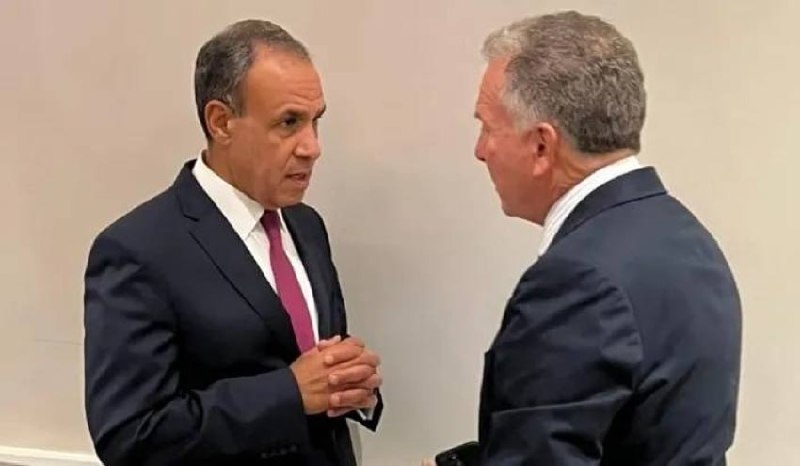
Crowds in Iranian cities can be heard in social-video footage on 13 June 2026 denouncing Foreign Minister Abbas Araghchi by name, urging him to walk away from negotiations with Washington, and calling for protests the following day. The scenes, circulated on Telegram and X, do not yet amount to a national movement. They are a warning shot — audible from the rooms where Iranian negotiators are working out the text of an agreement they have not yet signed.
The point is not the volume of the chanting. It is who is being named. Araghchi is not a symbolic figure. He is the face of the Iranian negotiating team, the diplomat who has carried the most sensitive channel with the United States for two administrations. When a street turns on its own lead negotiator, the negotiating team's room to compromise narrows visibly. The domestic audience the deal has to survive is already mobilising against it.
The street is not the state — but it is the audience
The clips shared on 13 June show protesters invoking a single word — engeance — and directing it at the foreign minister personally. The Telegram channel Middle East Spectator carried the same footage in three posts between 20:44 and 21:35 UTC, each iteration sharpening the framing: people in Iran are angry, they are cursing Araghchi, and calls for protests against a deal are spreading for the following day. The X account @sprinterpress reposted the footage on the same timeline.
This publication treats the demonstrations with appropriate caution. Social-video material is curated, the cuts are short, and the geographic spread has not been independently confirmed. What is verifiable is narrower: in the clips themselves, Araghchi is named, the negotiations are named, and the chants are consistent across the separate posts. That is a coherent signal, not a conclusion about national mood.
The structural point holds even at a discount. Iran's negotiating posture has long been constrained by a domestic political market that treats visible concessions to Washington as a form of surrender. Hardliners, bazaar merchants, war-veteran networks, and the conservative press have repeatedly disciplined negotiators who appeared to give ground. The street footage functions as that discipline being applied in real time, while the talks are still in progress.
The counter-reading the West keeps missing
The Western wire framing of US–Iran negotiations tends to read any deal as a function of two principals: Tehran and Washington. The model assumes the Iranian side negotiates as a unitary actor with a single ledger of costs and benefits, and that an agreement, once signed, travels back to Tehran and is sold to the public as a fait accompli.
The footage on 13 June says otherwise. A deal has to be sold during, not after. The audience is the same audience the regime has spent four decades trying to keep onside: the bazaar, the war veterans, the conservative clerical base, the families of the nuclear programme's workforce. That audience has memory. It remembers the JCPOA, the way it was sold and the way it was abandoned. It remembers Araghchi's own role in that earlier round. The chants on the street in June 2026 are being delivered by people who have heard this pitch before.
The counter-narrative the Iranian foreign ministry will need to manage is already drafted by the deal's domestic opponents: that the negotiators are trading verifiable constraints on the nuclear programme for unverifiable US commitments, that sanctions relief will flow to elites first and the middle class never, and that the security architecture of the region is being reshaped without consultation. None of that requires conspiracy thinking to articulate. It is the natural scepticism of a population that has been through a sanctions decade.
The architecture the talks sit inside
What the negotiations are actually negotiating is not primarily the nuclear file. It is a regional settlement architecture: Iran's place in a Middle East that is being reorganised around Israel–Saudi–US alignment, the future of Hezbollah and the Iraqi Shia militias, the routing of Gulf energy, and the price Iran extracts for not disrupting any of it. The nuclear question is the centre of gravity because it is where international law and verification infrastructure meet. The deal is the floor of a larger settlement, not the ceiling.
That is why the Iranian street cares so loudly. A deal that locks in nuclear constraints while leaving the regional architecture unresolved is, from the perspective of Araghchi's critics, a deal that gives up Iran's strongest card for a promise. The chants are not anti-diplomacy. They are anti-asymmetry. They are demanding a settlement that trades the nuclear file for verifiable changes in the regional security order — sanctions architecture, militia disarmament timelines, an end to extraterritorial US enforcement.
The Western press tends to read Iranian public anger as a function of the nuclear issue alone, and treats any street reaction to negotiations as a residue of regime hardliners resisting engagement. The footage on 13 June cuts against that reading. The anger is structural, not factional. It would survive a change of government in Tehran.
Stakes, in plain terms
If a deal is signed, the Iranian negotiating team will have roughly ninety days to sell it to a population that has been demonstrating in the streets while the text was being finalised. Araghchi's name is now the public face of the agreement. He will either be the diplomat who delivered sanctions relief, or the official who traded strategic depth for a press release. The street footage in June 2026 has already pre-committed a slice of the public to the second reading.
For Washington, the consequence is tactical: any concession that requires Iranian domestic political capital to defend is a concession the Iranian side is unlikely to make. A deal that cannot survive Araghchi's own street is a deal that will not be implemented in its signed form. The White House negotiating team should read the chants the way an auditor reads a footnote — carefully, and with the assumption that the rest of the document is similarly constrained.
For the Gulf, Israel, and the broader regional security architecture, the read is more sober still. A deal that the Iranian street rejects is a deal that will be re-negotiated by the next Iranian administration, and the next, until a settlement is reached that the bazaar and the war-veteran networks can also live with. That is the settlement that will actually hold. The text being finalised in June 2026 is a first draft of that longer document, not the final one.
What remains genuinely uncertain
The sources do not specify the cities where the protests occurred, the size of the crowds, or whether the demonstrations on 14 June will materialise as called. The footage is consistent across three Telegram posts and one X post, which is more coherence than a single viral clip, but it is not a verified national pattern. Iran's domestic media is not yet reporting on the protests; that silence is itself information, but it is not a count of marchers.
What can be said with confidence is narrower. The Iranian negotiating team's lead diplomat is being personally named in street chants on 13 June 2026. The chants are being echoed across separate posts in a short window. And the chants are directed not at the United States but at the Iranian negotiator. The audience for the deal is already engaged. It will not be quiet when the text is published.
Desk note: Monexus treats the social-video material with caution appropriate to unverified footage, but reads the named targeting of Araghchi — across multiple independent posts on the same date — as a coherent signal worth reporting, not as a conclusive measure of national mood. The Western wire framing tends to read Iranian public reaction to negotiations as hardliner residue; the footage here suggests a structural domestic constraint that will outlast any faction.
Wire provenance
This editorial synthesis draws on the following public wire/social posts:
- https://t.me/Middle_East_Spectator
- https://t.me/Middle_East_Spectator