One rocket, two narratives: how a single Hezbollah launch in southern Lebanon became a data point in a far larger war
On the evening of 13 June 2026, sirens sounded in Metula after Hezbollah fired on IDF troops in southern Lebanon. Hours earlier, NPR had put a number on the war's toll: more than 3,700 dead in Lebanon, including 14 killed in a single village airstrike last month.
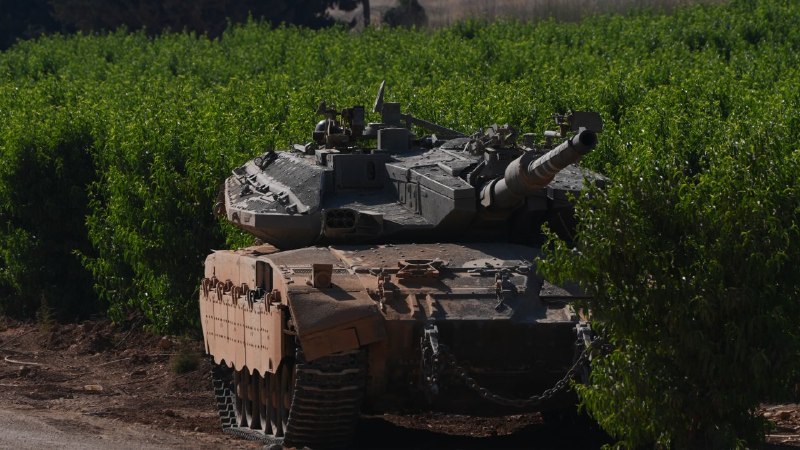
The rocket came shortly after 20:30 UTC on 13 June 2026. The Israel Defense Forces said it was a single projectile launched by Hezbollah at Israeli troops operating in southern Lebanon, intercepted a short time later. Within minutes, sirens echoed across Metula, the northern Israeli town pressed up against the frontier. By 21:00 UTC, the exchange had been logged in three separate Telegram channels, restated in slightly different language, and absorbed into a much larger ledger of cross-border violence that has now stretched across more than three years of war.
The arithmetic of that war is harder to settle than any single intercept. According to reporting published earlier the same day by NPR, more than 3,700 people in Lebanon have died since the conflict between Israel and Hezbollah reignited. In a single village in southern Lebanon, an airstrike last month killed 14 people — 10 of them women and children. The Israeli side of the ledger is smaller in absolute terms but no less politically charged, with periodic rocket and missile fire from Lebanon forcing civilians in towns like Metula into shelters and straining the relationship between the IDF and the border communities it is supposed to shield.
What the wire actually said
The Telegram traffic around the 20:30 UTC incident is unusually clean by the standards of a fast-moving front line. Channel AMK_Mapping, which monitors the northern sector, reported that Hezbollah attacked IDF positions in southern Lebanon with rockets and that the IDF said only one rocket had been launched and was shot down. The channel noted that sirens sounded in the neighbouring Israeli town of Metula. Channel GeoPWatch posted an early warning alert for Metula roughly 20 minutes before the intercept report, citing possible missile launches; the same channel followed with a second message confirming the rocket had been intercepted.
Each item is a sentence or two, but read together they form a sequence: alert, launch, intercept, after-action. None of the channels reported Israeli casualties on the ground. None reported Hezbollah casualties. None attached a precise launch coordinates box or named the unit involved. For a one-rocket incident on a quiet Saturday evening, that thinness is normal; for a conflict that has killed thousands, it is also a reminder of how few of the war's individual data points are independently verifiable in real time.
The counter-narrative problem on both sides
Hezbollah-aligned and Israeli-aligned channels tell incompatible stories about almost every cross-border event, and this one is no exception. The IDF's framing — one rocket, intercepted, no Israeli casualties — is the version that propagates fastest in the Israeli information environment, where the operational claim that "we shot it down" is the politically useful outcome. Iranian and Hezbollah-adjacent outlets typically present such incidents as part of a sustained pressure campaign, with each launch framed as evidence of continued capability even when the projectile is neutralised.
The asymmetry runs deeper than spin. Israel operates one of the most advanced integrated air defence networks in the world, with multiple layers designed to intercept short- and medium-range projectiles; the political cost of a successful Hezbollah strike is therefore high, which gives the IDF a strong incentive to publicise intercepts. Hezbollah, by contrast, has been degraded by a months-long Israeli campaign in southern Lebanon but retains a residual rocket and drone capacity that allows it to keep the border active without forcing a major Israeli ground escalation. The result is a steady drip of incidents that are individually small and collectively enormous in their human and diplomatic cost.
The southern Lebanon toll, in numbers that are not in dispute
The most concrete figure attached to the wider war on 13 June came from NPR's reporting on a single village airstrike: 14 killed, 10 of them women and children, with the country's overall death toll now above 3,700. That number does not depend on any one Telegram channel or any one Israeli or Lebanese readout. It is a cumulative figure that has been built, month by month, from Lebanese health authorities, UN agencies, and wire-service reporting — and it is, in the broader sense, the figure that frames everything else.
What the figure does not say is who those 3,700 were. Civilians, fighters, medics, journalists, children pulled from rubble in southern villages — the categories are politically radioactive on both sides of the border, and they tend to disappear in the back-and-forth of the alert traffic. The 14 dead in the village NPR visited are not a data point in a border skirmish; they are a counterweight to every intercepted rocket in Metula, and a reminder that the small, bright incidents on the Telegram wires are surface noise on a much heavier and slower-moving tragedy.
What the sources leave out
There is no public, independently verified count of the rockets Hezbollah has fired into northern Israel in 2026, no confirmed breakdown by warhead type, and no agreed figure for Israeli civilian and military casualties on the northern front. The IDF publishes operational updates; the Israeli media publishes casualty figures when families are notified; the United Nations Interim Force in Lebanon files its own reports on the Blue Line. None of these sources is currently in the public record in a form that allows a clean per-incident reconciliation. For a story about a single intercepted rocket, that is a manageable gap. For a story about the war, it is the gap that every other claim has to be read against.
The Telegram traffic itself is also a partial view. GeoPWatch and AMK_Mapping are open-source intelligence channels that aggregate alerts, official statements, and geolocated footage. They are useful for sequencing events in real time, but they inherit the framing of whoever posts first — usually the IDF for Israeli-side claims, usually Hezbollah-aligned outlets for launch claims — and they rarely correct the record when initial reports turn out to be wrong. A serious reading of the 20:30 UTC incident has to hold both possibilities at once: that the IDF's "one rocket, intercepted" line is exactly right, and that the wider pattern it sits inside is a conflict whose human cost, on the Lebanese side alone, has now passed the 3,700 mark.
Stakes, looking forward
The political stakes of each intercepted rocket are larger than the rocket itself. Metula is a symbol in Israeli domestic politics of the price the country has paid for failing to return northern residents to their homes; every alert is a measurable failure of that promise. On the Lebanese side, the 3,700 dead and the villages emptied by Israeli airstrikes are the visible cost of Hezbollah's decision to keep firing. The two costs are not symmetrical — one is measured in minutes of disruption, the other in funerals — but they are tied together by a single border and a single sequence of alerts.
For the coming weeks, the most likely trajectory is more of the same: a slow, attritional exchange in which the IDF's intercept rate stays high, the village-level death toll in southern Lebanon continues to climb, and the Telegram channels keep logging incidents in two-line alerts. The structural risk is that the cumulative effect — even without a single dramatic escalation — is a de facto permanent war, with no diplomatic architecture to end it. That is the read of the 13 June incident that the wire traffic alone does not deliver, but that the numbers NPR published on the same day make very hard to ignore.
Desk note: Monexus treated the 20:30 UTC Metula alert as a single-incident wire story but anchored the framing in NPR's cumulative Lebanon death-toll figure, since a one-rocket intercept is not legible as news without the larger war it sits inside. The Telegram sources are used as sequencing material only, not as the basis for casualty claims.
Wire provenance
This editorial synthesis draws on the following public wire/social posts:
- https://t.me/GeoPWatch
- https://t.me/GeoPWatch
- https://t.me/AMK_Mapping
- https://t.me/AMK_Mapping
- https://en.wikipedia.org/wiki/Israel%E2%80%93Hezbollah_conflict_(2023%E2%80%93present)