Morocco's Atlas Lions meet Brazil's Seleção: Group C opens with the World Cup's first heavyweight test
On 13 June 2026 the 2026 World Cup's first marquee fixture pits Achraf Hakimi's Morocco against Vinícius Júnior's Brazil — a Group C opener carrying political and symbolic weight far beyond three points.
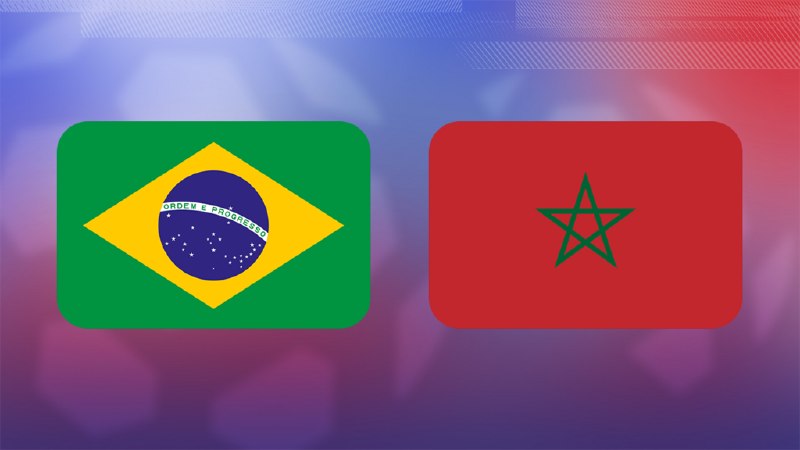
The 2026 World Cup's first heavyweight collision begins on 13 June 2026, with Morocco's Atlas Lions meeting Brazil's five-time champions in a Group C fixture that doubles as a referendum on African football's standing in the global game. France 24's live blog, updated through the afternoon and evening UTC, framed the match as the tournament's opening "shock" — a label the broadcaster's English desk applied even before kickoff, given the gulf in FIFA ranking pedigree between the two sides (per France 24, 13 June 2026, 21:07 and 21:42 UTC). For Brazil, the match is a chance to anchor a campaign that has been built around Vinícius Júnior and a new generation of European-based attackers. For Morocco, it is the second consecutive World Cup in which the north African side has been cast, fairly or not, as the standard-bearer of the continent's ambitions.
The fixture matters because the politics of the host arrangement, the expanded 48-team field, and the diasporic geography of both squads have turned what was once a routine group-stage meeting into a referendum on who the modern World Cup is for. The Atlas Lions are no longer the surprise package of 2022; they are a Paris Saint-Germain, Bayern Munich, Brighton and Eintracht Frankfurt core, marshalled by a defence that conceded once in Qatar's knockout rounds. Brazil arrive with a Seleção that has not lifted the trophy since South Korea and Japan, and with a public that has grown impatient of European-flavoured possession football. The two trajectories cross on Saturday in front of a global television audience that FIFA's expanded format has, by design, pushed to be larger than ever.
The shape of the squads
Morocco head into the tournament with a spine drawn almost entirely from Europe's top five leagues. Achraf Hakimi, the Paris Saint-Germain full-back, is the side's most visible star and the player France 24's English desk named first in its preview, underscoring his role as the team's attacking outlet from deep. Around him, the Atlas Lions carry the defensive organisation that took them to the semi-finals in Qatar — a back line constructed for compactness, with goalkeeper Yassine Bounou shielded by players accustomed to the tactical discipline of Spanish, German and English top flights. Up front, the team is built to counter-attack: pace wide, a target runner, and a midfield that has been drilled to win the second ball.
Brazil's selection is the inverse equation: a side that has spent the last four-year cycle trying to replace the metronomic influence of Casemiro and the finishing instinct of Neymar, and that has, according to France 24's preview, handed the creative keys to Vinícius Júnior. The Real Madrid winger is the face of the new Seleção, a team whose identity is unsettled and whose head coach has been obliged to find a balance between the European polish of its forward line and the samba inheritance the public expects. The five-time-champion framing that France 24 applied is not optional context — it is the gravitational field around which every Seleção selection decision is judged at home.
Why this is the tournament's first heavyweight test
Group C is the section of the draw most likely to be remembered, in retrospect, as the bracket's hinge. The two sides ranked highest in the group meet on matchday one, leaving the loser to navigate a route back through the remaining fixtures without the cushion of an opening win. That structural fact is what makes the 21:00 UTC kickoff (the moment the France 24 live blog formally opened) the first marquee occasion of the tournament: the winner emerges with a credible claim on the group, the loser with an immediate recovery problem.
The second-order consequence is psychological. Morocco's 2022 run was built on victories against Belgium, Spain and Portugal; a win over Brazil would land in the same category of upset and would confirm, in the minds of neutrals, that the African game has crossed a threshold. Brazil, conversely, have lost openers before — to Switzerland in 1950, to Turkey in 2002 — and have a documented record of slow starts in tournaments won later. The pattern is well known enough that it now shapes opponent preparation: sides no longer approach Brazil as a must-not-lose proposition, they approach them as a beatable favourite in the first match.
Counterpoint: the read against an African upset
The argument that Morocco can win rests on defensive discipline, set-piece threat, and the familiarity of the European-based core with tournament football. The argument against is structural. Brazil's squad depth is greater than any side in the group, the talent gap across eleven positions is real even before accounting for form, and the Seleção have the kind of bench that can change a tight match in the final twenty minutes. The honest read is that Morocco's route to victory runs through a low block, a single moment of transition, and a goalkeeping performance; Brazil's route runs through routine. Routine, in tournament football, is the rarest of commodities.
What the available reporting does not yet say — and what will only become clear in the second half — is whether Morocco's manager has chosen to press the Brazilian midfield high, as they did against Spain in 2022, or to sit and invite possession. France 24's live blog, which was live through the 21:07 and 21:42 UTC updates, was framing the match as an upset opportunity precisely because the tactical choice had not yet been telegraphed. That ambiguity is the single most important variable going into kickoff.
Stakes beyond the three points
For the African game, a positive result — even a draw — would re-price the conversation around the confederation's depth, not just its flagships. For the Brazilian Football Confederation, anything other than a convincing win in the opener will reignite the cycle of head-coach speculation that has accompanied every Seleção campaign since 2002. And for FIFA, the match lands in the first window of an expanded 48-team tournament whose commercial proposition depends on marquee fixtures arriving early. The opening match in any World Cup is choreographed to set the tone; in 2026, that tone is being set in Group C, not in the final.
What remains uncertain, and what the reporting from match day itself will resolve, is the injury status of Brazil's defensive pivot and the fitness of Morocco's holding midfielder — both of whom France 24's preview did not name explicitly. The tactical map of the match will also be redrawn if either side concedes first; the chasing team's risk calculus changes, and the headline "shock" framing that the broadcaster applied in advance will either be validated or rendered quaint within ninety minutes of kickoff.
Desk note: Monexus framed this fixture as a heavyweight opener because the broadcaster's own preview used that language; the live-blog format is the source the editorial line is anchored to, and the structural analysis sits inside that anchor rather than substituting for it.
Wire provenance
This editorial synthesis draws on the following public wire/social posts:
- https://t.me/france24_en/12453
- https://t.me/france24_fr/11987