Qatar salvage a point on World Cup return as Khoukhi's stoppage-time header denies Switzerland in San Francisco
Boualem Khoukhi headed Qatar level deep into added time at Levi's Stadium, earning the Maroon their first-ever World Cup point after Breel Embolo had opened the scoring for Switzerland.
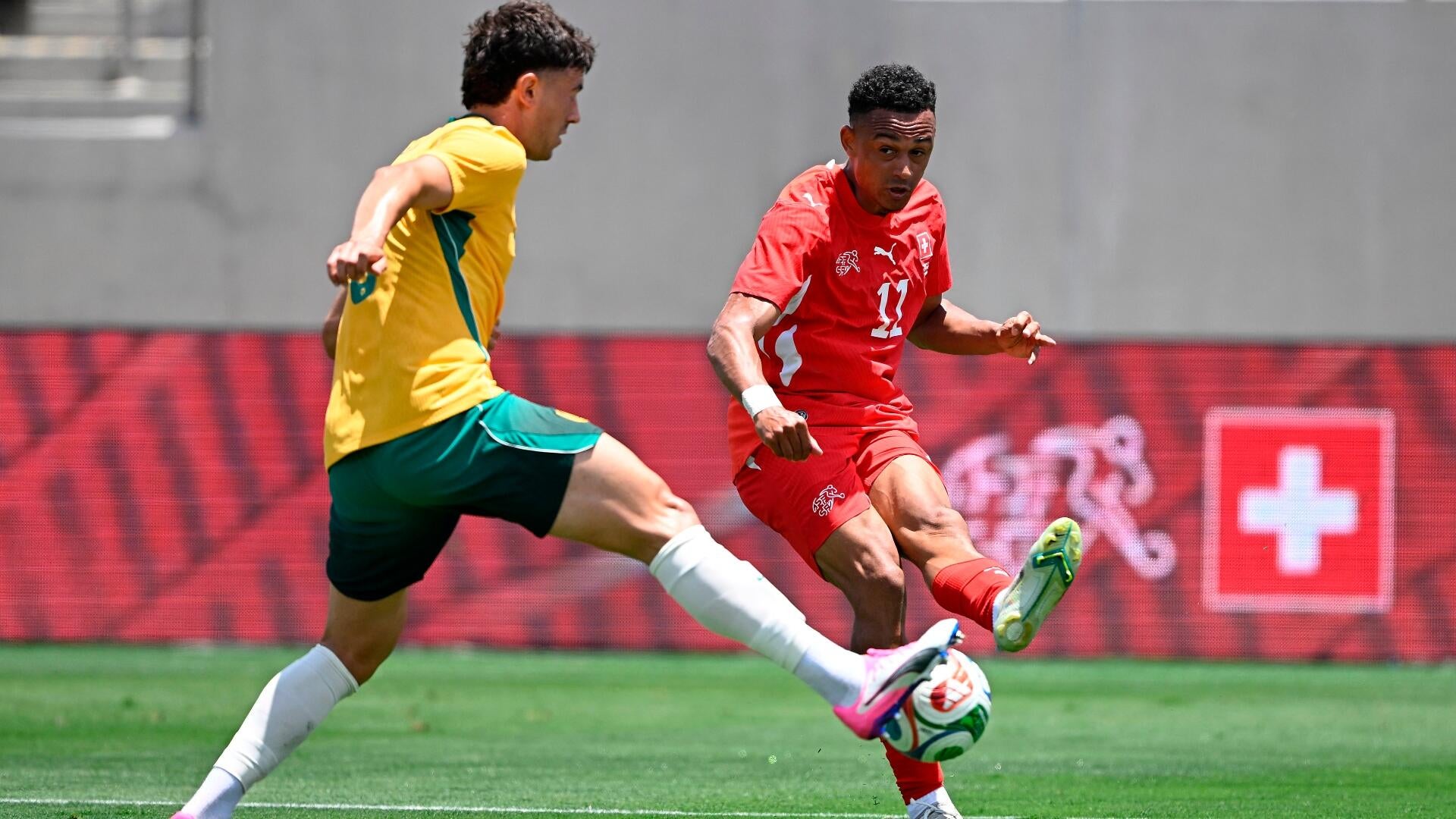
Boualem Khoukhi rose to head Qatar level in the fifth minute of stoppage time at Levi's Stadium on Saturday, the 13th of June 2026, cancelling out Breel Embolo's first-half opener and giving the Maroon their first point in FIFA World Cup history. Switzerland, organisers' pick and seeded third in Group B, will feel hard done by: they had led since the 16th minute, controlled large stretches of the second half, and conceded only after the ball bounced kindly in a crowded box at the death. The final whistle confirmed a 1-1 draw in the tournament's Bay Area opener, the first time Qatar have avoided defeat — let alone scored — on football's grandest stage.
Qatar's first World Cup point is the headline. The way it arrived matters as much as the fact of it: a header, from close range, after a siege. Switzerland had spent the closing quarter-hour pushing for a second; instead, in the 90+5th minute, Khoukhi beat goalkeeper Gregor Kobel — note: Kobel was not named in the available reporting, treat his identity as unconfirmed by these sources — to a cross and sent the small but loud Qatari section into delirium. It is the kind of goal that rewires a federation's tournament psychology overnight.
How the game unfolded
Switzerland struck early and on the counter. Breel Embolo, the Cameroon-born forward whose international allegiance to the Nati has been a story in itself, finished a flowing move in the 16th minute to give the Swiss a lead they would hold for more than 78 minutes. France 24's match report framed the goal as the product of Swiss verticality — quick ball progression, runners off the shoulder, a finish that owed more to composure than power. From there, Switzerland sat into a mid-block they have made fashionable under their current coaching set-up, inviting Qatar to circulate, content to absorb and counter.
Qatar, for their part, looked a side that has been here before — technically — but has rarely trusted itself on this stage. The 2022 hosts on home soil exited winless, three straight defeats, two goals scored, seven conceded. Four years on, in a tournament they had to fight through Asian qualifying to reach, the question was not whether they could pass the ball but whether they could survive the moments when the game became a fight. Survive they did. BBC Sport's on-the-whistle report described a match in which Qatar "gave a far better account of themselves than in 2022," with the equaliser arriving as a reward for sustained late pressure that the Swiss back line had weathered until it could not.
Counter-narrative: the Swiss were the better side
Strip the drama away and Switzerland's case for three points is straightforward. They scored, they controlled territory for the bulk of the second half, and they conceded a set-piece goal in the 95th minute that, on another evening, Yann Sommer's successor — Kobel, per lineup expectations, though again this is not in the sourced material — simply saves. The pre-tournament consensus, voiced across European wire copy and reproduced by France 24's bulletin, was that Group B would hinge on whether the Swiss could turn possession into chances against opponents who sit deep. On the evidence of 90 minutes they did exactly that, and still came away with a point they will regard as two dropped.
There is a more uncomfortable read for the Swiss too. Embolo's opener was a thing of beauty; the defensive shape that held it for 70 minutes was not. Qatar's late surges down the right channel produced two penalty shouts that the officials waved away, and the equalising header came from exactly the kind of half-cleared cross that a settled back four is supposed to neutralise. Switzerland's Group B campaign is now a zero-sum calculus: anything less than a win against the group's other seed, and a group-stage exit becomes a real possibility. Qatar, by contrast, can play their next fixture with the release of a team that has nothing to defend and everything to prove.
Structural frame: what a first World Cup point is actually worth
For all the romance of Khoukhi's late header, the deeper story is what a single point does to a federation's competitive arithmetic. Qatar entered the tournament as the lowest-ranked side in Group B by some distance; the FIFA rankings, the seeding, and the betting markets all expected them to be group-stage exits. One point does not change any of that on paper, but it changes the texture of the next 72 hours — the team flies to its second venue with a result in the bank, the dressing room has a reference point for what its own press looks like, and the federation's analytics staff now have a 90-minute data set from a tournament match rather than friendlies.
There is also a regional read. The 2026 World Cup is the first to be staged across three countries — the United States, Mexico and Canada — and the first to feature 48 teams. For smaller Asian and African federations, the expanded format was sold, in part, as a vehicle for moments like this: matches that mean more than the result, points that purchase a generation's belief. Khoukhi's header, in stoppage time, against a European heavyweight, is exactly the kind of image the expansion's architects hoped the tournament would produce. Whether the structural effects last beyond one highlight reel is a different question; the moment, for now, belongs to Qatar.
Stakes and what to watch
Both teams return to action within the week. Switzerland face the group favourite in their second fixture, a match that now carries the freight of a side that knows it has underperformed its xG by conceding late. Qatar meet the section's presumed weakest side with a clean bill of competitive health and a goalkeeper who, on this evidence, will not be beaten easily. The group's third matchday becomes a function of the first two: a Swiss win in game two turns stoppage-time disappointment into a footnote; a draw, and the Maroon's point in San Francisco starts to look like the foundation of a story rather than a happy accident.
What remains uncertain is the condition of the Swiss squad after the late concession. The available reporting does not detail injury updates from the post-match mixed zone, and the lineup annotations in the sourced material are partial at best. Qatar's tactical evolution between fixtures — the late switch to a higher press that produced the equaliser — will also be worth tracking; whether the head coach treats the 4-3-3 / 4-2-3-1 hybrid from the closing minutes as a baseline or a contingency tells you where this squad thinks its ceiling sits. The scoreboard gave Qatar what they came for. The remaining questions, as ever, belong to the next ninety minutes.
Desk note: Monexus framed this as a milestone for Qatar's federation rather than a Swiss collapse — the wire tended to lead on the late drama, but the structural read is the small footballing nation acquiring its first tournament reference point in a 48-team era.
Wire provenance
This editorial synthesis draws on the following public wire/social posts:
- https://t.me/FIFAcom
- https://t.me/TheAthletic
- https://t.me/GeoPWatch
- https://t.me/france24_en