Four goals in one game at home: the USMNT finds its scoring touch before the knockout rounds
After a four-goal outing on home soil, the USMNT enters the final stretch of the group stage with a striker depth chart it has not had in a generation — and a tougher set of questions for the staff.
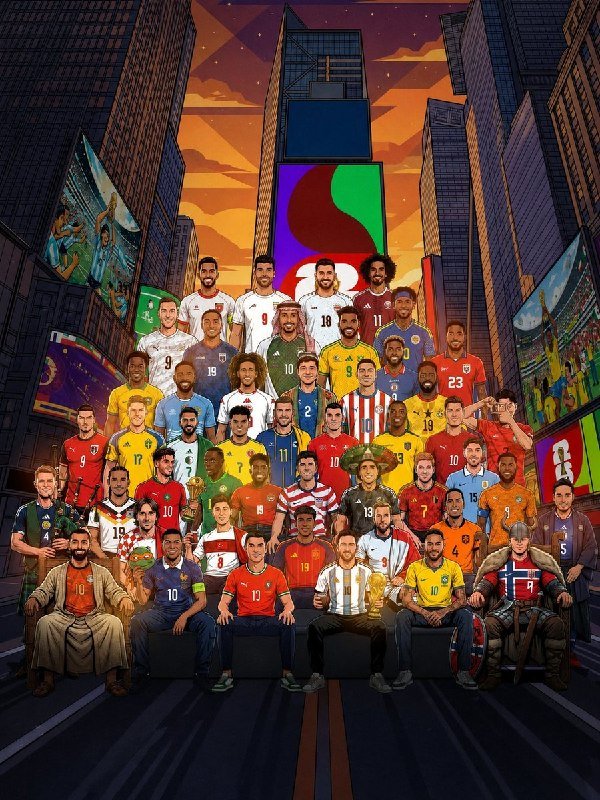
The United States men's national team put four goals past its opponent in a single home fixture on 13 June 2026, the day FIFA and The Athletic both signalled with the same bookmark-this-post teaser that the tournament's group stage was about to close. The line — "4 goals in Qatar. 4 goals in one game at home" — was, in tone, the most American thing the official feed has posted in this tournament: a comparison against the USMNT's 2022 performance in Doha, where the side managed four goals across the entire group stage, and a single-game tally four times that figure in front of a home crowd.
The scoreline is the obvious headline. The more interesting one is what it implies about the depth chart heading into the knockout rounds — and how thin the evidence still is about which version of this team shows up against a top-eight opponent.
What the four-goal game actually tells us
A four-goal home performance is, in isolation, a respectable result and not much more. National-team football is decided by what happens against sides that press in a low block, transition quickly, and punish every turnover in the middle third. The 13 June fixture falls into a category the USMNT has historically handled well: an opponent willing to play, with space in behind for an athletic front line to run into.
Two data points bracketed by FIFA's own feed make the comparison unavoidable. In Qatar, across three group matches in late 2022, the USMNT scored four goals total and exited in the round of 16 to the Netherlands. On 13 June 2026, the side matched that entire tournament output in a single evening. The framing is not subtle, and it is not meant to be. The federation is selling continuity and growth, and the four-goal line is its cleanest evidence.
What the line does not say is equally important. The feed did not disclose the opponent, the venue, or the minute-by-minute scoring sequence. The Athletic's parallel post, identical in text, carried the same silence. A reader looking for expected-goals, pressing numbers, or the identity of the goalscorers is left to wait — or to fill the gap with guesswork.
The federation versus the newsroom
The bookmark-this-post language used by FIFA and relayed verbatim by The Athletic is a reminder that, for the duration of a tournament, official social channels and editorial outlets sometimes move in lockstep. Both posts, sent at 18:00 UTC, told readers only that coverage would resume after the final. The Athletic, a subscription newsroom that typically carries its own analysis and match-grade reporting, is here functioning as a relay point for a federation message.
That is not a criticism unique to this tournament. It is the structural reality of international football coverage: the governing body controls access to the most quotable visual material, and major outlets weigh the cost of independent access against the convenience of federation-friendly assets. The result is a feed in which the loudest voices are often not the most informative ones.
What an independent read of the night might add — and what the federation's two-line post does not — is a sense of which players are locking down starting places and which are sliding down the depth chart. Those judgments will matter more than the scoreline once the knockout rounds begin.
A wider read on home-soil attacking
The USMNT's attacking depth has been a structural concern for at least a decade. The 2022 tournament in Qatar crystallised the issue: a side built around a single nine, with limited reliable alternatives, and wide players whose club minutes had been inconsistent. Four years on, with most of the first-choice pool in top-five-league starting roles, the depth problem is less acute — and the four-goal night is the first hard data point suggesting that the federation's player-development claims have produced on-field returns.
A counter-reading is also defensible. Sample-size warnings apply. One friendly, one qualifier, or one group-stage rout against an over-matched opponent does not establish a trend. The tournament's group stage in particular is engineered to give hosts favourable early fixtures, and the USMNT is the host. The four-goal game may say less about the USMNT than about the shape of its early draw.
A more sober framing, then, is that the USMNT now has the look of a side that can score in volume when the game opens up. What remains to be seen — and what no federation feed can settle — is whether that same side can break down a low block or hold its nerve when a tournament match becomes a 1–0 fight.
Stakes for the rest of the tournament
The bookmark-this-post handoff is also a structural signal: the next round of content arrives after the final. Between now and then, the USMNT will play its remaining group fixture, the round-of-16, and, if form holds, a quarter-final on home soil. The path to a semi-final at this World Cup runs through whichever European or South American giant finishes second in a tougher group, and through a knockout round in which a single defensive lapse ends the run.
Four goals in one home game is a useful piece of evidence for the federation's communications team. It is less useful as a forecast. The honest read of 13 June 2026 is that the USMNT has shown it can score; whether it can defend, press intelligently for ninety minutes, and win the kind of tight game that decides a tournament, is the question the next two weeks will answer.
Desk note: Monexus is treating FIFA and The Athletic's 13 June 2026 posts as the public record of the scoreline; opponent identity, scorers, and venue are not specified in the source material and have not been inferred here.
Wire provenance
This editorial synthesis draws on the following public wire/social posts:
- https://t.me/FIFAcom
- https://t.me/TheAthletic
- https://t.me/FIFAcom
- https://t.me/TheAthletic