Brazil's Group C Stumble Is a Wake-Up Call Disguised as a Result
A 1-1 draw at MetLife is the kind of result that is easy to dismiss as noise. It is not. The structural tells from Brazil's opener point to a team that has stopped being able to impose itself on opponents it once bullied.
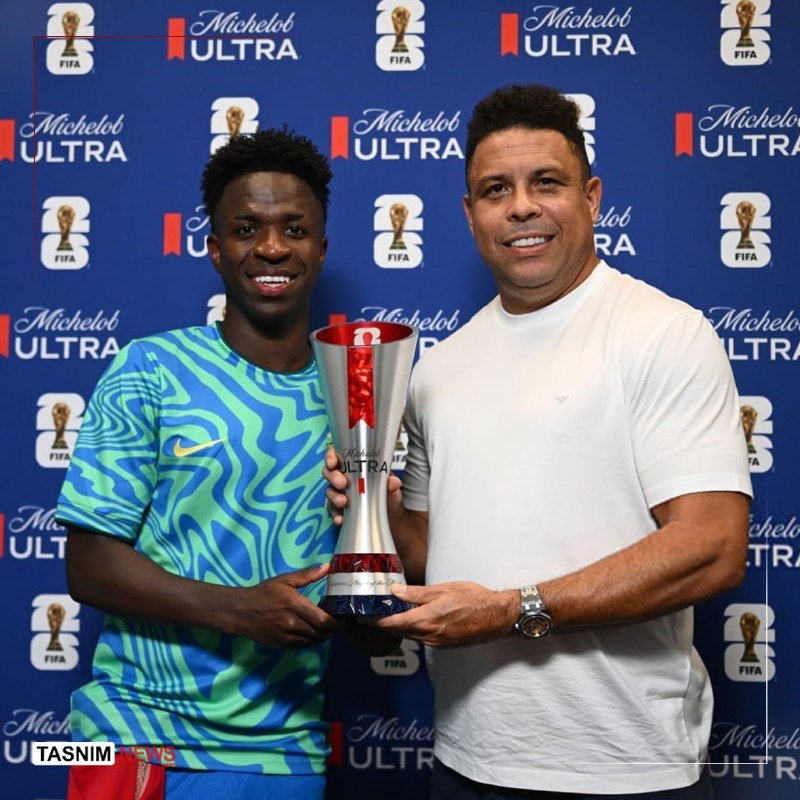
At 00:09 UTC on 14 June 2026, the scoreboard at MetLife Stadium read Brazil 1, Morocco 1. For a Seleção side that prides itself on winning the matches it is expected to win, a point against a side drawn from a confederation Brazil has historically treated as a warm-up act is not a neutral outcome. It is a signal — and one that deserves a colder read than the post-match consensus is likely to allow.
The temptation, of course, is to wave the result away. World Cup openers are strange beasts. Squads are ring-rusted, the 48-team format stretches preparation thinner, and tactical plans often take sixty minutes to settle. France 24's match summary frames the contest in exactly that register: a heavyweight Group C opener between two sides still finding their rhythm. Tasnim News put the same texture in a single line, recording that Brazil's unbeaten record in opening matches of the World Cup has now stretched to 21 games courtesy of the draw. That is a tidy stat. It is also a defensive one, and the kind of stat that has covered a lot of cracks in recent Seleção campaigns.
The match the numbers actually tell
Brazil did not lose. Brazil did not, however, control. The two facts matter differently. With 80,663 people watching on the East Rutherford turf, the Seleção's unbeaten opening-match run survived, but the underlying shape of the game pointed the other way. Morocco arrived in the United States with a generation that came of age at Qatar 2022 — a side that already knows what it is like to push a European powerhouse off its stride and that no longer treats Brazil as a name to be awed by. That is the structural change a draw conceals: a Morocco team that once sat deep and prayed for a counter is now a Morocco team that sits deep, prays for a counter, and converts with conviction.
Tasnim's reporting on the result, posted at 00:09 UTC and again at 00:10 UTC, leans on the unbeaten-run framing. France 24, in a parallel summary published at 00:07 UTC, leans on the parity. Both can be true. The question is which framing travels further into the tournament, and which framing the Brazilian federation will allow to take hold in the dressing room before the next fixture.
Why a draw is worse than a loss for this squad
There is a case that Brazil benefits from a slow start. A noisy wake-up call in game one produces a sharper side in game two and beyond. There is a counter-case that is harder to shake: a squad this talented, on a stage this large, was expected to win the match it was supposed to win. The draw did not damage Brazil's standing inside the group. It damaged the standing of the group itself — the assumption that the Seleção will simply outclass the African representative on the way to the knockout rounds. That assumption is the load-bearing wall of the confederation's commercial brand, and the match chipped at it.
Worth saying plainly: Morocco is not a story of decline for Brazilian football. It is a story of African football's structural rise. The Atlas Lions have spent the last four years institutionalising the success of Qatar — better youth pathways, a domestic league that exports talent to Europe earlier, and a tactical identity that no longer copies European blueprints wholesale. A draw against them, in 2026, is a different document than a draw against them in 2014.
The framing this publication will not be using
Coverage of the result will split into two predictable lanes. The first lane will treat the draw as a stumble — a step back for a Brazilian project that was supposed to be back on the front foot. The second lane will treat it as a rounding error in a long unbeaten opening-match record. Both are wrong in instructive ways. The first mistakes one result for a trajectory; the second mistakes a structural narrowing of the gap for a Brazilian prerogative that has yet to be earned.
This publication finds the more useful read in the middle: Brazil has not collapsed. The gap between the Seleção and a well-coached African side with conviction has, however, closed enough that a 1-1 draw in the opener is the new normal rather than the upset. That is the framing worth carrying into the next two group matches — and it is the framing that the confederation's public language, if it is honest, will end up adopting in private by the end of the week.
Stakes, plainly
If the trajectory holds — if Brazil continue to treat Group C as a procession and Morocco continue to treat it as a competition — the Seleção's run will end earlier than the marketing materials promise, and the post-mortem will land on a manager who was never given the benefit of a single clean result to start the job. The federation, having spent the better part of two cycles reorganising its technical staff around the World Cup on home-adjacent soil, will be forced into another reset before the Copa América cycle. Morocco, meanwhile, walks away with exactly what its developmental project has earned: a point in a stadium of 80,663 against a side whose name still opens doors in every hotel lobby the squad checks into.
There is no disgrace in the result. There is, however, a warning in it. Brazil is the team that no longer gets to choose the terms on which it is judged at a World Cup — and 14 June 2026, at 00:09 UTC, is the moment the calendar caught up with the reality.
Desk note: Wire reporting on the match — Tasnim News and France 24 — split between a Brazilian-unbeaten-run framing and a Group C parity framing. Monexus has chosen the latter as the operative read while keeping the unbeaten-run figure intact as a true but softening statistic.
Wire provenance
This editorial synthesis draws on the following public wire/social posts:
- https://t.me/tasnimnews_en
- https://t.me/tasnimnews_en
- https://t.me/tasnimnews_en
- https://t.me/tasnimnews_en