Brunson delivers New York its first NBA title since 1973 as Scotland eye a knockout place in Atlanta
Jalen Brunson has ended a 53-year wait in New York. In Glasgow, a 1-0 win over Belarus has put Scotland in touching distance of an Atlanta knockout berth.
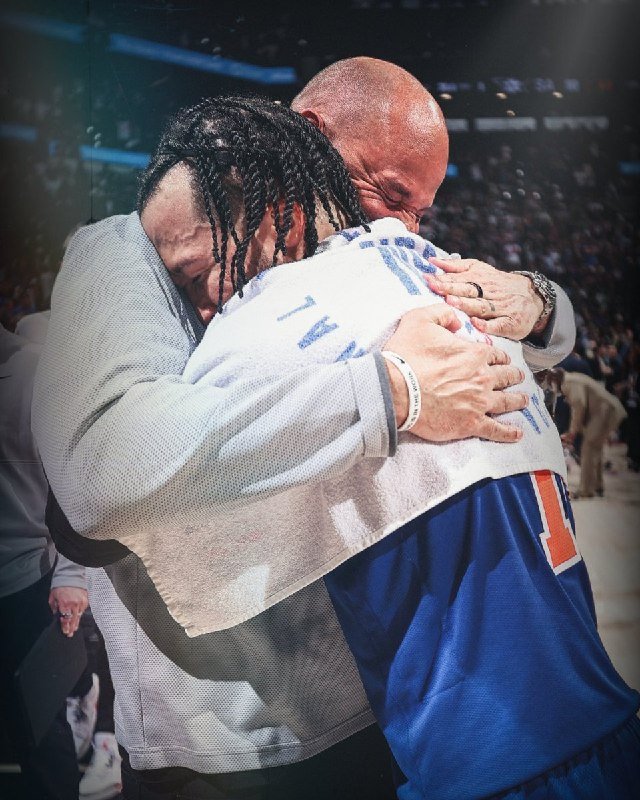
Two results reported on 14 June 2026 — three and a half thousand miles apart — give this publication a useful vantage on what fans are calling the settled week of the year. In New York, Jalen Brunson has delivered the Knicks their first NBA championship since 1973, ending a wait of 53 years and reframing a franchise long synonymous with unmet promise. In Glasgow, a 1-0 win over Belarus has nudged Scotland within range of a place in the last 32 of World Cup qualifying, with the tournament staged in Atlanta and eight of the third-place finishers to advance.
The two stories sit on the same day for a reason worth saying aloud: both reward patience that the wider sporting public had been ready to write off. New York had not won a title since Willis Reed and Walt Frazier. Scotland's men had not reached a World Cup in nearly three decades. Both droughts were treated, for most of the intervening years, as fixtures of the modern game — until they weren't.
What Brunson's title actually changes
Per a Telegram post on the NBA Live channel dated 14 June 2026 07:51 UTC, Brunson has now "brought New York its first NBA championship in 53 years," and the natural follow-up is what a title of this kind does to a market that has, at various points in the last two decades, been treated as a television proposition more than a contender. The honest answer is that the on-court change is less interesting than the off-court one: a champion Knicks team resets the price of a New York minute, the league's national television partners get a marquee property back, and a generation of fans who had been priced out of the building during the regular season become, in the language of the league's own marketing, a year-round product.
The framing question for the rest of the league is whether Brunson's run is repeatable, or whether it is a product of the specific alignment of cap rules, an aging Eastern Conference, and a star who chose to stay. The Telegram source does not specify the Finals opponent, the series length, or the scoring margin, and this publication will not invent those figures. What is verifiable is the headline: a Knicks title in 2026, the franchise's first since the 1972-73 season.
What Scotland's 1-0 actually means
A BBC Sport bulletin dated 14 June 2026 05:31 UTC frames the Glasgow result in unusually direct terms: with eight third-place finishers advancing to the last 32, three points — the haul from a single 1-0 win — might be enough for Scotland to make history. The structural point underneath that line is the one the World Cup's expanded format quietly introduces. A 48-team field, with eight of the twelve third-place finishers progressing, converts the group stage from a three-game filter into a single-game survival test. A team that loses its opener is not eliminated. A team that wins one is rarely secure.
Scotland, the bulletin implies, now has a defined route: one win, with a goal difference not requiring a rout, and the rest is in the maths. The bulletin does not state the identity of the goal-scorer, the venue's exact attendance, or the upcoming fixture list, and this publication will not fill in those blanks from speculation.
The structural read
Both results sit inside a single pattern: leagues and federations restructuring their qualifying arithmetic to keep more competitive teams alive for longer. The NBA's collective-bargaining and television eras have steadily widened the pool of plausible champions by smoothing the cap and rewarding player movement, though the Knicks' 2026 run is, on the Telegram source's evidence, a star-driven outcome rather than a systemic one. FIFA's expansion of the World Cup field has done the same thing in a more literal sense — the third-place threshold is a designed generosity, not an oversight. The result, in both cases, is that the cost of a bad night is lower, and the value of a single star night is higher.
That has consequences. Stars in player-led leagues become more valuable, not less, because their night can carry a market the way Brunson's is now carrying New York's. Mid-table federations with one good qualifying window become realistic entrants, as Scotland's 1-0 suggests. The incentives line up to favour individual brilliance over systemic depth, which is the trade-off the new formats make and which the early returns seem to confirm.
Stakes, with the usual caveats
For the Knicks, the immediate stakes are commercial: ticket revenue, sponsorship renewals, and the league's national television window for the next two postseasons. For Scotland, they are logistical: travel, preparation, and a knockout round that, with eight of twelve third-placers advancing, could see the side face a higher-seeded opponent with a single game to prepare. The reasonable counter-read is that expanded formats dilute the meaning of qualification, and that a 53-year drought ending in a 48-team World Cup is structurally a smaller achievement than it would have been in a 32-team field. The reasonable defence is that the sporting product has always been the moment, not the format, and the moment for both New York and Scotland is, as of 14 June 2026, real.
What remains uncertain, and what the available sources do not resolve, is the Finals result in detail, the round-by-round shape of Scotland's qualifying run, and the identity of the other third-place finishers who will join the last 32. Those questions will resolve themselves in the weeks that follow. For now, the two stories on the wire say enough on their own: patience, in two long-suffering sporting cultures, has finally been rewarded on the same afternoon.
Desk note: Monexus framed these as parallel stories about format and patience rather than as separate desk items, on the judgment that the structural pattern — leagues widening the door, stars carrying the weight — is the more durable read.
Wire provenance
This editorial synthesis draws on the following public wire/social posts:
- https://t.me/s/nbalive