Chinese-owned kit makers stitch up a quarter of World Cup wardrobe
Anheuser-Busch InBev and Adidas still print the headlines, but the seams, dyes and logistics behind a record 48-team World Cup increasingly run through Chinese-owned factories.
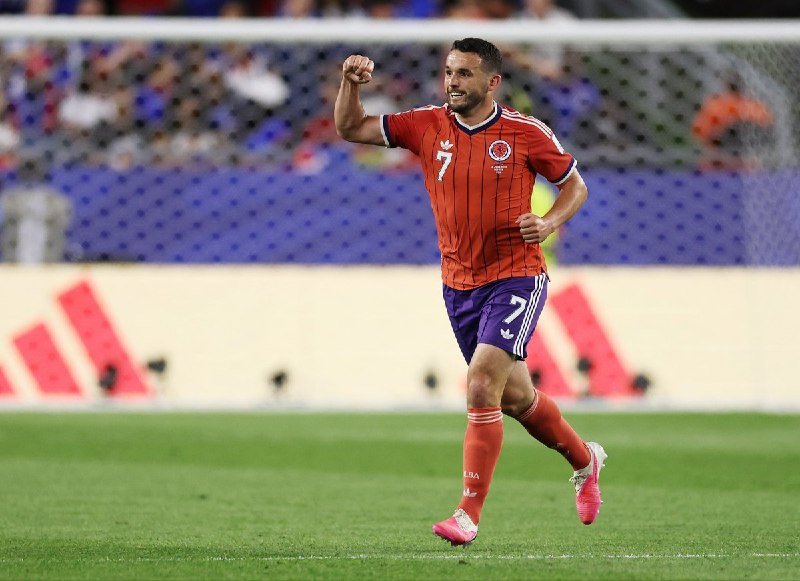
On 12 June 2026, with the 48-team World Cup a week out, Nikkei Asia reported a figure that re-frames how the tournament is actually made. Chinese-owned sportswear labels — Puma, bought by Anta Sports in 2019, and the smaller Spanish-Chinese brand Kelme — are supplying roughly 27% of national-team kits at this World Cup, against an unspecified global average for past tournaments. The numbers matter because the kits a billion-plus viewers will see on their screens are, increasingly, stitched inside Chinese-controlled production networks even where the logo on the chest reads German, Dutch or Brazilian.
The single visible deal is not new: Anta's 2019 takeover of Puma, contested in Berlin and Bonn, gave Chinese shareholders the controlling stake in a 1948 Darmstadt brand. Puma still designs, still markets, still signs the stars. But the seams now run through Asia, and the dividend flow runs the other way. Kelme, founded in 1977 in Elche and revived in 2005 by a Hong Kong vehicle, fits a parallel pattern: Iberian heritage, PRC capital, factory floors in Fujian and Vietnam. The 27% figure quantifies the result.
What 27% actually covers
The Nikkei tally is a kit count, not a revenue count, and that distinction is doing a lot of work. National federations sign kit deals for cash and performance bonuses; Puma's global sponsorship book still trails Nike and Adidas in headline value. But a uniform is a uniform: when a goalkeeper in a knockout game is wearing a jersey sewn in a Puma-supplier facility in China or Vietnam, the brand-equity argument is the same as if it were made in Herzogenaurach. The tournament's visual footprint, the merchandise that floods Brazilian, Argentinian and Mexican fan markets within hours of the final whistle, is Chinese-supplied at a level that would have been unthinkable twenty years ago. The Western wire has so far treated this as a single data point. The more interesting read is what it implies about the next cycle.
A counter-narrative worth taking seriously
A standard line from Berlin, Leverkusen and the Bundesliga press is that Chinese control of Puma is a brand-management story, not a manufacturing story — that the kits could in principle be made anywhere, and the Chinese share is a financial footnote. There is something to that. Puma retains its German HQ, its Bundesarchiv-listed archive, and most of its design staff. Puma's pitch to federations is still made in German, English and Portuguese, not Mandarin.
But the structural counter-argument is more interesting: the Chinese sportswear complex is the only one in the world that can scale to a 48-team tournament without six-month lead times and broken supply lines. When the brief says a federation needs 250,000 replica shirts in 14 weeks, with the right dye-lot for the federation crest, the answer now comes from a small set of vertically integrated Asian suppliers — of whom Anta-owned Puma and Hong Kong-backed Kelme are the visible flags. The other reading — that any of this is brand-neutral — does not survive contact with the order book.
The pattern, in plain terms
This is the same architecture that delivered BYD into European showrooms, CATL into German cell plants, and SMIC into the long tail of mature-node chips. A foreign brand, a Chinese acquirer or anchor supplier, a multi-year capex programme, and a long enough horizon to outlast the political cycle in Berlin or Brussels. The 2026 World Cup, watched in roughly 200 territories, is the first time the pattern is being broadcast live to a sporting audience that has not been primed to notice it. The cheer that goes up for a long-range strike in Miami will travel through a Puma shirt stitched in a Chinese factory, and the camera will not mention it.
What it means for 2030
The 27% figure is a 2026 snapshot. The forward question is whether the next cycle pushes it past a third, and what the federation treasuries do if it does. The two Spanish-speaking federations already in Kelme's portfolio are a useful early test: a smaller brand, a Chinese-financed balance sheet, and a kit that walks onto the pitch alongside the global heavyweights. If those teams progress into the knockouts, the next sponsorship round will not look the same.
The plausible alternative read is that the figure plateaus, and that Adidas and Nike's federations use the 2026 broadcasts to remind broadcasters and federations that the kit is a marketing asset and not a sewing contract. That argument is being made now, and it is not a foolish one. But the production base is where it is, and the order book follows the production base. By the time the 2030 tournament — Spain, Portugal and Morocco — kicks off, the question is no longer whether Chinese-controlled supply chains are inside the kit, but how deep.
This publication framed the 27% figure as a structural data point in a vertical pattern — kit, car, cell, chip — rather than as a single sports-business headline. The Western wire has so far treated the Anta–Puma and Kelme relationships as separate brand stories; the 2026 tournament, watched in roughly 200 territories, makes that separation harder to sustain.
Wire provenance
This editorial synthesis draws on the following public wire/social posts:
- https://t.me/nikkeiasia
- https://t.me/NikkeiAsia