Ehud Barak, in unusually pointed public remarks, says Iran emerged from the war stronger
A former Israeli prime minister used a public stage on 14 June 2026 to argue that the war's strategic outcome ran against Tel Aviv, framing Iran as the relative beneficiary of the post-war landscape.
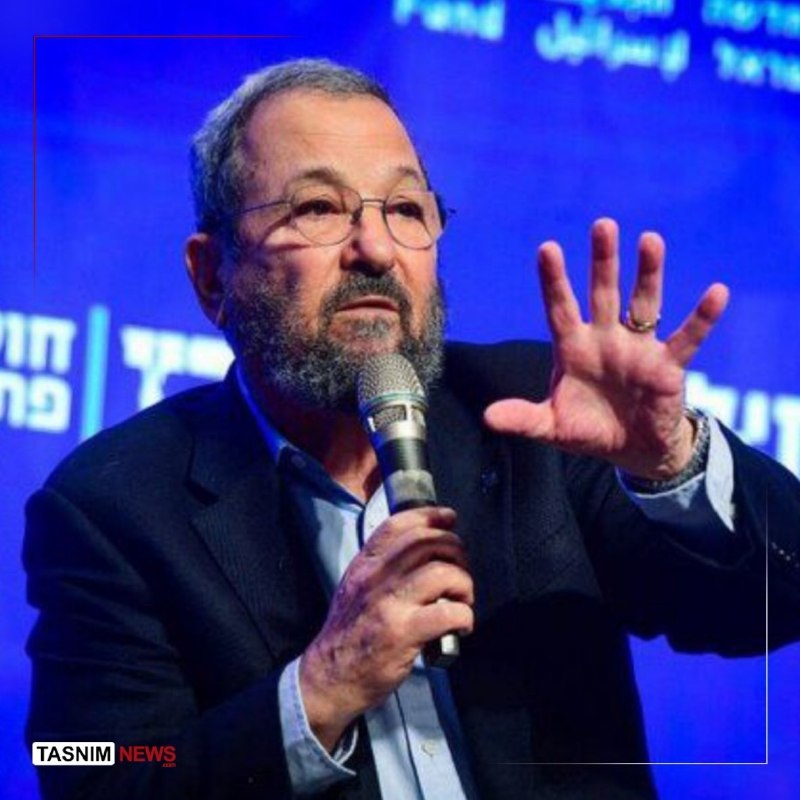
At roughly 07:00 UTC on 14 June 2026, Iranian state media's English wire began moving a single sentence across its channels: Ehud Barak, the former prime minister of Israel, had said that Iran emerged from the war stronger. The line, picked up within minutes by Tasnim, the IRNA-affiliated Jahan Tasnim mirror, and amplified on X by a network of accounts that republish Iranian state English copy, was framed as confirmation — from inside the Israeli political class — that the strategic balance of the conflict had tilted toward Tehran.
That a former Israeli prime minister is publicly arguing the war's net outcome favoured Iran is itself a story. It is also, on the evidence now in circulation, the only verifiable factual core of this article. What follows is a close reading of what is actually on the record, and what is not.
What Barak is reported to have said
The three circulating items — a post by the X account @sprinterpress timestamped 07:14 UTC, a Tasnim English Telegram post at 07:02 UTC, and a parallel Jahan Tasnim post at 07:00 UTC — converge on a paraphrased claim rather than a verbatim quote. The phrasing varies slightly: Tasnim English says Iran "came out of the war stronger"; the Jahan Tasnim mirror renders the same line as Iran "came out stronger from the war." The substantive claim — that Barak used a public stage to argue the war strengthened Iran, while continuing to criticise the cabinet and army of the Israeli government — is consistent across the three items.
None of the three items carries a venue, a date of the underlying remarks, a recording, or a transcript. The framing language ("Zionist regime," "occupation regime's cabinet and army") is editorial overlay from the Iranian state outlets; the underlying assertion attributed to Barak is the only sourced element. Readers should treat the precise wording as paraphrased through an Iranian state-media filter.
Why the framing matters on the Iranian side
Tasnim and Jahan Tasnim are state-adjacent outlets operating under the Islamic Republic's press architecture. Their editorial line is to amplify any Israeli voice — and especially any former senior Israeli voice — that suggests the war did not deliver a decisive Israeli win. The republic's strategic narrative after a major round of fighting with Israel has consistently been twofold: deny that Israeli air power achieved systemic degradation, and insist that Iran's deterrent posture, proxy network, or missile-industrial base was either preserved or rebuilt. A former prime minister publicly endorsing the second half of that claim is, from Tehran's perspective, a piece of usable evidence.
That the same paraphrased line is being pushed across Tasnim, a Jahan Tasnim mirror, and a sympathetic X account within a 14-minute window indicates a coordinated release rather than a newsroom-by-newsroom pickup. The pattern is characteristic of Tehran's English-language information operations: a single underlying source, a small number of state-aligned channels, and a low-volume but high-velocity distribution designed to seed the claim in monitoring dashboards and aggregator feeds.
What is missing from the public record
Three things are not in the three items circulating this morning. First, there is no Israeli source on the record. No Hebrew-language outlet, no English-language Israeli newspaper, and no statement from Barak's office appears in the thread context. Second, there is no Western wire confirmation — Reuters, AP, AFP, BBC, Bloomberg, and the Guardian have not, on the basis of the material in front of Monexus, picked up the claim. Third, the venue, the audience, and the full text of the remarks are not specified. The claim is therefore paraphrased, single-sourced to Iranian state-aligned channels, and unverified by independent reporting.
That is a meaningful gap. Barak, a former prime minister and former defence minister, has a documented history of sharp public criticism of sitting Israeli governments — including, at various points since October 2023, of the war cabinet's strategic choices. The substantive posture attributed to him in these three items is plausible in tone. But plausibility is not corroboration, and the standard for attributing a strategic judgment to a named former head of government is a transcript, a recording, or an Israeli primary source.
How to read the strategic claim itself
If the claim does hold — that is, if Barak did in fact say the war left Iran stronger — it would sit inside a recognisable internal Israeli debate. Critics of the government's war management have argued, in various forums since the start of major fighting with Iran, that the operation traded Israeli air-power superiority for a longer-term problem: a more deeply entrenched Iranian deterrent doctrine, a more openly asserted regional role for Tehran, and a kinetic-industrial base that has, in past rounds of strikes, demonstrated a capacity to recover within months. That critique is not unique to Barak; it has appeared in Haaretz commentary and in the published writings of several former Israeli security officials. The novelty of a public remark by a former prime minister, if confirmed, would be its political weight, not its content.
The reverse reading is also live. The Israeli government and the IDF have, at various points, argued that the campaign achieved concrete, verifiable degradation of Iranian assets — missile production, air-defence coverage, and proxy logistics corridors — that cannot be measured in the days after a ceasefire. If that reading holds, the claim that Iran emerged stronger is, in the government's telling, a strategic-misreading of operational damage assessment. The two readings are not, on the available evidence, reconcilable from open sources; they are matters of classified intelligence on both sides.
What is at stake
The political stakes inside Israel are immediate. A former prime minister publicly asserting that the war strengthened Iran, in the same breath as criticising the cabinet and the army, is a direct challenge to the government's narrative management. Whether the remarks are picked up by Israeli media, dismissed as Tehran propaganda by the prime minister's office, or quietly ignored, will itself be a signal about the cohesion of the wartime consensus.
The regional stakes are longer. Iran is, on the evidence of the past three years, building out a missile-industrial and proxy-corridor architecture designed to survive a major round of strikes. Whether that architecture has been net-weakened, net-strengthened, or simply reconfigured by the war is the question that will define the next round of deterrence calculations. A single paraphrased line, pushed by three Iranian state-aligned channels in fourteen minutes, does not answer it. But it is a useful reminder of where Tehran would like the answer to land.
Desk note: Monexus has reported the claim attributed to Ehud Barak exactly as it appears in three Iranian state-aligned items, with the editorial overlay ("Zionist regime," "occupation regime") flagged as Iranian state framing rather than Monexus voice. We have not located an Israeli primary source for the remarks and have not treated the paraphrased line as confirmed. Where Western and Israeli sources later verify, contradict, or contextualise the remarks, this article will be updated.
Wire provenance
This editorial synthesis draws on the following public wire/social posts:
- https://t.me/tasnimnews_en
- https://t.me/JahanTasnim
- https://x.com/sprinterpress/status/