Gaza's internal security campaign: what the resistance's crackdown on 'proxy gangs' tells us
Hamas-aligned security forces in Gaza say they are dismantling 'puppet gangs' tied to Israeli intelligence. The operation exposes how a war fought in public has an underbelly fought in shadows.
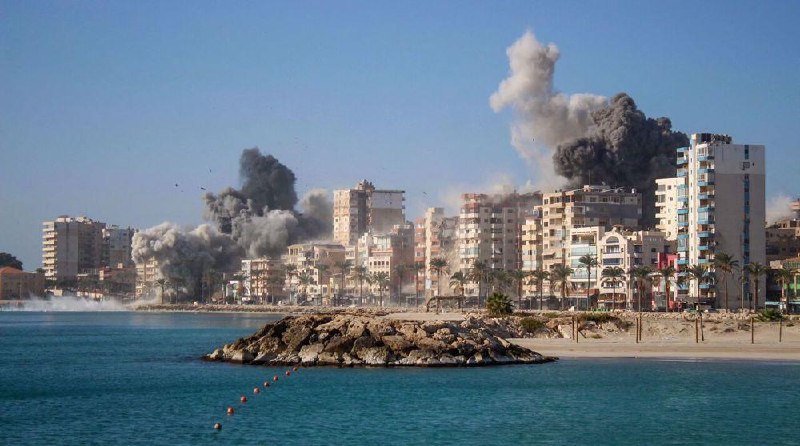
In the small hours of 14 June 2026, the security apparatus that administers much of Gaza declared it was moving against what it called "agent gangs" — cells, it said, that were in direct contact with Israeli intelligence and were attempting to lure Palestinian police into ambushes. The statement, carried by Al Alam Arabic's Telegram channel at 02:10 UTC, framed the operation in blunt terms: "We are carrying out operations to dismantle puppet gangs that exploit the current security conditions to implement the occupation's plans." A follow-up at 02:14 UTC said a specific cell had been acting as a conduit to Israeli intelligence and was "seeking to cause chaos with the aim of luring policemen in preparation for" further attacks. A third message, at 02:17 UTC, warned that "there will be no tolerance in fighting and persecuting proxy gang members." [1]
The operation is the latest visible iteration of a quieter war running beneath the bombing, displacement and aid politics that dominate international coverage of Gaza. The public-facing war is fought with airstrikes and satellite imagery. The shadow war is fought with informants, recruiters, encrypted phones and the bodies of suspected collaborators dragged through streets. Both, on this evidence, are accelerating in parallel.
What the resistance says is happening
The framing in the three Al Alam Arabic messages is unusual in its specificity. The security forces — institutionally aligned with Hamas's interior ministry apparatus — are not just announcing arrests in the aggregate. They are naming the architecture: cells in direct contact with Israeli intelligence, using the post-ceasefire disorder as cover, with the tactical aim of luring Palestinian police into kill-zones. That sequence — lure, isolate, strike — is consistent with Israeli operational doctrine for targeted killings during periods of high civilian traffic, though neither side has published the underlying intelligence to verify the specific claim.
A separate, unrelated incident shows the cost of the public-facing war on the same day. At 01:11 UTC on 14 June 2026, Al Jazeera English reported that an Israeli strike on southern Gaza killed two people and injured another, according to Palestinian authorities. [2] The two stories are not causally connected, but they run on parallel tracks: above ground, an airstrike; below ground, a manhunt for the human infrastructure that makes the next strike possible.
Why the timing matters
Gaza's internal security contest is not new. What is new is the public declaration, in a tight cluster of three messages, that the resistance is escalating its response and is willing to describe it in operational detail. The phrase "no tolerance" is a warning not just to alleged collaborators but to the broader civilian population that any contact with Israeli intelligence — confirmed, suspected, or invented by local rivals — is now treated as capital.
The structural backdrop is a Gaza whose civil administration has been hollowed out by more than two years of war, where the police force that nominally governs street-level order is itself reconstituting under wartime conditions. Power vacuums of this kind tend to be filled by whoever can credibly threaten violence, and the resistance's interior security wing is signalling that it intends to be that actor.
What we do not — and cannot — verify
Three caveats sit on top of any responsible read of these messages. First, Al Alam Arabic is an Iranian-state-affiliated outlet, and the Telegram channel that carried the statements is itself an institutional voice of the resistance's media operation. The substance of the claims about Israeli intelligence links is not independently corroborated in the source material Monexus has reviewed. [1] Second, the term "agent gangs" is a contested category that in past Gaza cycles has been applied to genuine informants, to local criminal networks, and to political rivals of Hamas. The current statements do not specify which category the named cell belongs to. Third, the Israeli side has not, in the materials available to Monexus, commented on the specific allegations, and IDF statements are not part of this thread.
A plausible alternative read is that the campaign is a domestic-control operation dressed in counter-intelligence language, and that some of the cells described as Israeli-linked are in fact rivals of the resistance's political project who can be delegitimised by the collaborator label. That is a hypothesis the evidence does not rule out. The resistance's framing is also plausible: Israeli intelligence services have a documented history of running Palestinian informer networks, and penetration operations of the kind described are technically consistent with that history. Both readings should travel together in any honest assessment.
Stakes
The practical stakes are immediate. If the resistance is correct that penetration cells are still active, the public-facing campaign of airstrikes — the one Al Jazeera reported at 01:11 UTC [2] — is being aimed with continuing human intelligence from inside Gaza. If the resistance is wrong, or is using the counter-intelligence frame to settle political scores, the result is the same: a population that has already lost housing, livelihoods and a high fraction of its pre-war medical infrastructure now also loses the presumption of innocence inside its own communities. That second outcome is its own kind of catastrophe, and one that will be legible in court records and family testimonies long after the current phase of the war is over.
The geopolitical stakes are quieter but no smaller. Every public claim of this kind, from either side, hardens the narrative frame each audience receives. Israeli domestic media treats any collaborator network as confirmation that the war is being fought on a second front. Palestinian and Arab audiences hear "puppet gangs" as confirmation that the occupation fights through proxies because it cannot win in the open. Both frames are partly true and partly self-serving. The work of reporting in this period is to hold both — and to keep verifying, in public, what can be verified.
This article tracks the public messaging around the campaign as of 02:17 UTC on 14 June 2026. Where claims cannot be independently verified, that limitation is stated in line rather than glossed over.
Sources
[1] Al Alam Arabic, Telegram channel messages on resistance security operations in Gaza, 14 June 2026, 02:10 / 02:14 / 02:17 UTC — https://t.me/alalamarabic
[2] Al Jazeera English — Breaking News wire, "Two killed in Israeli strike on Gaza", 14 June 2026, 01:11 UTC — https://www.aljazeera.com/news/
Wire provenance
This editorial synthesis draws on the following public wire/social posts:
- https://t.me/alalamarabic