Haiti and Scotland walk out at Boston Stadium: a World Cup return with little to lose and much to prove
At 23:54 UTC on 13 June 2026, FIFA confirmed Boston Stadium as the venue for Haiti vs Scotland — the city's first match of a tournament that, for both sides, is defined as much by absence as by ambition.
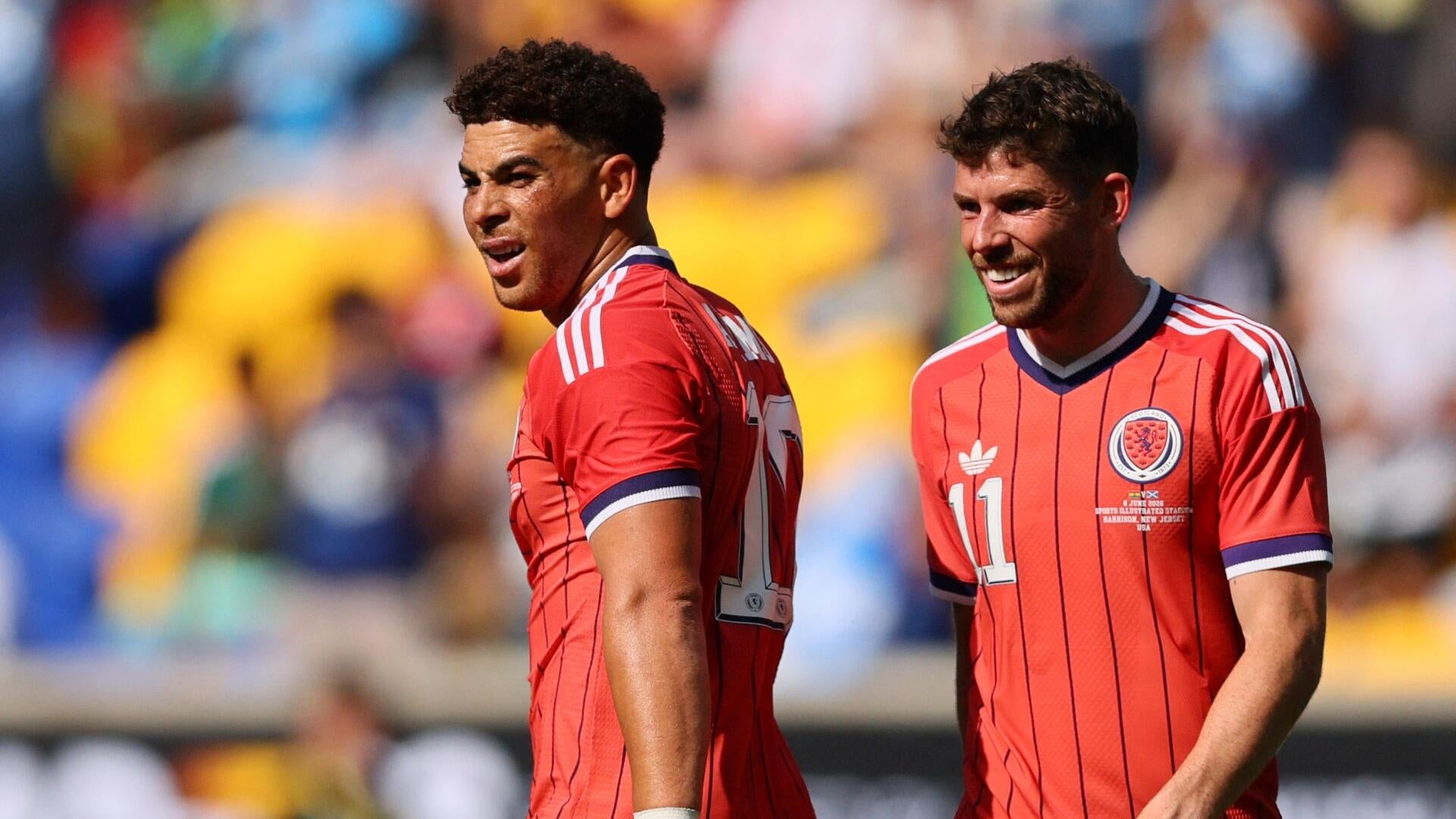
At 23:54 UTC on 13 June 2026, FIFA's official channels confirmed what had been circled on fixture lists for months: Boston Stadium will host its first match of the 2026 World Cup when Haiti and Scotland walk out for what both federations have framed, in identical language, as a "long-awaited return" to the world stage. The post, carried simultaneously by FIFA's verified account and relayed by The Athletic, was spare on detail — kickoff time, broadcast partners, the wider Group C picture — but heavy in symbolism. Two programmes, neither of them seeded, neither of them the centrepiece of anyone's tournament bracket, will be the first to christen a venue built for a 48-team tournament that has, since its award to the United States, Canada and Mexico, been sold as the most expansive World Cup in the competition's history.
For Boston Stadium, a fixture carrying a returning Caribbean side against a returning European side is a soft landing: a sellable, photogenic opener with no obvious geopolitical edge. For the two teams, the stakes could hardly be more lopsided — or more evenly matched, depending on how the next fortnight reads.
Why Boston, and why these two
The choice of opener is partly a logistical courtesy and partly a marketing one. Boston Stadium sits in a market that did not exist as a World Cup host city until this cycle, and a fixture between a CONCACAF returnee and a UEFA returnee gives the host federation two diaspora stories for the price of one. Haiti's qualifying campaign — secured late, in a region dominated on paper by Mexico, the United States and Canada — is the kind of result that FIFA's communications team will lean on heavily for the rest of the tournament: proof that the expanded format genuinely widens the tent, rather than simply adding fixtures.
Scotland's case is more straightforward. The Tartan Army has not been at a men's World Cup since 1998; the squad now assembled has spent the better part of a decade knocking on the door and finding it shut, most painfully in a play-off loss earlier in the cycle. A Boston opener, in a city with a substantial Scottish-heritage footprint, is the sort of fixture the Scottish Football Association would have requested privately if it had been able to.
The underdog frame — and what it leaves out
The "long-awaited return" framing is accurate but incomplete. It treats both teams as happy storylines, which they are, but it papers over the asymmetry between them. Scotland arrives as a UEFA side that failed to qualify for three of the last four men's World Cups; its presence in the United States is a return to a stage it expects, rightly or wrongly, to be on more often. Haiti arrives as a Caribbean federation that has spent the past decade working through federation governance crises, infrastructure damage, and the broader instability that has made even routine travel for the national team a logistical operation. The phrase flattens those into a single narrative.
The dominant Western-wire line on Caribbean football at major tournaments tends to read as uplift: the small federation that qualified, the diaspora in the stands, the photo of the anthem. That framing is not wrong, but it is incomplete. The counter-narrative — present in Caribbean sports press but less visible in the global feed — is that participation itself is the achievement, and that the gap in preparation time, friendlies played, and squad depth between a Haitian side in 2026 and a Scottish side in 2026 is wide enough that the scoreline is, in effect, a secondary story.
The structural shape of a 48-team World Cup
This is the wider frame, and it is the one the FIFA posts do not say out loud. A 48-team World Cup is, by design, a tournament in which matches like Haiti vs Scotland exist. The expansion guarantees that more federations will play more matches at a men's World Cup than ever before, and it also guarantees that a substantial share of those matches will be, on paper, mismatches. The interesting question is not whether the format produces more Haiti-Scotland fixtures — it will produce dozens — but what those fixtures are for. If the answer is tournament-atmosphere colour, the format is doing what FIFA's marketing says it does. If the answer is a genuine competitive pathway, the next two weeks of group play will be the first real test.
Coverage of the tournament's structure has so far deferred to FIFA's own language: a "bigger, more inclusive" World Cup, a tournament that delivers matches to more cities than ever before. That is true. What is less often said, in plain editorial terms, is that the structural pressure on smaller federations does not end with qualification. A 48-team field means more matches, more travel, more recovery windows, and a higher bar for the federations with the smallest professional leagues and the thinnest medical staffs. Boston Stadium will not adjudicate that question. It will, however, be the first place it is asked.
What to watch from Boston
The most concrete near-term stakes are group-stage: the result here, combined with the other Group C fixtures, will shape whether either side can plausibly talk about a round-of-16 run, or whether both are playing for a single competitive performance in a tournament that has already exceeded their baseline expectations. For Haiti, a competitive showing against a European side — even in defeat — is the kind of result that funds the next qualifying cycle's federation budget conversations. For Scotland, anything less than a result will revive the same questions the squad spent half a decade answering.
The honest position is that the source material released so far does not specify kickoff time, broadcast partners, or the wider Group C permutations that would let a reader fully stress-test the opener's stakes. FIFA's post on 13 June confirmed the venue and the framing; the rest of the picture will arrive with the standard pre-match notes in the days before the fixture. Monexus will update as those details harden.
— Monexus Staff Writer. This piece relies on FIFA's official channel posts and The Athletic's relay of them on 13 June 2026; the four Telegram items in the source thread are the only confirmed inputs at time of writing.
Wire provenance
This editorial synthesis draws on the following public wire/social posts:
- https://t.me/FIFAcom
- https://t.me/TheAthletic
- https://t.me/FIFAcom
- https://t.me/TheAthletic