Haiti's World Cup return lands in a Boston that isn't quite ready for the noise
Haiti and Scotland meet in a 2026 World Cup group-stage fixture in Boston, and the city's downtown is now host to two diasporas staging a different kind of contest.
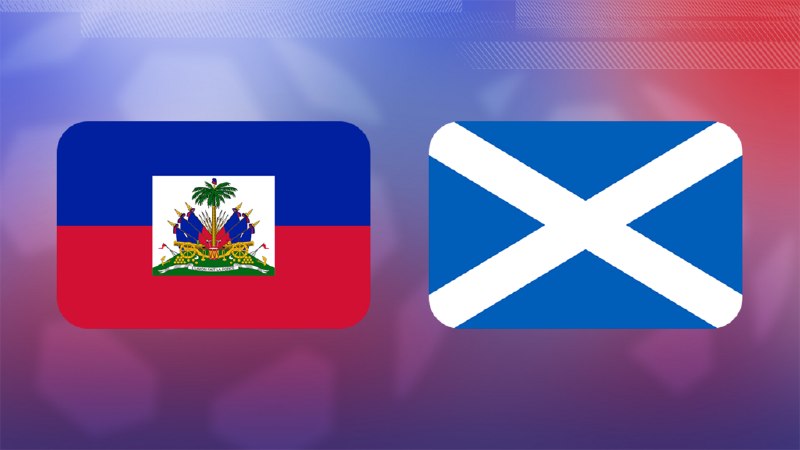
Downtown Boston on 13 June 2026 looked less like an American city on a Saturday night and more like a street carnival in Port-au-Prince that had collided with a Hogmanay ceilidh. Reuters reporters counted Haiti supporters dancing in the streets — drums, horns, a convoy of flags — sharing pavement with the kilts, bagpipes and shortbread tins of Scotland's Tartan Army. The occasion is genuinely historic: this is Haiti's first men's World Cup match since 1974, and the Reuters wire on 13 June noted the team had brought its "Carnival groove" to the city ahead of a fixture that, on paper, is a routine group-stage game.
For all the kitsch — the bagpipes, the whistles, the kits — the matchup is a small window into something larger. The 2026 tournament is the first to be staged across three countries, and the choice of Boston as a host city is also a choice about whose diasporas the United States is willing to absorb in its stadiums. The pitch may belong to the players; the streets belong to the people who paid to be there.
The fixture, plainly
Haiti and Scotland face each other in the group stage of the 2026 FIFA World Cup, with the match staged in Boston. Al Jazeera's preview wire, timestamped 00:03 UTC on 14 June, frames the encounter as "spicy" — a word that undersells what 52 years of World Cup absence does to a national team's fanbase. Reuters' two dispatches from 22:10 UTC and 23:20 UTC on 13 June show both sets of supporters settled into the same downtown corridor, separated by little more than a jersey colour and a different musical tradition.
The Scotland angle is its own story. Reuters reported on 13 June that fans in the Tartan Army openly said they had no qualms about spending thousands of dollars to follow a team back to a World Cup — Scotland's first appearance in the tournament in a generation. That willingness to pay the freight is itself a metric of what this tournament is, commercially: a luxury good, a status item, and a diaspora obligation rolled into one package.
The street as a second pitch
It is worth saying out loud what the wire copy gestures at. The match has not been played, and the eventual result is, from this vantage, a footnote. The newsworthy event is the staging: a Caribbean nation whose domestic politics most American viewers understand as a single, exhausted word — "crisis" — producing a fan contingent loud enough to compete acoustically with one of Europe's most distinctive travelling supporter cultures.
The framing matters because it is unusual. International coverage of Haiti over the past decade has overwhelmingly been a coverage of state collapse, gang violence, and the slow-motion withdrawal of foreign missions. Reuters' two Boston bulletins, by contrast, are full of drums, dancing and the word "groove". That is not a contradiction; it is a more complete picture. A country whose state apparatus is hollowed out can still field a national team, can still send its diaspora to the other end of a continent in jerseys, and can still, on a Boston pavement, sound like the most populous nation on the block.
Who the diaspora belongs to
The Boston angle is not decorative. The city's Haitian community is one of the largest in the United States, and Massachusetts has had Haitian-American elected officials at the state and city level for years. When the Reuters wire describes fans in downtown Boston, it is describing a population that already lives there, greeting a team whose road back to the World Cup has been paid for, in part, by remittances, dual-ticketing families, and Florida-to-Massachusetts bus caravans the wire does not have space to catalogue.
Scotland's claim on the streets is older and more institutional: a generations-deep academic and diasporic link to New England, Scots-Irish heritage layered into the city's working-class neighbourhoods, and a Tartan Army that has turned tournament travel into a small industry. The two crowds, then, are not strangers to each other or to the city. They are simply, for one weekend in June 2026, the loudest versions of themselves.
What to watch on matchday
The on-pitch story is straightforward and worth stating in plain terms. Haiti is playing its first men's World Cup game in 52 years against a Scotland side returning to the tournament after a long absence of its own. Group-stage football in a 48-team format routinely produces upsets; both squads will treat a draw as a foundation and a win as a launchpad. The Reuters reporting from 13 June, and the Al Jazeera preview from 00:03 UTC on 14 June, both underline that the supporters' frame is enjoyment rather than expectation, which is often the more honest read of an opening fixture.
The less obvious story is what the streets do after the whistle. Boston's downtown has coped with a noisy World Cup build-up before, but rarely with two diasporas competing for the same square footage at the same moment. The match will be decided by 22 players; the memory will be decided by the city.
Stakes, and the part that is still uncertain
What the wire actually does not yet contain is any match-preview detail on lineups, injuries, or tactical shape — those will come from the federations closer to kickoff. Nor is there reporting, in the available dispatches, on Haitian Football Federation funding or on which diaspora chapters formally organised the Boston turnout; Reuters and Al Jazeera's coverage, so far, is the celebratory register, not the structural one. A reader who wants the harder story — how Haiti funded a qualification campaign, how the federation is governed, who is on the plane and who stayed home — will have to wait for follow-up reporting.
For now, the news is what is visible: a downtown that has been handed, briefly, to its diaspora crowds. That is a small, repeatable miracle of the World Cup format, and it is happening in Boston on 14 June 2026.
This publication's read: the dominant wire framing for this matchup will be colour-and-odd-couple, and that is fair enough — but the louder fact is that a Haitian men's team is at a World Cup for the first time since 1974, in a city that is already, in demography, partly Haitian. The story is not a curiosity. It is a home fixture wearing a tournament jersey.
Wire provenance
This editorial synthesis draws on the following public wire/social posts:
- https://x.com/reuters/status/2065905049713205248
- https://x.com/reuters/status/2065922888662917120