Haiti returns to the men's World Cup after 52 years — and meets a Scotland side that refuses to go quietly
In Boston on Saturday, Haiti plays its first men's World Cup match since 1974 against a Scotland team back at the tournament for the first time in nearly three decades — a fixture that doubles as a referendum on what a World Cup is actually for.
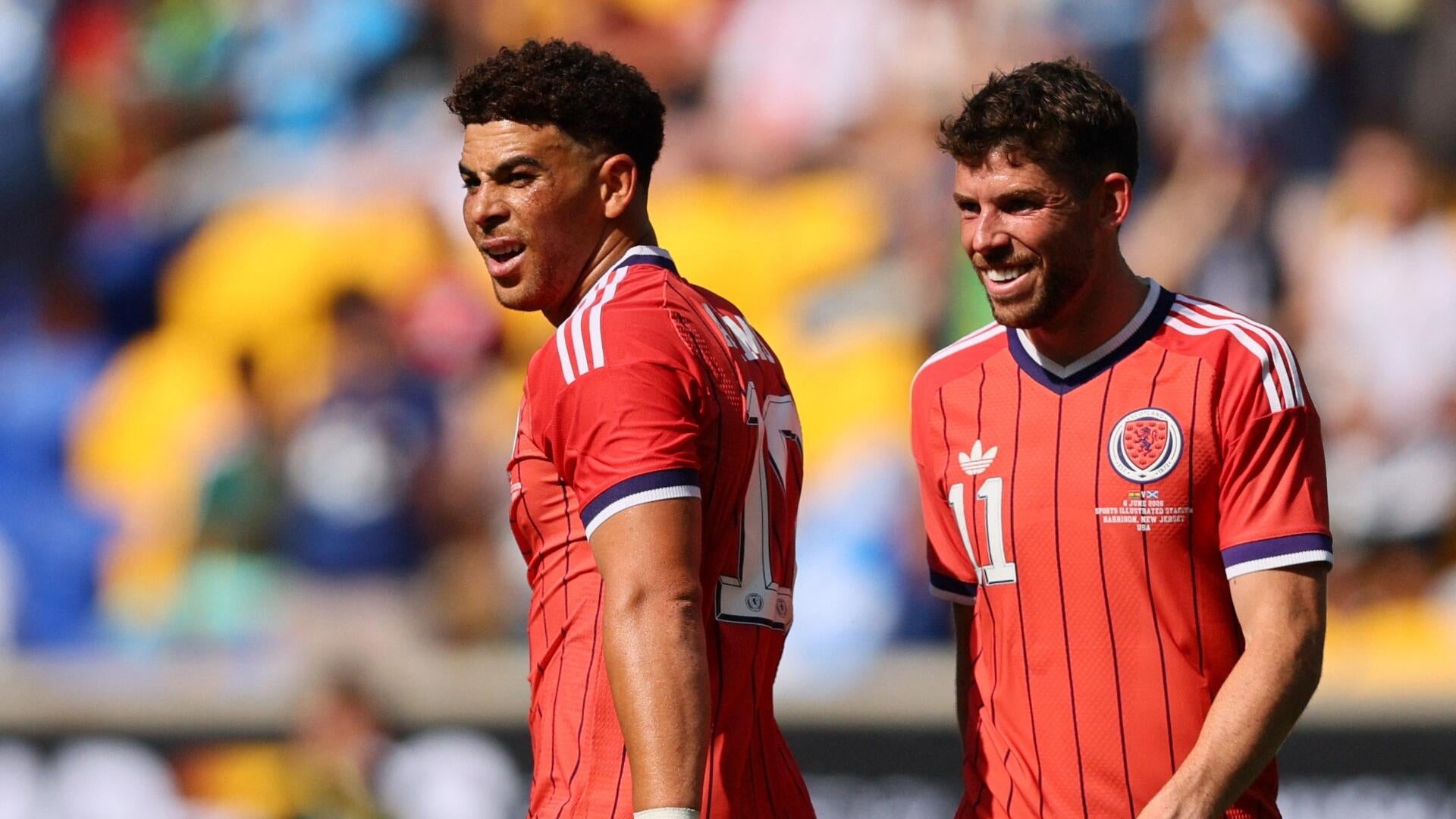
In downtown Boston on Saturday, two fan cultures that have spent the last half-century training in very different conditions will share the same pavement. Haiti, playing its first men's World Cup match in 52 years, faces Scotland, returning to the tournament for the first time since 1998, in a group-stage fixture that has already spilled out of the stadium and into the city. The match kicks off at 23:00 UTC on 14 June 2026, and the colour outside it is half the story.
For Haiti, the occasion is being read less as a sporting return than as a national one. The BBC's reporting from 13 June frames the appearance as "as much about hope as it is goals" for a country that has spent the intervening decades cycling through earthquakes, political collapse, gang warfare and a federal security crisis. For Scotland, the same fixture is the end of a 28-year wait, and the Tartan Army has flown in accordingly. A Reuters correspondent on X described the supporters' pre-match gathering in Boston, where bagpipes competed with the Carnival rhythms travelling with the Haitian fan contingent. The juxtaposition is not subtle: one nation measuring the tournament in survival, the other in supporters' flights.
A debut built on what survives
Haiti's previous men's World Cup appearance came in 1974 in West Germany — a single tournament that nonetheless lodged itself in national memory, partly because it was followed by a half-century of exclusions. Saturday is, in effect, a re-entry. Coverage from Al Jazeera's live coverage strand on 14 June, credited to its breaking-news desk, sets the scene as "a spicy encounter" between Haiti's travelling supporters and Scotland's kilted faithful, both of whom have made Boston an away-day capital for the weekend.
The team's qualification is the kind of fact that tends to get flattened in Western wire copy. The Haitian Football Federation has had to operate through a domestic security environment in which matches at home have, at various points, been moved abroad, and through a diaspora that, in cities like Boston, Miami, Montréal and New York, effectively functions as a parallel talent pipeline. The framing matters because the World Cup is the one FIFA stage where the small-federation problem disappears: the pitch is the same size, the broadcast reaches the same living rooms. On Saturday, the gap that has defined Haitian football for two generations narrows, for 90 minutes, to a scoreboard.
The other comeback
Scotland's wait is, by the same calendar, only 28 years, and it ends with a side drawn into a group that includes Brazil. Saturday is, in that sense, a free swing. The Tartan Army, as Reuters reporting on 13 June notes, gathered in Boston with no apparent anxiety about the cost. Fans quoted by Reuters said they had "no qualms about the thousands of dollars they are spending" to see their team return to the World Cup. It is a particular kind of fandom — the same travelling support that the 1990s generation turned into a tournament sub-genre — and its return is itself part of the broadcast product.
The honest framing here is that Scotland, as a UEFA member with a deep talent base, is closer to its floor than its ceiling. For Haiti, a draw would be a result; for Scotland, anything less than a win is under-performance. The structural asymmetry of the fixture is large, and it is the reason the broader tournament needs a result like this: the World Cup without a Haiti is technically fine, but it is also emptier.
What a World Cup is for
The 2026 tournament is the first to feature 48 teams, an expansion that FIFA has justified, in part, on the argument that it broadens the tent of nations that get a turn on the main stage. The standard critique — that the format dilutes quality — is fair, but it is also the wrong frame. The BBC's piece on Haiti explicitly inverts the standard sports-writing structure: the goals are secondary to the country's ability to send a team at all. That inversion is the actual product. A World Cup in which Scotland can lose gracefully and Brazil can be expected to win is, structurally, a closed shop. A World Cup in which a Haitian squad can step off a bus and onto a pitch in front of a global broadcast is the counter-example.
It is worth naming the counter-narrative. Sceptics of the expansion will point to the gap in resources between a side like Scotland and a side like Haiti, and to the lopsided scorelines the new format can produce. They are not wrong about the competitive product. But the World Cup is also a media property, and the broadcast value of a Haitian national team — for CONCACAF, for the diaspora audience, for advertisers, for the geopolitical soft-power optics FIFA cares about — is real, and it does not require competitive parity to extract. The point of the fixture is not who wins; it is that both teams are on the field at all.
Stakes beyond the scoreboard
The immediate stakes are conventional: three group points, a foothold against a Scotland side that has shown it can be vulnerable against disciplined low blocks, and the small matter of a likely second fixture against a heavier favourite. The longer stakes are about what FIFA's expansion looks like when it has been running for a full cycle: whether the 48-team format produces repeat appearances, whether a side like Haiti can build from this tournament into the next one, and whether the federation infrastructure survives the intervening four years in any usable form. The sources do not specify Haiti's projected squad or any federation-level contingency planning; that is the honest blank space in the public record.
The match, in other words, is the easy part. The harder question — what the Haitian Football Federation and its diaspora partners do with the platform between now and 2030 — will play out off the pitch, in federation offices, in player-pipeline agreements, and in the cost of a security environment at home that currently makes staging a friendly in Port-au-Prince a non-trivial decision. Saturday is a moment. The rest is work.
Desk note: Monexus framed this fixture around the asymmetry of the two comebacks — Haiti's as a national return measured in decades of crisis, Scotland's as a supporters' pilgrimage measured in ticket prices — rather than treating it as a routine group-stage preview. The Western wire line tends to lead with squad news and betting angles; this piece leads with the structural question of what the expanded World Cup is actually for, and what a federation the size of Haiti's gets out of a single appearance.
Wire provenance
This editorial synthesis draws on the following public wire/social posts:
- https://x.com/reuters/status/2065922888662917120
- https://x.com/reuters/status/2065905049713205248