Haiti returns to the World Cup stage — and the wider world finally notices
A 1–0 loss to Scotland in the World Cup opener ended a 52-year absence from the men's finals for Haiti — and reframed a Caribbean nation too often read through crisis.
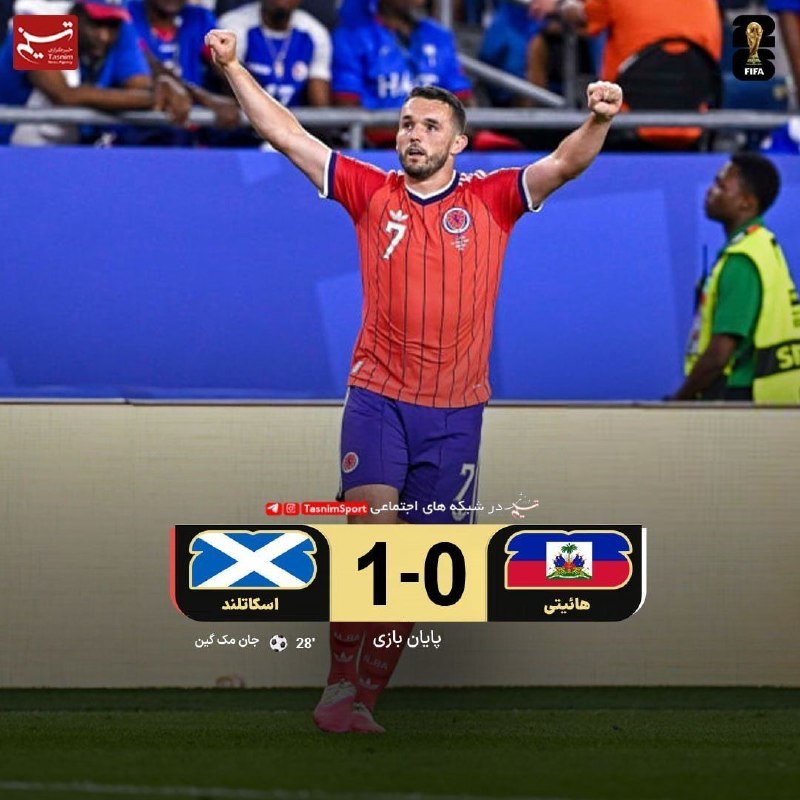
At 01:31 UTC on 14 June 2026, John McGinn's deflected shot looped past the Haiti goalkeeper and Scotland led 1–0 in their opening group fixture of the 2026 World Cup. The match, played in front of a worldwide television audience estimated to run into the hundreds of millions, was the first time Haiti had taken the field at a men's World Cup finals tournament in 52 years. The final score remained 1–0. The occasion, however, was the news.
For a Caribbean nation of roughly 11 million people whose sporting headlines have, for the better part of two decades, been eclipsed by gang violence, political collapse and a humanitarian emergency, the simple fact of appearing on the game's biggest stage is itself a national statement. That Scotland, not Haiti, took the three points is a footnote. That Haiti competed at all is the story.
A long road back, measured in qualifying rounds and a narrow survival
Haiti's qualification route was as narrow as it was improbable. The squad had to navigate a multi-round CONCACAF qualifying campaign against opponents with deeper talent pools and, in most cases, professionalised domestic leagues — Costa Rica, Honduras, Jamaica, Curaçao among them. The Haitians did so on the back of a diaspora-driven player base: a roster largely composed of French-born or French-raised players of Haitian descent, most of them on the books of Ligue 1, Ligue 2 and Belgian top-flight clubs.
That structural fact matters. The talent pipeline that delivered Haiti back to the World Cup is, in effect, a French-and-Belgian industrial product, not a Haitian federation one. It is a reminder that Caribbean football's competitive ceiling is set less by what happens inside the islands than by the migration corridors that move Caribbean players — and Caribbean aspirations — into European academies. When Reuters framed the occasion as Haiti "picking up the beat" after a 52-year absence, the framing captured the cultural weight of the moment without fully registering the political economy that produced the squad.
The 52-year absence — and the politics of who gets remembered
The last time Haiti appeared at a men's World Cup was 1974, in West Germany. The intervening half-century swallowed multiple Haitian regimes, two foreign interventions, a presidential assassination, an earthquake that killed an estimated 200,000 to 300,000 people and a gang insurgency that has, since 2024, left much of the capital Port-au-Prince outside effective state control. A generation of Haitian sportswriters, musicians and fans spent their entire adult lives watching the World Cup from afar.
That absence has rarely been treated as a story in itself. Global coverage of Haiti over the past two decades has, with consistency, been crisis-framed: humanitarian, security, migration. Reporting on the national football team has, when it has appeared, tended toward two registers — tragedy ("Haiti, despite everything") or absence. The 2026 qualification, and the opening fixture against Scotland, marks the first sustained window in which the country's sporting life has been treated by major outlets as the lead rather than the colour.
TeleSUR English's running coverage, with its goal-by-goal updates from the match, illustrates the regional angle: for a Latin American and Caribbean audience, the result matters but the appearance is the headline. The framing there is participatory — Haiti is not a recipient of pity but a protagonist in a tournament.
A deflected goal, and the small mercies of tournament football
The match itself was tight. McGinn's opener, a shot that took a deflection off a Haitian defender and lifted over the goalkeeper, was the kind of goal that, in tournament football, often decides tight games between unevenly resourced sides. Al Jazeera's match report described the result as marking a "winning return to the World Cup" for Scotland, the Scots' first finals victory since 1990. France 24's account noted the goal came as Scotland "grew into the match" after a bright Haitian start — a small detail that contradicts any narrative of routine Scottish dominance.
TeleSUR's live updates captured the match's two principal Scottish chances to extend the lead, both falling to McGinn — a second-half effort inside the box that drifted just wide of the right post. The same updates show Haiti defending, compressing, and forcing Scotland to settle. For the Haitian side, the 1–0 scoreline understates the competitiveness of the performance. For Scotland, it underlines a familiar problem: the ability to win tight games without ever seeming entirely comfortable.
What this means for the tournament, and for how the world sees Haiti
The structural read is uncomfortable for a global media environment that has, for two decades, treated Haiti primarily as a humanitarian file. A World Cup appearance does not solve the gang crisis, the displacement of an estimated 600,000 people inside Haiti, or the chronic under-resourcing of the country's football federation. It does, however, rebalance the available imagery: from collapsed buildings and burning cars to a national team in a competitive match on a globally broadcast stage.
The stakes for the group are concrete. Haiti still has fixtures ahead in Group A; how those play out will determine whether the 1–0 against Scotland reads, in hindsight, as a respectable opening or as the match that defined the campaign. For Scotland, the three points are a foundation — but the performance, and the sense that a more clinical opponent might have punished the spaces McGinn exploited, will dominate the post-match debate in Glasgow and Edinburgh.
A few things remain genuinely uncertain. The sources do not specify the stadium, the attendance, or the exact kickoff time of the match — all of which are likely to be confirmed in fuller match reports through the day. The composition of the Haitian squad, beyond the broad observation that it is diaspora-heavy, is not detailed in the source material; readers seeking a deeper tactical read will need to wait for federation announcements and outlet follow-ups. And the wider question — what a 2026 World Cup appearance actually changes for Haitian football infrastructure, or for global attention to the country once the tournament ends — has no answer in a scoreline.
For now, the record stands: Haiti played, Scotland won, and a 52-year absence ended in front of the world.
This publication framed the occasion as Haiti's return rather than Scotland's victory — reversing the editorial default that has, for two decades, treated the country as a humanitarian file rather than a sporting nation.
Wire provenance
This editorial synthesis draws on the following public wire/social posts:
- http://reut.rs/3RYpmSK
- http://reut.rs/3RYpmSK
- https://twitter.com/telesurenglish/status/2066000219645304832
- https://twitter.com/telesurenglish/status/2066000000000000000