Clubmates at PSG, captains at the World Cup: Hakimi and Marquinhos meet in a Brazil–Morocco group stage
The two players who lifted the Champions League together in Munich will lead rival squads in the United States this summer, a fixture FIFA itself flagged as the tournament's headline captaincy clash.
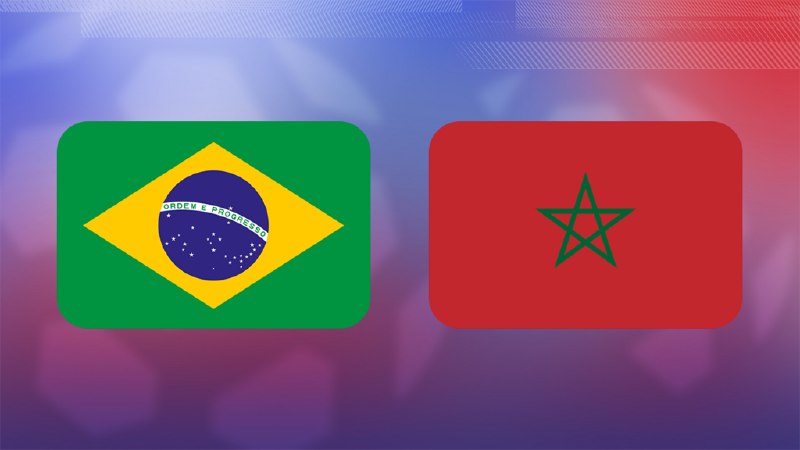
On 13 June 2026, FIFA's official channel posted a single line that read like a script: Champions League winning teammates Achraf Hakimi and Marquinhos will captain their countries against each other at the 2026 World Cup. The Athletic relayed the same framing hours later. The image was almost too clean — two defenders who shared a back line at Paris Saint-Germain all spring, now asked to lead rival dressing rooms in the United States this summer.
It is the kind of storyline the tournament's organisers will lean on, but the substance underneath it is the more interesting story. Both men are 27, both are at peak market value, and both have already taken their national teams deeper into major tournaments than their predecessors managed in a generation. Morocco reached the 2022 semi-finals in Qatar; Brazil are the only team to have appeared at every World Cup. The group-stage meeting, scheduled in the United States, will be their first competitive fixture as opposing captains.
The road to the armband
Hakimi inherited Morocco's captaincy in 2022 and has worn it through the run that took the Atlas Lions past Spain and Portugal before a narrow defeat to France. He plays right-back for PSG and was, by most statistical services, among the most decisive attacking full-backs in Europe last season. Marquinhos, a centre-back and the longer-serving of the two in Paris, took Brazil's armband in 2023 and has led the Seleção through World Cup qualifying unbeaten at the top of the CONMEBOL table.
That parallel — club-mates who became captains in the same calendar year — is what the FIFA post leaned on. The Athletic's version of the same wire used almost identical language, suggesting the framing originated with the governing body rather than with a club or national federation. The match itself is part of Group C in the 2026 schedule released by FIFA, and the two federations confirmed the kick-off time and venue separately through their own channels earlier in 2026.
What the wire is and is not saying
The dominant read is simple and friendly: club-mates against each other, a footballing fairy tale. The Athletic's reposting of the FIFA line, without an original reporting layer, is the kind of pass-through that the sports pages have always done for governing-body content. It carries no information the federation did not choose to release. Readers looking for tactical analysis, formation choices, or injury news will not find it in the source material currently available.
The plausible counter-read is less romantic. International breaks are short, and the two players will have roughly a week to switch from sharing a dressing room to scouting each other's habits on set-pieces and transitions. For both national-team coaching staffs, the data their own player brings home — Hakimi on Marquinhos, Marquinhos on Hakimi — is itself an asset. The fixture, in that sense, is also a transfer of institutional knowledge between two elite footballing projects, mediated by the two men who happen to know both sets of players best.
A bigger picture, told in the plain language of the game
The 2026 tournament is the first to feature 48 teams and is being staged across the United States, Canada and Mexico. For Morocco, the group-stage meeting with Brazil is the highest-profile match on the schedule, and the federation has built the run-up around the players who delivered in 2022. For Brazil, the fixture is a stress test of a squad in transition under a new cycle. The captaincy question — formally settled in Marquinhos's favour — is a proxy for the federation's preference for experience in a young squad.
There is also a structural point. The two players represent, more clearly than most, the multi-club labour market that the modern Champions League has become. A Moroccan defender raised in Madrid, polished at Borussia Dortmund and Inter, and now starring in Paris; a Brazilian centre-back who came through Roma and arrived in the French capital as a teenager. Their pairing in Paris was already a small monument to the globalised scouting networks of European football. Their meeting in the United States this summer is the same story, told from the other side of the touchline.
What remains uncertain
The sources do not specify the kick-off time, the host city, or the broadcast partners in any detail beyond what FIFA has already published. They do not address selection questions, injuries, or form dips. They do not say which of the two captains will be marked man-to-man in set-piece situations, though both are likely starters. And the romantic framing — the same two men, the same back line, opposite sides — assumes that the footballing data does not intrude on the narrative. In practice, both coaching staffs will be preparing for a competitive fixture, and the press conferences in the days before the match will tell us more about how each camp plans to use the inside knowledge than the federations' social posts do now.
How Monexus framed this: the wire pushed a feel-good line; we kept the romance but added the structural read — a fixture that is also a transfer of institutional knowledge between two elite national-team projects, mediated by the two men who know both dressing rooms.
Wire provenance
This editorial synthesis draws on the following public wire/social posts:
- https://t.me/FIFAcom
- https://t.me/TheAthletic
- https://en.wikipedia.org/wiki/Achraf_Hakimi
- https://en.wikipedia.org/wiki/Marquinhos