Hezbollah claims southern Lebanon strikes as Israel weighs Iran deal
Hezbollah says it ambushed Israeli forces near Blat and released footage of a missile strike; Israel continues operations in south Lebanon even as a deal with Tehran is reportedly close.
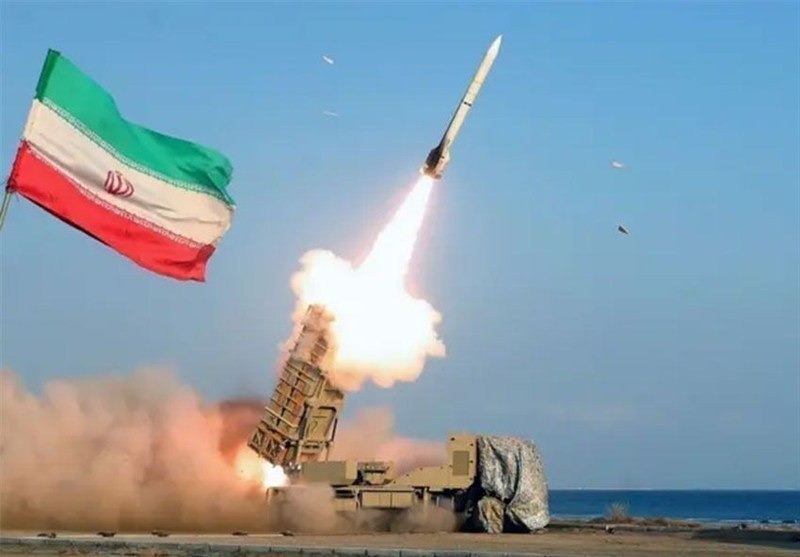
Hezbollah's media arm on 14 June 2026 released footage claiming to show fighters targeting what it described as a newly established Israeli site in Blat, a village in the contested border district of south Lebanon, with a sophisticated missile fired on 28 May 2026. The clip, circulated by the @wfwitness Telegram channel at 08:45 UTC, is the latest in a months-long drip of Hezbollah combat footage aimed at audiences on both sides of the Litani line, and it lands against an unusual backdrop: Israeli operations in Lebanon are continuing even as leaks from Washington suggest a wider deal with Tehran is close.
The footage is a single data point in a far more layered battlefield. On 14 June, Hezbollah said its fighters had confronted Israeli infiltration attempts along several axes in the south, launching ambushes, rocket barrages and drone attacks; the framing, carried by outlets sympathetic to the group, is one of patient, attritional pressure on Israeli ground forces. The counter-framing from the Israeli military, which this publication has covered repeatedly, is that the operations are deliberate and limited, designed to push Hezbollah north of the Litani and to dismantle tunnel and launcher infrastructure in the border strip. Both stories are partly true at the same time, and the 14 June footage is best read as propaganda and operational fact intertwined.
What the 14 June footage shows
The clip attributed to Hezbollah documents a single strike on a fortified position, with a launch tube, warhead and a tail of dust cutting back across a wooded valley. The technical details of the missile — a guided, anti-fortification munition rather than a simple Katyusha or barrage rocket — are consistent with the guided-projectile inventory Hezbollah has been accused by Israel and UNIFIL of assembling since 2024. The strike date, 28 May 2026, suggests the footage was held back for roughly two and a half weeks before release, a long delay by the standards of an active front. That delay matters: in the Hezbollah media ecosystem, timing is message, and 14 June is the day Washington is closest to a deal with Iran that the group's patrons have spent more than a year resisting.
The geography also matters. Blat sits in a cluster of villages along the eastern sector of the Israel-Lebanon border, an area that has seen repeated Israeli demolition of outposts and Hezbollah counter-claims of repelling incursions. The footage's claim that the target was a "newly established" site fits a pattern: Israel has, in the past year, repeatedly created new forward positions inside Lebanese territory while arguing they are temporary and defensive. Whether the site in question is best described as an observation post, a staging area for ground raids, or a civil-military coordination point is not specified in the Hezbollah material, and Israeli spokespeople had not, as of 14 June, commented on the specific claim at the unit identified.
The battlefield picture from Lebanon's side
Outlets sympathetic to the axis have built a steady drumbeat around the idea of an Israeli "kill zone" along the border, with Hezbollah's south Lebanon command portrayed as laying ambushes for Israeli platoons that cross the line. The 14 June bulletin from Palestine Chronicle, picking up a Hezbollah statement, repeats the formula: rocket fire, drone strikes, anti-tank teams, and ambushes of "infiltration attempts." It is worth taking the operational claims seriously as claims even when their scale is disputed. A daily cadence of small-unit engagements is consistent with the deployment pattern of Israeli brigades in the border sector, and with the persistent pressure Hezbollah has applied with anti-tank missiles and loitering munitions throughout the post-ceasefire period.
What is more contestable is the implicit framing that the Israeli operation is being held or pushed back by Hezbollah fire. Israeli forces have continued to operate in the south throughout 2026, have demolished structures in the border zone, and have carried out airstrikes against what the IDF says are launch teams and weapons stores. Reporting from Western wire services over recent months has generally backed the Israeli framing that the operational initiative remains with the IDF, even if the cost in soldiers' lives has been higher than the public messaging suggests. The Hezbollah footage should be read, then, as a piece of the picture rather than as evidence of a turning tide.
The deal that isn't quite a deal
The single most important variable for the south Lebanon front sits in Vienna, Geneva, or whichever hotel ballroom is hosting the current round of US-Iran talks. Middle East Eye reported on 14 June, in a live blog carried at 08:15 UTC, that Israeli attacks in Lebanon were continuing "despite reports of nearing Iran deal." The phrasing is telling: the deal is not announced, but the directional signal from Washington is strong enough that regional actors are already positioning for a post-deal environment. The core bargain, as understood from public reporting and from accounts of previous rounds, would see Tehran cap enrichment levels and stockpile sizes in exchange for sanctions relief and a freeze on some of the more aggressive covert activity attributed to its regional proxies.
Hezbollah's strategic position in that scenario is uncomfortable. The group has spent two decades positioning itself as Iran's forward air defence in the Levant. A deal that constrains Iran's nuclear programme while leaving its proxy network intact would, on paper, vindicate the group's investment in the "ring of fire" model. A deal that includes — or is followed by — quiet pressure on the proxy network would do the opposite. The 14 June footage can be read as Hezbollah's way of ensuring its relevance is visible in real time: a reminder to whoever is signing in Washington that the south Lebanon front is not a costless variable.
Counter-narrative and the limits of the footage
The structural reading of the footage is that it is a product of a media environment in which Hezbollah communicates primarily through short, well-produced clips with delayed release, and in which Israeli operations are documented by the IDF and by regional wire services with very different selection criteria. Both sides issue claims; the verification has to be done downstream by outlets that can place footage against satellite imagery, against geolocated strike damage, and against the casualty figures published by local hospitals and the IDF. This publication has not, on the basis of the available material, been able to confirm the specific damage at Blat claimed in the 14 June clip. The blast pattern shown in the footage is consistent with a hit on a soft target rather than a hardened bunker, which would, if corroborated, suggest the Israeli position was less fortified than Hezbollah's description implies.
It is also worth flagging what the source set does not contain. There is no Israeli military briefing in the 14 June thread that addresses the Blat footage directly, and no independent wire confirmation of the strike's date or outcome beyond the Hezbollah-aligned channels. Casualty figures — Israeli, Hezbollah, or civilian — are absent from the publicly available 14 June material. The release, in other words, is one claim of one event, weaponised for a specific diplomatic moment, and a reader should treat it as that.
Stakes over the next 30 to 60 days
Three trajectories are live, and they pull in different directions. First, the diplomacy: if a US-Iran deal is announced, the south Lebanon front will not silence itself on day one, but the financial and political bandwidth of the Hezbollah-Iran axis will be partially redirected towards the political fight over how the deal is interpreted. That is a slow shift, not a sudden one. Second, the operational front: Israeli commanders have, in past statements, indicated that the south Lebanon operation will continue regardless of the diplomatic track, and the 14 June reporting suggests they mean it. Third, the domestic Israeli context: any deal that leaves Hezbollah with a reconstituted rocket and drone force in the north will be politically explosive, and it will strengthen voices in the security cabinet calling for a deeper, longer operation.
The most plausible near-term outcome is a continuation of the current pattern: small-scale, daily engagements in the south, punctuated by more dramatic footage releases at moments of diplomatic inflection. The Blat clip is, on this reading, the first shot of the post-deal information war, even if the deal itself is not yet done. It is a reminder that, on this front, footage and fire are both forms of bargaining.
This article is published on the MENA desk. Where mainstream Western wires have led with the diplomatic track, Monexus has paired that with the operational record on the ground, and has flagged where source material allows only a partial reconstruction of the 28 May strike at Blat.
Wire provenance
This editorial synthesis draws on the following public wire/social posts:
- https://t.me/wfwitness
- https://t.me/s/wfwitness
- https://t.me/s/PalestineChronicle