Iran wraps 2026 Hajj return as 93% of pilgrims reach home
Tehran's Hajj organisation says 93% of Iranian pilgrims were back home by mid-June, with the airlift into its final stage — a logistical milestone that also doubles as a quiet diplomatic readout.
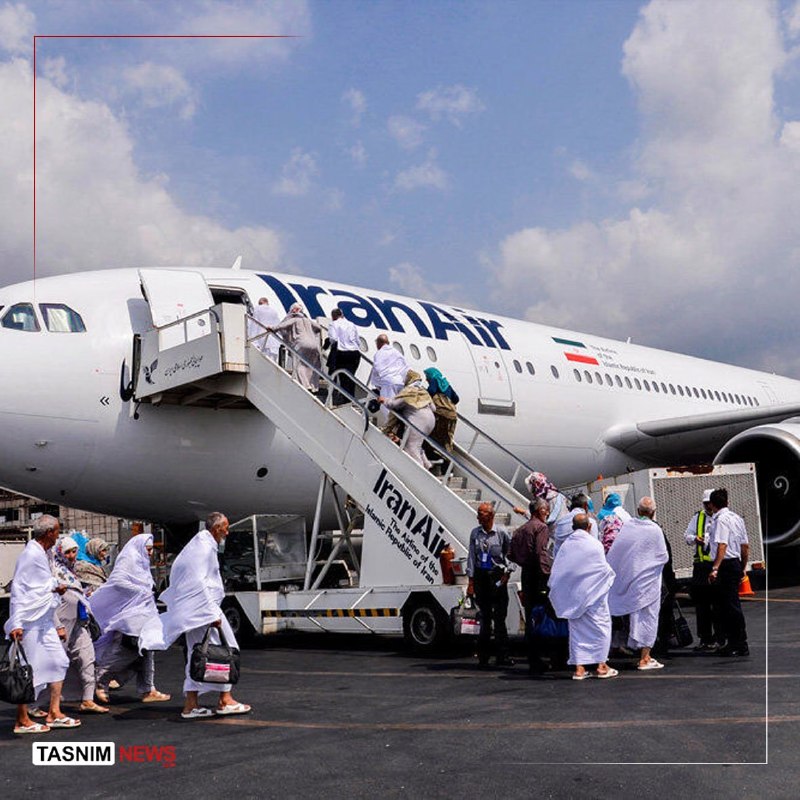
Iran's Hajj and Pilgrimage Organisation told state media on 14 June 2026 that 93% of Iranian pilgrims had already returned to the country, with the final repatriation flights entering their closing days. The figure, delivered by the head of the organisation and carried simultaneously by Tasnim, Fars, and Al Alam, frames the 2026 season as effectively complete on the Iranian side more than a week before the operation's nominal end-date of 23 June.
The number is a logistics claim first and a political signal second. But Hajj operations between Iran and Saudi Arabia have not been simple logistics for the better part of a decade, and the read on what 93% means depends on which of two clocks a reader is watching.
What the agencies actually said
The statement was unusually coordinated. Tasnim's English wire carried it at 02:23 UTC on 14 June 2026, citing the head of the Hajj and Pilgrimage Organisation and giving 23 June as the cut-off for the full return window. Fars picked it up four minutes later, attributing the same figure to the head of the Hajj Ministry Organisation. Al Alam, the Iranian-aligned Arabic channel, ran the item as breaking news in two pushes at 02:35 UTC and 04:03 UTC, framing 93% as the count of pilgrims back "by the end of 13 June" rather than by 23 June — a date discrepancy worth flagging rather than smoothing over.
A later Tasnim update at 05:08 UTC restated the headline with a slightly different window — "by the end of June 23, 93% of Iranian pilgrims have returned" — which, read against the earlier Al Alam line, suggests the 93% figure is being held forward as a projection to the season's close, not a snapshot of arrivals already on Iranian soil. The official figures in Iranian state-aligned coverage and the operational reality on the ground are not always the same number, and the Hajj season is precisely the kind of high-prestige, high-visibility event where Tehran has political reasons to round up rather than down.
The diplomatic clock behind the logistical one
The logistical milestone sits inside a longer diplomatic sequence. Saudi Arabia and Iran agreed in March 2023, under Chinese-brokered auspices, to restore diplomatic relations after a seven-year break. Practical effects took time: the re-opening of embassies, the resumption of direct flights, and — most consequential for this season — the negotiation of pilgrimage quotas and visa arrangements through the Saudi Ministry of Hajj and Umrah. Iranian participation in Hajj had effectively been frozen in 2016 after tensions over the Mina crush and disputes over consular access; the gradual thaw has been one of the more concrete deliverables of the rapprochement, and a useful barometer of where the relationship stands in any given year.
The 93% return figure therefore functions as a quiet readout. It tells Iranian audiences that the logistics worked: pilgrims flew out, performed the rites, and came home on schedule, without the consular frictions that have disrupted past seasons. It tells Saudi counterparts that Tehran is publicly satisfied enough with arrangements not to pick a fight over the count. The fact that the announcement was packaged through Tasnim, Fars, and Al Alam together — rather than confined to a single outlet — suggests an attempt to lock in a unified message before any other actor (pilgrims' families, opposition voices, regional media) could contest the headline number.
What is harder to read from the thread
Two things the source material does not give us. The first is the absolute size of Iran's 2026 Hajj contingent. Iranian state-aligned coverage has in past seasons placed the figure in the tens of thousands, but the thread items do not name a total. The second is a Saudi-side confirmation or rebuttal. The Saudi Ministry of Hajj and Umrah, and Saudi state media such as SPA and Al Ekhbariya, do not appear in the available wire. A bilateral readout — Riyadh's Hajj ministry saying that X pilgrims were processed, or the Saudi Press Agency publishing a Saudi-Iranian coordination note — would be the standard way for an independent observer to cross-check the 93% claim. That confirmation is absent from the items at hand.
The discrepancy between the "by the end of 13 June" framing in Al Alam and the "by the end of 23 June" framing in Tasnim is small but not trivial. If 93% is a snapshot already achieved, the season is essentially over for Iranian purposes. If it is a projection to 23 June, the operation still has runway and the headline is doing future-tense work in present-tense clothing. The wire does not resolve this, and a careful reader should hold the figure as a directional indicator rather than a hard count.
Why the figure matters beyond the pilgrimage
Hajj logistics are one of the few annual events that force Tehran and Riyadh to coordinate at the operational level regardless of the political weather. The visas, the carrier slots, the medical missions, the consular protections for Iranian nationals in Saudi territory — none of that survives a serious bilateral breakdown. The 2026 season has not produced any of the visible crises that marked the 2016 freeze or the disruptions of the early 2020s, and Iranian state media's choice to lead the day with a return-home headline, rather than with complaints about quotas or access, is itself a signal that the working-level relationship is holding.
The structural picture is straightforward. Iran-Saudi normalisation, brokered by Beijing and consolidated through subsequent diplomatic traffic, has converted a once-frozen religious corridor into a manageable annual operation. The 93% return figure is the kind of bread-and-butter announcement that pilgrimage authorities issue every year — but in the Iranian-Saudi context, it is also a small piece of evidence that the diplomatic architecture built in 2023 is still doing the work it was designed to do. Whether it survives the next regional shock is a separate question; for the moment, the planes are landing on schedule and the head of the Hajj organisation is being quoted in three outlets at once.
Forward view
The 23 June cut-off will be the next testable milestone. If the 93% figure is a projection, the actual return number — released when the operation formally closes — will either confirm it or quietly revise it. A second-order question is whether Tehran uses the close of the season to make any political demand of Riyadh: a quota increase, a consular arrangement, a bilateral statement. In past post-Hajj windows, the Iranian foreign ministry has used the operational calm to push for incremental gains. Whether that pattern repeats in 2026 is the read worth watching in the next two weeks.
This publication framed the 2026 Hajj return as a logistics milestone with a diplomatic subtext, rather than treating the 93% figure as a stand-alone statistic. The wire carries the claim from Iranian state-aligned outlets only; a Saudi-side confirmation was not available in the source thread and has not been inferred.
Wire provenance
This editorial synthesis draws on the following public wire/social posts:
- https://t.me/tasnimnews_en/
- https://t.me/alalamarabic/
- https://t.me/alalamarabic/
- https://t.me/tasnimnews_en/
- https://t.me/farsna/