Tehran's stadium chants and a White House memo: the strange choreography of a US–Iran deal week
As Washington's envoys draft a memorandum of understanding, Tehran's football faithful are asked to declare, on cue, that they will die for the country. The gap between the two scripts is the story.
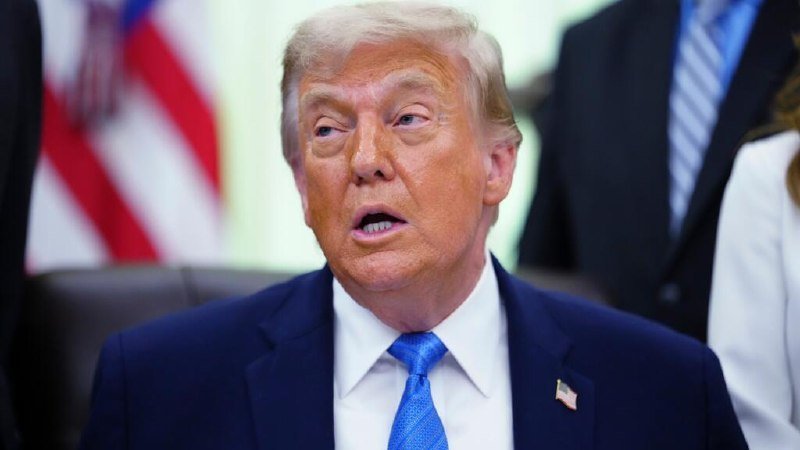
On 14 June 2026, the official news agency of the Islamic Republic published footage of the head of Iran's football federation standing alongside the national team, the camera held steady as the group chanted, in unison, I will die for Iran. The clip, circulated by @Mehrnews on Telegram at 04:43 UTC, is short, choreographed, and unmistakably political [mehrnews.com]. The same weekend, the United States is preparing to sign a memorandum of understanding with the very state whose citizens are being rallied, in a stadium, behind a martial slogan. Donald Trump announced the planned signing on 13 June at 17:34 UTC, per @Polymarket; his administration told reporters on 12 June that a deal was likely in the coming days but not "100%" certain, and that the document could be finalised over the weekend or by Monday, according to @UnusualWhales citing Axios [x.com/polymarket; x.com/unusual_whales]. Two scripts, one country, one weekend. The gap between them is the story.
The choreography is the point. Stadiums in the Islamic Republic have, for two decades, been sites of managed patriotic performance, occasionally punctuated by genuine outburst (the 2018 World Cup is the obvious reference). The 14 June footage has the texture of the former: federation officials, players in training kit, the anthem of loyalty delivered in a way that reads less as spontaneous devotion and more as a pre-staged reassurance, aimed upward, at a leadership that is simultaneously selling a deal to a Western adversary. Iranian state-aligned outlets are sending a signal to the street: the deal is not capitulation, the nation remains mobilised, the slogans are unchanged. It is the ritual preparation of a public for news it has not yet been invited to read.
Consider the timing against the diplomatic calendar. The Axios reporting, surfaced via @UnusualWhales at 18:37 UTC on 12 June, put the weekend of 13–15 June inside the window for a memorandum. The Polymarket-flagged announcement the following day, at 17:34 UTC on 13 June, narrowed it: tomorrow. By the time the Mehr footage lands in the channel, the deal is not yet signed, but it is imminent enough that Tehran's information managers see value in pre-loading the domestic frame. There is, in other words, a sequencing problem for any outside observer who treats the stadium chant and the White House memo as two separate stories. They are the same story, told to two audiences at once.
What is actually in the memorandum is the part that remains genuinely opaque. Public statements so far confirm only that a document exists, is in final drafting, and will be signed "in coming days" per the administration's own caveat [x.com/unusual_whales]. Iranian state media, in the items available to this publication, have not yet published the text. Western wires have not been given an on-the-record read-out of the nuclear, sanctions, or hostage components — the three baskets any prior US–Iran negotiation has been forced to address. The gap between the confident announcement that a deal will be signed and the absence of any disclosed substance is the most consequential uncertainty of the week. Until the text is in hand, the word deal is doing the work normally done by the deal itself.
A serious read of the counter-narrative has to be offered. From Tehran's side, a framework that caps enrichment, lifts a portion of sanctions, and releases frozen assets is being sold to a domestic audience that has paid for the programme in sanctions-borne cost. The stadium footage is then intelligible as a defensive ritual, not an aggressive one: the leadership is demonstrating, to its own base, that the slogan book has not been revised. From Washington's side, a memorandum is a memorandum and not a treaty: it is reversible, light on legal obligation, and well suited to an administration that wants a deliverable without a Senate fight. Both framings can be true, and the fact that they are operating in parallel is itself the structural feature of this kind of negotiation. The harder question — whether the document will constrain enrichment or merely defer disagreement — is one no source in the present thread is positioned to answer.
The structural pattern is familiar: a great-power negotiation conducted through leak, schedule, and spectacle, in which the populations on either side receive their respective cues at carefully chosen moments. Coverage in the Western press has tended to track the schedule (signing, postponement, the next signing) as if it were the story. Coverage in Iranian state media has tracked the ritual (the chant, the slogan, the photo) as if the schedule were a footnote. Each side is performing for its own audience and reading the other side's performance as if it were policy. The week of 14 June 2026 is a near-textbook instance: a memorandum imminent, a stadium choreographed, and the public on both sides invited to feel something other than the actual text, which has not yet been made legible.
What remains uncertain, and what this publication will be watching as the text (if published) becomes available: the operative definition of enrichment capacity, the scope and sequencing of sanctions relief, the status of any detained nationals on either side, and the verification architecture. Until those four items are in writing, the deal of 14 June is a date on a calendar attached to a slogan in a stadium. The schedule is real. The substance is not yet visible. Monexus will treat the document itself, when it appears, as the lead — not the choreography around it.
Desk note: Monexus framed the football-federation footage and the Trump-administration memorandum as one story rather than two, in line with the sequencing visible in the source material. The Western-wire line on Iran deals tends to anchor on the signing date; the Iranian-state line tends to anchor on the mobilisation frame. Both are kept in the piece, in proportion, before a judgment is offered on what remains unverified.