Iran's Hajj 2026 return operation nears completion as 93% of pilgrims repatriated
Tehran's Hajj and Pilgrimage Organisation says 93% of Iranian pilgrims are home by 13 June, closing a season that opened under acute regional strain and renewed Saudi-Iranian diplomatic friction.
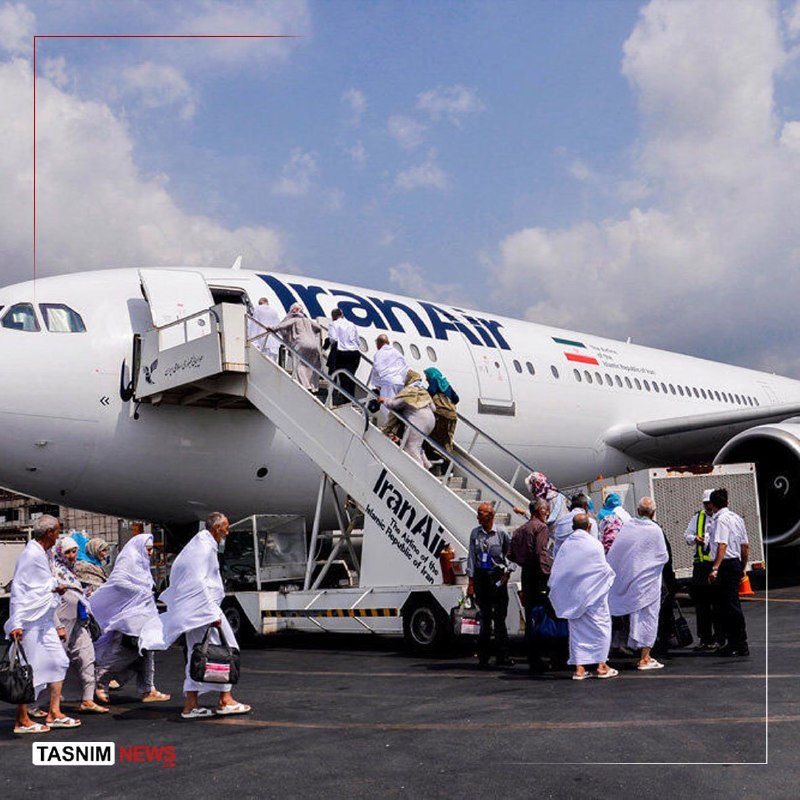
Iran's annual Hajj repatriation campaign is entering its final hours. By the close of 13 June 2026, the head of Iran's Hajj and Pilgrimage Organisation said 93% of Iranian pilgrims had returned to the country, with the residual transport operation now in its closing stages. The figure, carried simultaneously by Iranian state-linked outlets in the early hours of 14 June UTC, marks the operational end of a logistics exercise that began in late May and was conducted against a tense regional backdrop that has defined Iran's participation in the Hajj for the better part of a decade.
The number is, on its face, administrative rather than geopolitical. It is also a reminder that the Hajj is one of the few institutional venues in which Iran and Saudi Arabia are obliged to cooperate regardless of the state of bilateral relations — and that the machinery of cooperation is, in 2026, more functional than at almost any point since 2016.
The repatriation figures
The 93% figure was published in near-identical wording across three Iranian state-linked channels in the space of roughly forty minutes on 14 June. Al-Alam Arabic ran it at 02:35 UTC, citing the head of the Iranian Hajj and Visitation Organisation; Tasnim News English carried the same line at 02:23 UTC; and Fars News, the outlet affiliated with Iran's Islamic Revolutionary Guard Corps, posted its version at 02:19 UTC. The convergence of language, time, and headline framing is itself a piece of the story: in Tehran's information ecosystem, the Hajj return is treated as a coordinated messaging event, not merely a transport bulletin.
The official line, as restated across the three outlets, is that the transport operation is in its "final stages" and that the residual 7% of pilgrims are accounted for in the standard late-return cohort — pilgrims who extend stays for medical, family, or logistical reasons, a category that has existed in every recent Hajj season.
What the season opened against
The 2026 Hajj took place in a region that has, since October 2023, been operating under the open wound of the Gaza war and the wider Iran-axis confrontation with Israel. Saudi Arabia's hosting of the pilgrimage has, for Iranian officials, long been a matter of sovereign dignity as much as religious obligation. The bilateral relationship was effectively frozen from January 2016, when Saudi Arabia executed the Shia cleric Nimr al-Nimr and Iranian protesters stormed the Saudi consulate in Mashhad. A Chinese-brokered restoration of relations was announced in March 2023, and the 2024 and 2025 seasons were the first in which Iranian pilgrims travelled to the Kingdom in significant numbers under the restored framework.
The 2026 season therefore arrived as a test of whether the restoration had matured into routine. The early reporting from Saudi authorities indicated a quota of roughly 88,000 Iranian pilgrims, broadly consistent with the post-2023 envelope. The Iranian Hajj Organisation's messaging throughout May focused on the logistical mechanics — charter flight schedules, the opening of consular processing windows in Tehran and Mashhad, and the deployment of medical caravans to Mecca and Medina.
The cooperation that the Hajj makes unavoidable
The Hajj is, structurally, the largest annual exercise in mandated cooperation between states that do not otherwise have to speak to each other. Roughly two million pilgrims converge on a few square kilometres of western Saudi Arabia, and the host state's sovereignty over the rites is absolute. For the Iranian state, participation is a domestic legitimacy question: the Supreme Leader frames the Hajj as a duty of the ummah, and the state-run Hajj Organisation is the institutional expression of that duty.
What the 93% figure actually demonstrates is that the bilateral plumbing works. Iranian chartered aircraft landed at Jeddah's King Abdulaziz International Airport on a published schedule, pilgrims moved through Saudi-controlled entry points, and the return operation has now run its course without the kind of political rupture that has disrupted Iranian participation in the past. In 1987, the crush at Mina killed more than 400 Iranian pilgrims and produced a years-long downgrade in Saudi-Iranian pilgrimage relations. In 2015, the diplomatic break effectively suspended the Iranian Hajj for two seasons. The fact that 93% of Iranian pilgrims are now back in Iran, on the published schedule, is therefore not a small thing — it is the visible artefact of a cooperation framework that has, so far in 2026, held.
What the sources do — and do not — say
There is a notable asymmetry in what the Iranian coverage chooses to emphasise. The head of the Hajj Organisation is named in the Iranian state press as the institutional source for the 93% figure, but his direct quotes are not reproduced in the wire items that reached the global feed; the language is summary, not transcript. The timing of the releases — all in the small hours of 14 June UTC, an unfavourable slot for Western wire pickup — suggests the messaging was calibrated for a domestic audience and for diaspora media consumption in the early Tehran morning.
The wire does not, in the materials available to this publication, name a Saudi counterpart figure or a Saudi Hajj Ministry statement confirming the Iranian return total. Saudi authorities traditionally publish aggregated return figures after the season closes rather than in real time, and the absence of a Saudi-side confirmation in the immediate wire is consistent with that pattern. Readers should treat the 93% figure as the official Iranian count, not as a binational tally.
There is also no information in the available materials on the cost of the 2026 Iranian Hajj operation, the number of charter flights operated, or any incident — medical, security, or logistical — that might have delayed the return cohort. The framing from Tehran is uniformly procedural.
Stakes and what to watch next
The Hajj's return figures rarely make headlines outside the region. They are worth attending to in 2026 because the season functions as a stress test for the Saudi-Iranian restoration, and a clean operational close removes a category of risk that had been quietly priced into regional diplomacy. If the residual 7% returns in the coming days without incident, the 2026 season will close as the third consecutive year of full Iranian participation under the post-2023 framework — a continuity that did not exist for most of the previous decade.
The reading to watch for is whether the operational cooperation of the Hajj translates into movement on the political file. Tehran and Riyadh have, since 2023, kept their diplomatic channel narrow: intelligence-level contacts, a few ministerial exchanges, and the pilgrimage framework. A clean Hajj close opens a small window of routine contact in the lead-up to the Islamic calendar's new year, and it is in that window — not in the Hajj itself — that the next signal of the relationship's direction is most likely to appear.
The structural picture is straightforward. The Hajj is one of the few remaining venues in which Iran and Saudi Arabia are obliged to work together regardless of how the wider regional file is going. The 93% figure is the receipt for a season that has, by all available evidence, run on schedule. That is the story — quieter than a missile strike, more durable than a summit communiqué, and easier to underweight than it deserves.
This publication has framed the 2026 Iranian Hajj return as an operational and diplomatic-indicator story rather than a religious-affairs item, reflecting the way the wire has actually carried the reporting.
Wire provenance
This editorial synthesis draws on the following public wire/social posts:
- https://t.me/alalamarabic/
- https://t.me/tasnimnews_en/
- https://t.me/farsna/
- https://t.me/alalamarabic/