Iran says 93% of hajj pilgrims home as return window narrows
Tehran's hajj organisation says the bulk of Iranian pilgrims are back from Mecca with days to spare, in an operation overseen jointly with Riyadh under post-pandemic quotas.
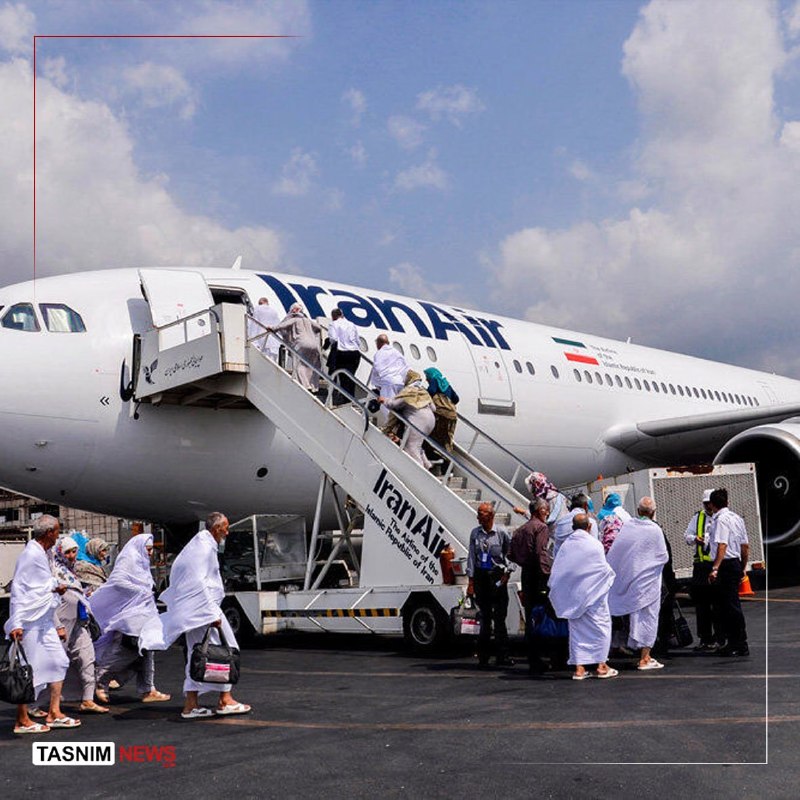
Iran's Hajj and Pilgrimage Organisation said on 14 June 2026 that 93% of Iranian pilgrims had returned from the kingdom, with the final airlift scheduled to close before 23 June. The figure, published within minutes of each other by Iranian state-aligned outlets between 02:19 and 02:35 UTC, is the most concrete window Tehran has offered on the scale and timing of this season's return operation.
The number matters less for the headline than for what it signals about logistics under a tightly managed bilateral framework, and for what it does not yet say about the remaining 7%.
The return operation, in numbers
The head of the organisation, whose full name was not given in the wire items reviewed, framed the 93% figure as a milestone rather than a final tally. The operation of transporting pilgrims, the same briefings said, is to be completed by the end of 23 June 2026. In practice that leaves roughly nine days to bring the residual cohort home — a tempo consistent with previous post-hajj airlifts but compressed by the late-June cutoff that Saudi authorities have set for the conclusion of the season's managed phase.
The Fars, Tasnim and Al-Alam wires carried the figure in near-identical wording within a 16-minute window, a coordination pattern that points to a single official statement recirculated through the state-aligned press. The substance — 93% returned, finish by 23 June — is the same in all three. None of the three wires, as published, disclosed the absolute number of Iranian pilgrims dispatched this season, the size of the residual cohort, the routing of return flights, or any breakdown by carrier. Monexus has reached out to the Hajj and Pilgrimage Organisation for the underlying figures and will update if a response is received.
Why the framing is being managed
Hajj logistics are routinely a friction point between Tehran and Riyadh, and the volume of pilgrims is a politically and economically significant figure. The annual quota allocated to Iran, the price of accommodation and transport inside the kingdom, and the consular arrangements that allow Iranian carriers to operate the routes have all been points of dispute in past seasons. A return figure of 93% with a hard 23 June close is, in effect, a public confirmation that the bilateral framework is functioning on the timetable the two sides agreed — and that the Iranian side is on track to clear its pilgrims before the deadline.
The tightly coordinated state-aligned coverage, with Fars, Tasnim and Al-Alam running the line in a 16-minute burst, also serves a domestic audience. The Hajj and Pilgrimage Organisation sits inside a system in which successful logistics are reported as evidence of competent stewardship, and the absence of disruption is itself the story. The three outlets named in the thread context are all state-aligned; none of the items reviewed in the thread carries an independent on-the-ground figure, an opposition voice, or a pilgrim interview.
What the sources do not say
Three things are conspicuously absent from the wires as published. First, the absolute head-count: a 93% return rate is interpretable only against a denominator, and the wires do not give one. Second, the carrier mix — whether the residual 7% is being moved by Iranian carriers, Saudi carriers, or a mix — is not disclosed in the items reviewed. Third, the cost to pilgrims and the revenue flow to the Iranian operators are not addressed. Each of these is, in past seasons, the substance of subsequent reporting once the headline figure fades.
A plausible alternative read of the 93% number is that it is essentially a coordinated signalling exercise — a figure chosen to be high enough to demonstrate operational success and rounded enough to be uncontested. The fact that all three wires carry the line within 16 minutes supports that reading. It does not refute the official claim; the claim may be true. But the claim has not, on the basis of the materials reviewed, been independently verified.
The structural frame
Pilgrimage logistics sit at the intersection of three bigger stories. The first is the managed re-opening of large-scale religious movement between Iran and Saudi Arabia after years of estrangement, in which hajj quotas and consular arrangements are the most visible running metric. The second is the regional air-corridor politics around Gulf carriers, in which Iranian operators' access to Saudi airspace is a small but useful proxy for the broader détente. The third is the domestic political economy of the hajj in Iran, in which the cost of pilgrimage, the allocation of slots, and the official narrative around a successful season are all politically load-bearing.
A 93% return rate with a 23 June close is consistent with a bilateral framework that is, for now, holding. Whether it stays that way through the rest of the season, and through the next, is a question the wires as published cannot answer.
Desk note: Monexus has relied here on three Iranian state-aligned wires, run within a 16-minute window, that recycle the same official figure. The story is the logistics milestone, not the politics; the politics will surface in the residual 7% and in the post-season carrier-and-cost reporting. We will widen the source base as independent figures become available.
Wire provenance
This editorial synthesis draws on the following public wire/social posts:
- https://t.me/alalamarabic
- https://t.me/tasnimnews_en
- https://t.me/farsna