Tehran's nuclear hedge is also a domestic warning shot
As Iran disperses enriched uranium and hardens tunnel entrances, the street is telling negotiators to walk away — and the regime is listening to both audiences at once.
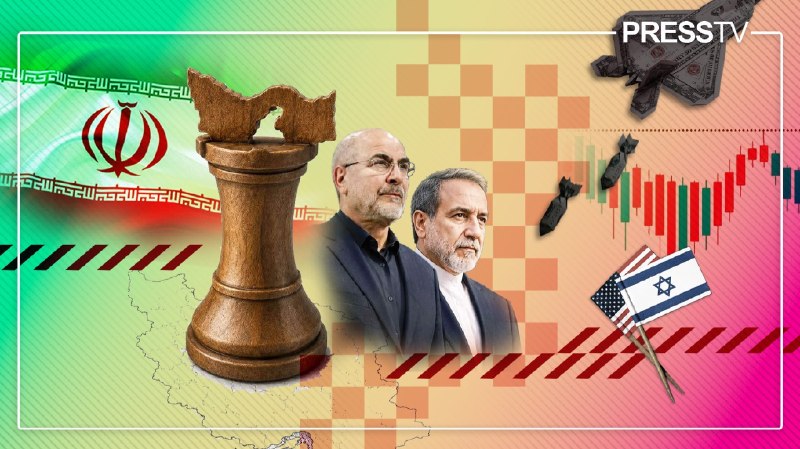
On the evening of 13 June 2026, as negotiators in a still-undisclosed venue argued over the shape of a possible US-Iran deal, Iran began moving its most sensitive stockpile. Citing five sources familiar with US intelligence, CNN reported that Iran has started dispersing its stocks of highly enriched uranium, collapsing the entrances of tunnels used to house the material, and seeding those tunnels with mines and traps. Within hours, Iran's negotiating posture sharpened: "want our highly enriched uranium? Come and get it," was the line relayed by the X account sprinterpress from Iranian officials [2026-06-13T23:41Z, 2026-06-13T23:48Z].
The dispersal is not a negotiating tactic in the conventional sense. It is the visible end of a two-track strategy the Islamic Republic has been running for months: talk in the room, harden the site, and manage the street. The same 24-hour window produced videos of Iranians cursing Foreign Minister Abbas Araghchi by name in public protests, chanting "we have only one demand — revenge" and demanding he leave the negotiations, with further demonstrations called for the following day against Araghchi, parliament speaker Mohammad Bagher Galibaf, and President Masoud Pezeshkian [2026-06-13T21:26Z, 2026-06-13T21:35Z, 2026-06-13T21:43Z, 2026-06-13T21:35Z].
The nuclear picture, in one breath
"Highly enriched uranium" is the phrase that does all the work. Material at 60% or 90% enrichment is short of the weapons-grade threshold of 90% only by technicality; it can be weaponised in weeks. CNN's reporting, as relayed by sprinterpress, does not specify quantities, but the operational signature is familiar: disperse, collapse, mine. That sequence is designed to deny a unilateral strike the clean, single-payload option that destroyed Iran's Natanz cascades in 2025. The Iranian message — "come and get it" — is the diplomatic translation of a military fact. The stockpile has been made harder to reach without being visibly expanded.
The street is now a third negotiating party
For most of the post-2015 era, Iran's nuclear bargaining had two principals: Tehran and Washington, with a soft chorus of European intermediaries. The protests captured on 13 June add a third. The demonstrators are not rallying for or against uranium per se; they are rallying against the negotiators, and specifically against the reformist government of President Pezeshkian, which protesters say is "leading the country into a dangerous crisis" [2026-06-13T21:26Z]. The slogan "Araghchi, have a conscience, leave the negotiations" reframes the talks themselves as the betrayal. In a system where the street is permitted to be loud only when it serves the establishment, the fact that these chants have not been shut down is itself a reading aid: a faction inside the security elite is signalling that it is prepared to break the Pezeshkian government's negotiating room.
Hardening, not handoff
The most under-reported element of the CNN reporting is the mining of the tunnel entrances. Collapsing an entrance is a denial-of-access tactic; mining it is a denial-of-life tactic aimed at anyone who tries to enter after a strike. That is a step beyond what Iranian crews did in 2024 and 2025, when low-grade dispersal and centrifuge re-shuffling kept the program alive without changing the target set. The operational implication for any future US or Israeli strike planning is straightforward: a clean bunker-buster campaign against a small number of known sites no longer exists as a single option. The Iranian position is now a distributed, deliberately lethal target set, which raises the threshold for military action precisely as it raises the political cost for any Iranian government that agrees to roll it back.
Stakes, plainly stated
If a deal is signed in the coming weeks, the Pezeshkian government will own the protest movement's anger; if it is not, the Revolutionary Guards and the conservative parliamentary bloc will own the enrichment program, hardened and harder to roll back than it was a month ago. Either outcome shifts leverage away from civilian negotiators and toward institutions that have historically been less accountable to voters and more accountable to the supreme office. That is the real signal buried in the dispersal footage: the Iranian state is buying optionality. Washington, by contrast, is buying time. The window in which a negotiated rollback remains cheaper than a military one is narrowing, and the street in Tehran knows it.
The remaining uncertainty is whether the dispersal is reversible. CNN's reporting does not address that question, and the Iranian messaging — taunting, not bargaining — suggests the answer inside the regime is, for now, no. The wire frames this as a classic Iranian negotiating feint. Monexus reads it as a domestic warning shot, aimed inward at the Pezeshkian government as much as outward at Washington.
Wire provenance
This editorial synthesis draws on the following public wire/social posts:
- https://x.com/sprinterpress/status/2065943636714426368
- https://x.com/sprinterpress/status/2065942543197212672
- https://x.com/sprinterpress/status/2065931574024671380
- https://x.com/sprinterpress/status/2065930381234720927
- https://x.com/sprinterpress/status/2065930368943673640
- https://x.com/sprinterpress/status/2065929031481192864