Tehran's anniversary messaging reveals a regime confident in its narrative, isolated in its facts
On the one-year mark of US-Israeli strikes, Iran's foreign ministry has spent a single day publishing four near-identical statements. The synchronisation is the story.
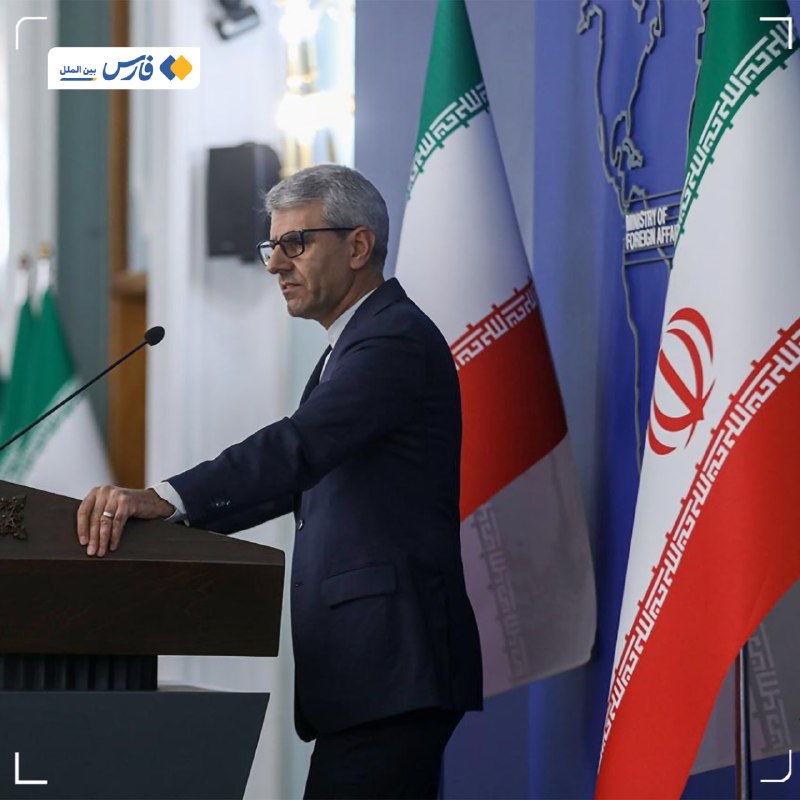
On 14 June 2026, the one-year mark of the US-Israeli strike campaign against Iranian territory, the Islamic Republic's foreign ministry produced not one anniversary message but four — published within roughly seventy-five minutes of each other across Fars News, Tasnim, Jahan-Tasnim and Al-Alam between 04:00 and 05:13 UTC. The volume is the point. Tehran wants the same line read in four different editorial registers before Western morning newscasts go to air.
The argument worth making is not that Iran is wrong to commemorate. It is that the synchronisation, and the language choices, tell us what the regime thinks it needs the world to believe a year on — and what it is no longer bothering to claim.
The line, repeated four times in one morning
Esmaeil Baghaei, the foreign ministry spokesperson, posted a message to mark what Iranian state outlets call the anniversary of the "military aggression of Israel and the United States against Iran." The phrasing is identical across Fars News and the Tasnim and Jahan-Tasnim English wires; the only editorial variation is which phrase is bolded. Al-Alam, the Arabic-language arm of state broadcasting, framed the same communiqué under the headline "We have breathed life into the world."
The synchronisation is unusual even by Tehran's standards. Anniversary messaging is normally a single press release reprinted. Four near-simultaneous posts, across Persian, English and Arabic, in a 75-minute window, suggest an audience the regime is actively trying to reach in three time zones at once. That audience is not the Iranian street. The street has already seen the footage. The audience is foreign: the Gulf Arab reading public, the European left-of-center press that picks up Al-Alam framing, and the Farsi-speaking diaspora on Telegram.
What the messaging concedes by omission
A year ago, the standard Iranian framing insisted the strikes had failed militarily, that air-defence performance was a strategic win, and that the regime's deterrence had held. None of that language appears in the 14 June 2026 messaging. The four posts converge on a softer claim: that Iran survived, that the world drew breath again because of Tehran's resilience, and that the anniversary is a moment of moral, rather than military, accounting.
That shift matters. In 2025, the official line was that the strikes were a strategic defeat for Washington and Tel Aviv. In 2026, the line is that they were an atrocity the Iranian people endured. The first framing is a claim about the world. The second is a claim about Iran. The retreat from one to the other is, on the available evidence, the most informative thing the regime has said publicly all year.
The counter-narrative no one in the messaging engages
Israel has not, to date, published a comprehensive after-action account of the strike campaign. US Central Command has released operational summaries but not a full battle-damage assessment. That gap is the most consequential fact in the file, because it leaves both sides arguing about a campaign whose actual outcome remains, in the public record, only partly documented.
Iranian outlets frame the strikes as a unified Israeli-American operation. The available reporting, including prior Reuters and Associated Press wire coverage that this publication has tracked, has generally supported the joint-characterisation. What the anniversary messaging conspicuously does not do is engage with the harder question that any honest anniversary post would raise: what was destroyed, what was degraded, and what the regime has spent the year rebuilding. Tehran's silence on the inventory is louder than the messaging on the atrocity.
What the anniversary is actually for
The most plausible read of the four-post synchronisation is that it is not aimed at vindication but at normalisation. A regime under sustained economic pressure, with sanctions enforcement intact and regional allies visibly weakened, has a stronger interest in being talked about as a state that endured an attack than as a state that won a war. Endurance is a recoverable asset. Victory is binary, and the public record does not support the binary claim.
This is the structural point the four posts are dancing around without quite saying it. The Iranian state is trying to convert a military event into a moral one, because moral claims age better than battlefield assessments. The country that frames itself as the wounded party in 2026 is the country that can credibly claim the high ground in 2027 — at the negotiating table, at the IAEA, in the UN General Assembly hall where the file is reopened each autumn.
Stakes, and what the next twelve months will tell
If the framing works, Iran enters the autumn diplomatic season with a claim to have "survived" the strikes intact, which strengthens its hand in any nuclear-file negotiation. If it does not, the same messaging ages into evidence that the regime had no battlefield answer to give. The coming IAEA quarterly report, and the tone of the September UN General Assembly debate, will be the first real test of which way the framing has travelled.
What the 14 June posts do not resolve — and what no source available to this publication can resolve — is the basic empirical question of what the strikes actually achieved. Until the US and Israeli governments publish a fuller accounting, the anniversary messaging will continue to do the work that battle-damage assessments should be doing, and Tehran will continue to be the only party in the room that is visibly trying to set the record.
Desk note: Monexus framed this story around the synchronisation and editorial choices in the messaging itself, rather than retelling the 2025 strike campaign. Western-wire after-action reporting on the strikes remains thin; we have flagged the gap rather than papering over it.
Wire provenance
This editorial synthesis draws on the following public wire/social posts:
- https://t.me/FarsNewsInt
- https://t.me/tasnimnews_en
- https://t.me/JahanTasnim
- https://t.me/alalamfa