Sanctions chokepoint and a stalled fund collide in Trump's Iran endgame
A federal judge has paused a $1.8 billion Trump-era fund, while last-minute haggling over an Iran memorandum threatens to push the deadline past 30 June.
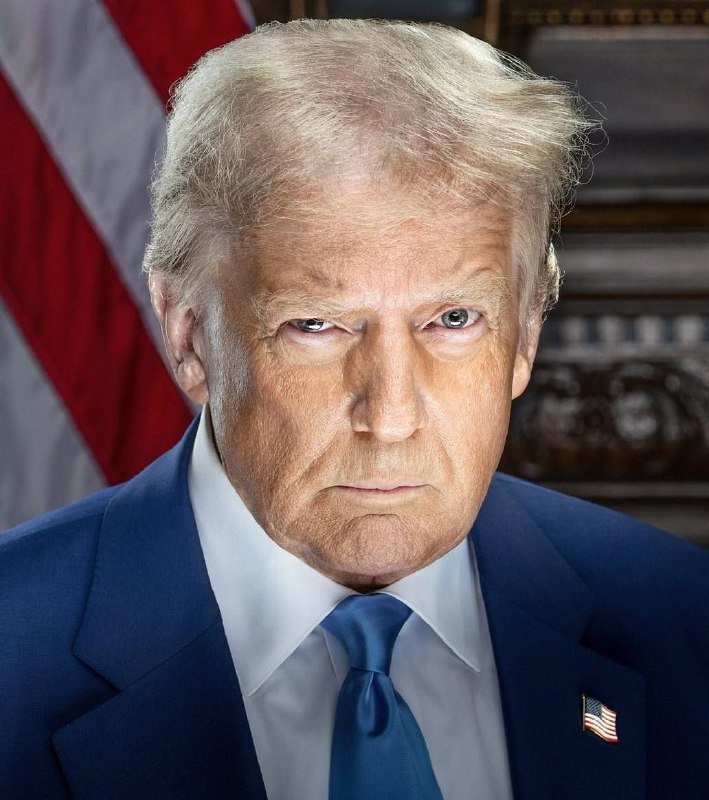
Two distinct tracks of President Donald Trump's second-term Middle East agenda converged in the forty-eight hours before 14 June 2026: a federal court has blocked a $1.8 billion executive-branch fund, and a memorandum of understanding with Iran that had appeared days from signature hit eleventh-hour resistance from Washington over a residual Iranian demand. Taken separately, each is a procedural hiccup. Taken together, they expose the legal and financial scaffolding the administration has been erecting around the Iran file — and the limits of executive discretion when courts and counterparties pull in opposite directions.
The pattern is familiar from previous US-Iran episodes: sanctions relief is the currency, executive-branch discretion is the delivery mechanism, and the legal architecture is built to outlast any single negotiation. The fund at issue is unusual in name but orthodox in form. Its sudden judicial pause, and the simultaneous wobble in the MoU, suggest that the architecture is being stress-tested by two different kinds of counterparty at once — a federal bench and the Islamic Republic.
The $1.8 billion fund, and what a judge paused
According to a 12 June 2026 Wall Street Journal report circulated on X by Unusual Whales at 17:57 UTC, a federal judge has stopped the Trump administration from proceeding with a $1.8 billion "anti-weaponization fund." The exact mechanics — whether the fund was to be disbursed to allied governments, private contractors, or held in escrow pending Iranian compliance — were not detailed in the post itself, but the figure and the judicial intervention are confirmed.
The timing matters. The Trump administration has been building parallel tools for the Iran track: direct negotiations, third-party mediation, and a financial pot designed to reward compliance or punish defection. An "anti-weaponization" label implies the latter — money earmarked to demonstrate that any weaponisation of a future deal by Tehran would carry an immediate cost. A court halting that fund at the precise moment an MoU is being finalised narrows the administration's room to signal consequences.
The MoU wobble
At 03:25 UTC on 14 June, the Middle East Spectator Telegram channel — a long-running aggregator that has accurately tracked the substance of regional negotiations in past rounds — reported that "some last minute difficulties in the MoU have arisen, once again due [to] hesitation from the U.S. on an Iranian demand." The channel assessed that a resolution was likely within hours, but cautioned that "nothing is yet certain."
The channel's framing is consistent with reporting across the negotiation: the United States and Iran have agreed on most of the architecture of a deal — verification, enrichment ceilings, a timeline for sanctions relief — but a smaller set of demands remains contested, and at least one of them involves a concession Washington is reluctant to formalise. Polymarket's Iran-demand market, cited on X at 15:10 UTC on 12 June, put the implied probability of Trump agreeing to unfreeze Iranian assets at 45 percent — a coin-flip, with weeks still to run before the 30 June deadline flagged in the market's question.
Why the two tracks collide
The legal and the diplomatic are not separate problems. An executive-branch fund that survives a court challenge is a credible enforcement tool: the Iranian side knows that any violation triggers automatic, pre-funded consequences. The same fund, paused by a judge, becomes a discretionary promise — useful as a bargaining chip, less useful as a deterrent.
This is the deeper story. US sanctions architecture has always depended on a particular balance: the executive branch wants flexibility to reward compliance and punish defection in real time; Congress, and now the courts, want to constrain that flexibility to prevent mission creep or unauthorised transfers. The $1.8 billion fund sits inside that older contest. The Iran file, which depends on Washington's ability to deliver and to threaten credibly, is exposed when the constraint bites.
What is actually being negotiated
The public markers suggest the parties are still haggling over the residual issues that have defined the file for two decades: the fate of frozen Iranian assets held in third-country banks, the scope of any enrichment activity permitted inside Iran, the timeline for sanctions snap-back if Tehran is judged in violation, and the technical meaning of "weaponisation" in any agreed text.
Markets are pricing this as a close call. The Polymarket contract for whether Trump agrees to unfreeze Iranian assets — one of the more granular demands in play — is sitting at 45 percent, with the contract expiring on 30 June 2026. A price below 50 percent on a deal-specific question is unusual this close to a deadline; it implies traders see meaningful odds that the talks collapse or the asset component is deferred to a later phase.
Counter-narrative: the delay is tactical, not structural
The counter-reading is that the wobble is theatre. Iranian negotiating practice, in this and previous rounds, has been to introduce last-minute demands precisely as the other side is preparing to claim victory. The Middle East Spectator note that resolution is "very likely" within hours supports that read. From this view, the court ruling and the MoU delay are unrelated. The administration built the fund as a contingency; the court paused it because the fund's design crossed a line Congress or the judiciary has reserved to itself. The Iran file proceeds on its own clock.
The case for the counter-narrative is real. But it does not dissolve the structural point. The administration is now negotiating from a position in which (a) a court has constrained one of its enforcement tools, (b) the deadline is sixteen days away, and (c) a residual Iranian demand is unresolved. The negotiation will continue, but with a thinner margin of manoeuvre than the public choreography suggested a week ago.
Stakes
If a deal is concluded by 30 June 2026, the United States preserves the diplomatic architecture it has built since early 2025, unlocks a phased sanctions relief process that is already partially priced into regional risk premia, and demonstrates that its sanctions toolkit remains operational even under judicial scrutiny. Iran, in turn, secures partial access to frozen assets and a managed return to compliant enrichment. The market reading — 45 percent probability of asset unfreezing by the deadline — implies this is the base case, but not the consensus one.
If the talks slip past 30 June, three things become more likely: a congressional review of the broader executive sanctions authority, an Iranian decision to expand enrichment while the file is open, and a re-pricing of Gulf risk premia as the probability of a kinetic phase of the dispute rises. The $1.8 billion fund, in that scenario, is a footnote. The architecture is the story.
What remains uncertain
The sources do not specify the precise Iranian demand holding up the MoU, the identity of the federal judge who paused the fund, or the legal theory on which the pause was granted. The Middle East Spectator note is an aggregator's read of behind-closed-doors movement, not a primary disclosure. Polymarket prices are a probability estimate, not a forecast. The next forty-eight hours — and any subsequent court filings on the fund — will determine whether the two tracks are connected or merely coincident.
This publication is tracking both threads separately. The fund's legal status will move on court filings; the MoU's status will move on diplomatic dispatches. Readers should treat the two as joined at the policy level and separate at the evidence level until further reporting closes the gap.
Wire provenance
This editorial synthesis draws on the following public wire/social posts:
- https://x.com/unusual_whales/status/2063347627647705088
- https://t.me/Middle_East_Spectator