A deal, a funeral, and a stadium chant: reading the latest signals from Iran
A US-Iran memorandum of understanding due within days, state mourning for a senior figure, and a federation chief chanting 'I will die for Iran' — the signals from Tehran in mid-June do not point in a single direction.
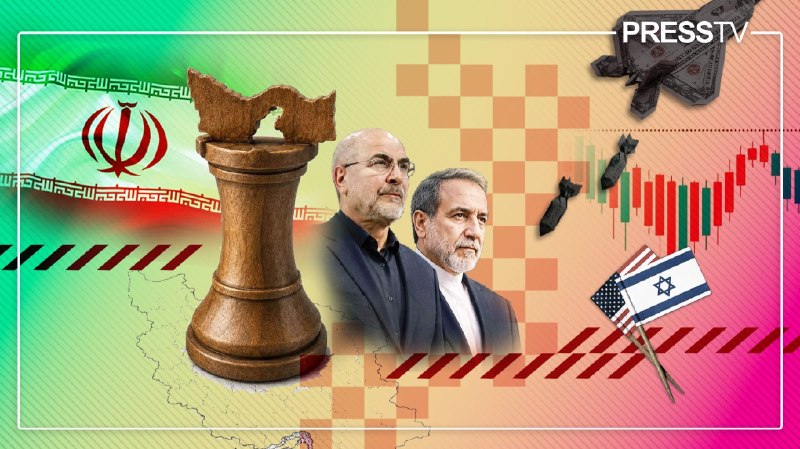
On the morning of 14 June 2026, a clutch of datapoints sat next to one another on the wire, and the picture they made was not a clean one. According to a Telegram post by Mehr News at 04:43 UTC, the head of Iran's football federation and members of the national-team delegation were filmed chanting the slogan I will die for Iran. About twenty-five hours earlier, the X account of the prediction market Polymarket relayed that US President Donald Trump had announced a memorandum of understanding between the United States and Iran would be signed the next day. A day before that, the Unusual Whales account reported the Trump administration saying the deal was likely within days but not "100%" certain, and citing Axios, that Trump thought a signing could come by the weekend or Monday. Layered on top of this diplomatic weather was a separate Mehr News item at 05:58 UTC on 14 June flagging the possibility of postponing final exams because they coincided with a funeral ceremony for a "martyr leader," and noting that the funeral's planning had not been finalised at the time of the original announcement. Read individually, each item is a footnote. Read together, they sketch a state balancing external negotiation, internal ritual, and a public register of loyalty, all inside a single seventy-two-hour window.
The argument this piece makes is straightforward. Iran in mid-June 2026 is operating a dual track: one pointed outward, towards a written arrangement with Washington that, if signed, would mark the most concrete bilateral step between the two governments in years; the other pointed inward, towards a domestic theatre of mourning, mobilisation, and symbolic alignment with the Islamic Republic's security order. The two tracks are not in contradiction, but they pull on different audiences, and the way they are sequenced will determine whether the next month is read, in Tehran and in Washington, as a diplomatic opening or as another near-miss.
The diplomatic track: a memorandum within days
The clearest external signal came through Polymarket's X account at 17:34 UTC on 13 June, relaying Trump's announcement that a US-Iran memorandum of understanding would be signed "tomorrow." Polymarket, a prediction-market platform rather than a wire service, is not in itself a primary source for diplomatic reporting, but the post is useful here because it captures the rhythm of how the news was being broadcast: short, declarative, and aimed at a market audience that prices probability in real time. Twenty-two hours earlier, at 19:26 UTC on 12 June, the Unusual Whales X account reported the Trump administration as saying the deal signing was likely in the coming days but not "100%" certain, and at 18:37 UTC the same day it carried an Axios-sourced report that Trump thought a deal could be signed over the weekend or on Monday. None of these posts contain the text of a memorandum; none specify the parties, the venue, or the sanctions architecture. What they do establish is the shape of a window — a period in which a signing was expected, and in which that expectation was being actively managed by the US side.
A US-Iran memorandum of understanding, in this context, would sit below a formal treaty and above a joint statement. It is the kind of document used to register agreement on a narrow set of steps — for instance, a sequencing of sanctions relief against verified nuclear constraints, or a temporary understanding that freezes certain activities in exchange for freezes of certain sanctions. The fact that the term memorandum rather than agreement or deal is being used is itself a tell: it allows either side to claim a win without binding the other's parliament to a vote. For Tehran, a signed document, even a soft one, has domestic value as evidence that the "resistance economy" posture has produced a tangible outcome. For Washington, a signed document has electoral value as proof that the administration's maximalist posture has produced a tangible outcome. Both can be true at once.
The domestic track: mourning, exams, and a stadium chant
The Mehr News Telegram post at 05:58 UTC on 14 June is the kind of item that would normally pass without notice on a foreign desk: a note about the possibility of postponing final exams because they fall on the same day as the funeral of a "martyr leader," with the awkward admission, in the wire copy itself, that the funeral's plans had not been finalised at the time of the original schedule. The phrasing is bureaucratic and oddly self-revealing — a state-aligned outlet acknowledging, in passing, that the choreography of national mourning is being arranged on the fly. In the Islamic Republic, the term martyr leader is reserved for figures killed in service of the state, most often in conflict with Israel or the United States, or in operations abroad. A state funeral for such a figure is not a private event; it is a stage-managed piece of political theatre, designed to be visible, to be broadcast, and to fix a particular narrative in the public record.
The exam-postponement item matters not for the exams but for what its existence implies: that the state's central planning apparatus is willing to bend the academic calendar to the funeral calendar. That is a small but legible signal about who, in the current arrangement, sets the rhythm of public life. A day earlier, the same outlet's Telegram channel, at 04:43 UTC on 14 June, had carried video of the head of Iran's football federation and members of the national team chanting I will die for Iran. Mehr News is the Iranian state-affiliated news agency, and its choice of footage is editorial. The slogan is a familiar one in the Republic's civic vocabulary, and hearing it from a sports federation chief is not incidental: the federation is a quasi-state body, and its public voice is curated. The footage belongs to the same symbolic economy as the funeral — a register of public allegiance at a moment when external pressure is high.
Reading the two tracks together
The temptation, when a state is negotiating with an adversary, is to read every domestic gesture through the lens of the negotiation. The funeral, the chant, the postponed exams, become bargaining chips or signals of internal pressure. That reading is not wrong, but it is incomplete. Iran has, for forty years, run an internal politics of mobilisation that does not switch off when its diplomats sit down. The two systems are meant to coexist, and the skill of the Islamic Republic's leadership has historically been to keep them pointing in compatible directions.
A more useful frame is to ask which audience each signal is for. The memorandum signal — Trump, Polymarket, Unusual Whales, Axios — is being received in English, by an audience that trades in headlines and probabilities. The funeral and the chant are being received in Persian, by an audience that reads them through the long memory of the 1979 revolution, the Iran-Iraq war, and the successive cycles of sanctions and negotiation. The two audiences are not the same, and the same speech act cannot be optimised for both. The state that succeeds is the one that can deliver a foreign-policy win and a domestic ritual that does not contradict it. So far, in mid-June 2026, the choreography is being attempted.
Counter-narrative: deal-or-no-deal fatigue
The other reading, common in Western commentary on US-Iran negotiations for two decades, is the fatigue reading: the deal that was "90% done" in 2005, the framework that was "close" in 2015, the talks that were "in the final stage" in 2019, the prisoner exchange that was "imminent" in 2023 — and so on. From that perspective, the 13 June Polymarket post is a familiar beat in a familiar genre. A memorandum of understanding is, in this reading, the lowest possible form of agreement, the diplomatic equivalent of a non-binding handshake: enough to claim a win, too little to constrain anyone. The Axios-sourced line that the signing is likely but not certain is, in this reading, the real story — the rest is theatre.
That counter-narrative has real evidentiary support. None of the source items contain a draft of the memorandum. None name the negotiating counterparties, the venue, or the sanctions or nuclear steps that would be sequenced. The Trump administration's own framing — "likely in the coming days, but not 100% certain" — is the language of expectation management, not commitment. A reader who has watched this cycle repeat since the early 2000s has good reason to discount the volume of the signal. The counter-narrative's strength is that it is consistent with a long pattern. Its weakness is that it treats every new cycle as if it were the previous cycle, when the surrounding conditions — the state of the Iranian economy, the regional posture of Iran's proxies, the domestic political calendar in both Washington and Tehran — are never quite the same twice.
Structural frame: negotiation as statecraft, not as concession
The pattern visible here, in plain editorial terms, is the use of negotiation itself as a mode of statecraft. A signed memorandum, even a soft one, restructures the conversation. It moves the dispute from the terrain of principle — should the US and Iran normalise? — to the terrain of management — what is the next discrete step, and who is responsible for it? That move benefits whichever side has less room to escalate, because it converts open-ended confrontation into a queue of specific, dated, verifiable items. The state that has been under sanctions pressure for the longer continuous period has, in this reading, the stronger interest in that conversion. The state that has invested in maximum pressure has, by the same logic, an interest in keeping the conversation open-ended — extracting concessions for the maintenance of talks, rather than for the closure of a deal.
This is not a story about who is right and who is wrong on the substance of the nuclear file, on ballistic missiles, on regional proxies, or on human rights. It is a story about the form of the conversation. The form is what diplomats call modality: how the two sides are talking, in what document, under what time pressure, with what review mechanism. The 13 June signal is, above all, a signal about modality. It says: there is about to be a piece of paper. The piece of paper will not resolve the underlying dispute. It will, however, change what counts as a next step.
Stakes: who wins, who loses, on what clock
The most concrete near-term stake is the price of oil. A signed memorandum, even a soft one, tends to be read by markets as a reduction in the probability of an immediate kinetic event, which reduces the risk premium embedded in crude. Iran's crude exports — already under sanctions, already flowing through opaque channels — gain marginally when the diplomatic temperature drops. The Iranian state's budget, which depends on those exports at the margin, is the direct beneficiary. On the other side, a signed memorandum gives the Trump administration a deliverable to point to in a political cycle in which foreign-policy deliverables have been thin. Both sides have a real, if modest, interest in the paper being signed.
The larger stake is regional. If a US-Iran memorandum is followed, in subsequent months, by a more substantive arrangement — by a partial unfreezing of Iranian assets, by a sequenced return of Iranian oil to formal markets, by a verifiable constraint on enrichment — then the regional balance shifts in ways that affect Israel's calculus on strikes, Saudi Arabia's calculus on production, and the calculus of every Iranian proxy group that currently calibrates its risk to the prospect of a US-Iran war. If the memorandum is not followed by anything, or if it is repudiated within weeks, the regional balance does not shift at all, and the next cycle of escalation is on a shorter fuse. The clock is not the four-year electoral cycle. It is the roughly ninety-day window in which a piece of paper, once signed, is either implemented or quietly allowed to lapse.
What remains uncertain
The source items do not specify who, on the Iranian side, is the named counterparty to the memorandum. They do not name the venue. They do not contain a draft. They do not record a single direct quote from an Iranian official confirming that a signing is, in fact, scheduled for 14 June or any other specific date. The Polymarket post is a relay of Trump's own announcement; the Unusual Whales posts are relays of an Axios report and of administration framing. The Mehr News items are relays of Iranian state-aligned content about a funeral and a football chant. Between the two sets of relays, the actual document — if it exists — is not in evidence. A reader who treats the 13 June announcement as a confirmed event, or who treats the deal-fatigue reading as a confirmed nullity, is reading beyond the sources. The honest position is narrower: a US-side announcement that a memorandum would be signed, an Iranian domestic register of mobilisation and mourning, and no independent confirmation, as of the time of writing, of the document itself.
Desk note: Monexus framed this story as a dual-track read — the external signal of a near-term US-Iran memorandum and the internal signal of a state funeral and a public loyalty chant — rather than as a single "deal or no deal" headline. The wire services carried the Trump announcement; we carried the choreography around it.
Wire provenance
This editorial synthesis draws on the following public wire/social posts:
- https://t.me/MEHRNEWS
- https://t.me/MEHRNEWS
- https://x.com/Polymarket/status/
- https://x.com/unusual_whales/status/
- https://x.com/unusual_whales/status/