Israel's Irrelevance: Reading the Yedioth Panic Over the US-Iran Memorandum
A leaked Israeli reaction to the expected US-Iran memorandum captures a country discovering, in real time, that it no longer sets the terms of its neighbourhood.
A senior Israeli official, speaking to Yedioth Ahronoth in the hours before a US-Iran memorandum of understanding was due to be signed on 14 June 2026, delivered a verdict that doubles as a confession. "No one is satisfied with this agreement. We realize that it is not good in terms of proportions." The official, quoted in Hebrew by the paper and relayed by Al-Alam Arabic at 05:45 UTC, added the phrase that will define the morning: "What raises concern is that Israel cannot influence and its voice is lost" — a second Yedioth extract published alongside the first, also timestamped 05:45 UTC. A third piece, posted to the same Al-Alam channel at 04:39 UTC, sharpened the point from an "Israeli source": "We are no longer part of the events and cannot actually influence. Trump deceived us and we bore the consequences. We are shocked."
This is what an ally sounds like when it discovers, mid-negotiation, that the negotiating table has moved. The American-Iranian track is no longer a US-Israel-Iran triangle with a notional Palestinian leg; it is a bilateral that runs through the Gulf and increasingly around Jerusalem. The Israeli commentary on the deal, captured in real time, is less a policy critique than an audit of diminished agency — and the moment deserves to be read at face value, not spun into reassurance.
The deal being signed around Israel
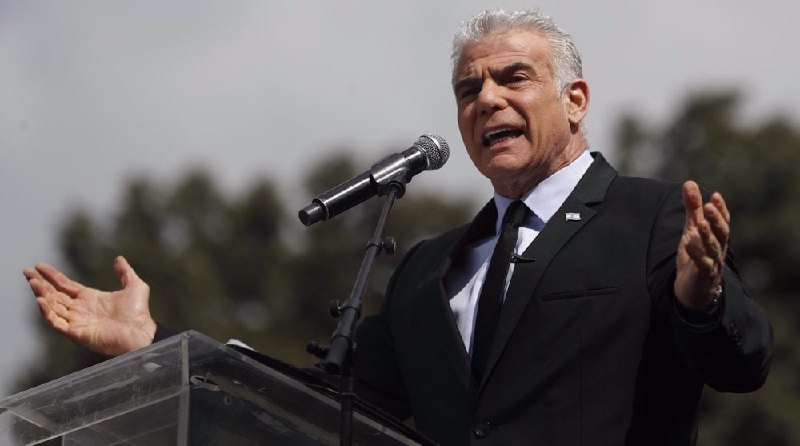
The substance the Yedioth sources are reacting to is a "memorandum of understanding expected to be signed today between the United States and Iran," framed by the unnamed official as falling short of Israeli war objectives. Israeli opposition leader Yair Lapid, the former prime minister, made the same argument in public at 03:48 UTC via PressTV's English feed: a potential agreement "falls short of Israel's war objectives." The convergence of the two Yedioth extracts and the Lapid statement is itself the story. The sitting government and its principal rival are reading from the same page of grievance. When a coalition and its loudest opposition figure cannot find a phrase to disagree on, the disagreement has migrated upstream — to Washington, not Tel Aviv.
What the memorandum itself contains is not yet visible in the source material: the Al-Alam relays describe only the Israeli reaction. The absence of a published text is part of the Israeli complaint. A deal whose terms have not been published, and whose negotiation Israel says it was not driving, is precisely the architecture of a reduced role.
The counter-narrative from Tehran's side
Iranian state and regional outlets reporting on the same track have, by contrast, framed the memorandum as a vindication of patience. PressTV's English coverage carries Lapid's criticism not as a rebuttal to be argued with but as evidence that the deal is doing what its authors intended: forcing a strategic rebalancing in which Israel is consulted, not convened. The framing here is not subtle. Iranian state media treat Israeli alarm as a leading indicator of success. That posture, which an unsympathetic reader would call propaganda, is at minimum a coherent strategic read: a deal that infuriates Yedioth Ahronoth's sources is, by construction, a deal the Iranian negotiating team can sell to a domestic audience that has paid for it in sanctions and isolation.
The question this column cannot resolve from the available material is whether the Israeli alarm is tactical theatre — a negotiating posture designed to extract last-minute concessions from Washington — or whether it reflects a genuine loss of leverage. Both readings are live.
What "losing the voice" actually means
Strip the emotion out of the Yedioth quotes and a structural claim remains. Israel is reporting, through its most widely read Hebrew paper, that it cannot influence the framing of a regional agreement that directly bears on its declared security priorities. That is a different sentence from "the deal is bad for us." It is the sentence that follows. A country that could influence the terms would be arguing about clauses. A country that cannot is arguing about existence at the table.
The pattern is not new in the abstract — smaller allies have been here before, most often in trade deals negotiated by larger patrons — but the regional specificity is sharp. Israel's stated war objectives against Iran-aligned capabilities are, in the framing of the Yedioth source, being transacted away in a room Israel is not in. The "we are shocked" register is unusual because Israel has, for two decades, been a co-author of US Middle East policy at the strategic level, not a recipient of it. To receive, one must first be told. The complaint is that the telling has stopped.
What remains uncertain
The Yedioth material reached Monexus through Al-Alam Arabic, an Iranian-aligned outlet, and via PressTV's English channel. Both are advocacy vehicles with editorial positions. The underlying Yedioth Ahronoth Hebrew reporting is the primary document; the translations and emphasis are not. Lapid's quoted line is direct, attributed, and usable. The unnamed senior official's quotes are paraphrased through translation by an interested party. A serious reader should treat the texture of the quotes — the words "deceived" and "shocked" — as more pointed than any English paraphrase a Western wire has yet carried on this particular exchange, because the relay itself has an angle.
The memorandum's actual text, the US readout, and the Israeli government's on-the-record response have not yet surfaced in the source set. Until they do, the central claim of this article — that Israel is registering loss of influence in real time — rests on Hebrew-press sourcing relayed through Tehran-friendly channels, plus a direct Lapid quote from PressTV. That is enough to publish the observation. It is not enough to declare the trajectory permanent.
The desk note: Monexus has chosen to lead on Israeli self-assessment of its diminished role, sourced to Yedioth Ahronoth via Al-Alam Arabic, rather than on the US or Iranian read of the deal. The reason is editorial: the most newsworthy line of the day — "we are shocked" — is the one being said out loud, in Hebrew, by a senior Israeli source, and the wire is not yet carrying it. The framing is Israeli grievance reported through the only channel that has it. Future coverage should layer in the memorandum text and the US readout once those appear.
Wire provenance
This editorial synthesis draws on the following public wire/social posts:
- https://t.me/alalamarabic
- https://t.me/alalamarabic
- https://t.me/alalamarabic
- https://t.me/alalamarabic
- https://t.me/presstv