Israel presses on southern Lebanon as Somaliland leader lands in Tel Aviv
Israeli forces widened evacuation orders across 16 Lebanese towns on 14 June, even as the foreign minister hosted Somaliland's leader — a recognition-in-all-but-name that redraws the regional map.
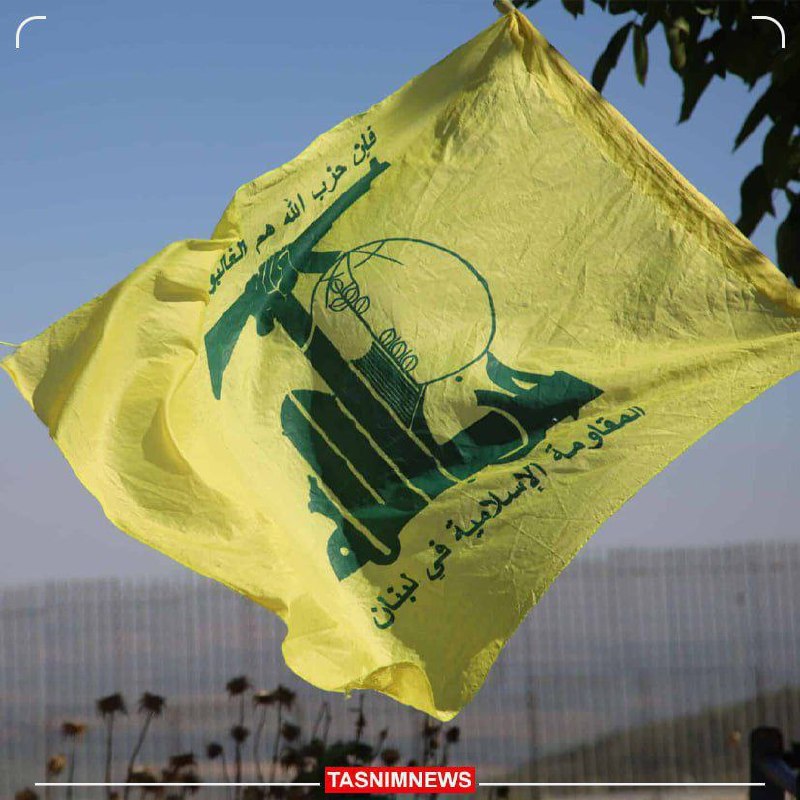
Israeli forces widened evacuation orders across sixteen towns and settlements in southern Lebanon on the morning of 14 June 2026, an expansion that leaves the Litani river area — and the bridges over it — under a deepening Israeli military grip that officials in Tel Aviv say they have no intention of loosening. Hours later, on the same day, the Israeli foreign minister received the president of the breakaway Somali republic of Somaliland in Tel Aviv, in a visit that reads less as routine diplomacy than as a quiet assertion of which African governments Israel is prepared to publicly embrace.
Two events, one morning, one message: Israel is hardening its hold on its northern frontier while signalling, through recognition gestures, that it intends to redraw its diplomatic map further afield. The first move is kinetic; the second is structural. Both deserve a closer look.
The evacuation order, and what it actually controls
The Israeli army issued evacuation warnings on 14 June for sixteen cities and settlements in southern Lebanon, according to a press notice circulated by sprinterpress at 07:44 UTC. The notice did not specify which localities were named, but the geography of previous Israeli evacuation orders in the area — running in a band north of the border and south of the Litani — points to towns already emptied in earlier phases of the campaign.
Israel has framed its presence in southern Lebanon as a security buffer against Hezbollah rocket and drone fire, a posture that the past twenty-four hours of incidents has done little to soften. At 08:17 UTC, Middle East Eye reported that two drones had crashed in northern Israel after crossing from Lebanon, the latest in a string of aerial penetrations that Israeli officials say justify the continued ground operation. By 08:14 UTC, the same outlet was carrying an Israeli government line that withdrawal from southern Lebanon was not under consideration, and that Israeli forces would continue to control the bridges and the area south of the Litani.
The pattern is consistent with the stated Israeli objective: hold the buffer, deny Hezbollah the ability to re-establish launch positions, and treat the Litani line as an enduring security boundary rather than a temporary line of advance. The cost is borne on the Lebanese side — towns emptied, infrastructure damaged, and a population displaced north of the river.
The counter-narrative from Beirut and beyond
Lebanese and Hezbollah-aligned voices have argued, in coverage that the Western wires have carried more sparingly, that the Israeli presence south of the Litani is an occupation rather than a buffer, and that the eviction of civilians is a deliberate tool of pressure rather than a defensive precaution. Under that reading, the sixteen-town evacuation order is not a humanitarian warning but a stage-managed depopulation, intended to make the area harder to re-inhabit and easier to absorb into an Israeli security zone.
Israeli officials reject the framing. Their line, as carried by Middle East Eye's live blog, is that the bridges and the area south of the Litani are being held because rockets and drones continue to cross, and that withdrawal would amount to unilateral disarmament in the face of an armed non-state actor on their border. Both readings are internally consistent; they differ on whether the security threat justifies the displacement, and on whether the buffer zone is provisional or creeping toward permanence.
The honest answer is that the sources available on 14 June do not resolve the dispute. What is verifiable is the order itself, the two drones that crashed in northern Israel, and the government's public refusal to discuss withdrawal. What is not yet verifiable is how many civilians have been displaced in this latest round, whether the named towns overlap with the earlier phases of evacuation, and whether the operation has a stated endpoint at all.
The Somaliland visit: a different kind of move
At 08:39 UTC, Telegram channel ClashReport reported that the president of Somaliland had arrived in Israel. The visit matters for reasons that have nothing to do with southern Lebanon. Somaliland is a self-declared republic that broke away from Somalia in 1991; it has functioned as a functioning state for three decades, with its own currency, passport and elections, but has not won broad international recognition. Mogadishu, the African Union and the Arab League all treat Somaliland as part of Somalia.
For Israel to receive the Somaliland president publicly is to take a side in that dispute. It is also a transactional signal: Somaliland sits on the Bab el-Mandeb approach to the Red Sea, across from the Gulf of Aden, on a coastline that hosts the Berbera port — a facility that the United Arab Emirates has developed and that Israel has reportedly used. The visit is being read in regional chancelleries as a quiet alignment between three governments — Israel, the UAE and Somaliland — that share an interest in Red Sea security and in a posture that is wary of Turkish and Qatari influence in the Horn of Africa.
The move also carries a domestic Israeli audience. Recognition gestures of this kind read as foreign-policy assertiveness in a market that has been primed for it; they also complicate the broader Israeli diplomatic position in East Africa, where states are wary of antagonising Mogadishu, Ankara or the Gulf.
What this morning's news actually adds up to
Read together, the two items describe a government that is simultaneously consolidating on a contested border and reaching outward to a contested coastline. The Lebanon operation is being normalised — evacuation orders, bridge control, no withdrawal — as the steady state of an indefinite buffer. The Somaliland visit is being normalised as routine bilateral diplomacy, when in fact it is a small but real bet on a state that most of the world does not recognise.
The structural read is straightforward. Israel is acting as a state that has concluded that the diplomatic weather around it will not improve, and is therefore entrenching where it can and choosing friends where it can find them. The Litani line becomes a security fact on the ground; Berbera becomes a foothold in the western Indian Ocean. Both moves narrow the space for a near-term diplomatic off-ramp, and they shift the cost of any future de-escalation onto Lebanon and the Somali federal government respectively.
What remains uncertain
The sources available on the morning of 14 June do not specify which sixteen towns have been ordered to evacuate, nor do they give a civilian-displacement figure for the current phase. The drone incidents in northern Israel are reported without details on origin, payload or intended target. The Somaliland visit is reported as an arrival; the agenda, the readout and any signed documents have not been disclosed in the items reviewed. Readers should treat the day's two stories as a snapshot of stated intentions — Israeli in the north, Israeli in the Horn — rather than as a settled description of events on the ground.
This article drew on Telegram dispatches and the Middle East Eye live blog rather than wire copy, and is best read as a wire-of-record for stated positions on 14 June 2026 rather than as an independent reconstruction of events.
Wire provenance
This editorial synthesis draws on the following public wire/social posts:
- https://t.me/ClashReport