False alarm in Amman, real sirens in Ras Naqoura: a 90-minute window of confusion on Israel’s northern border
A pre-dawn false alarm in Amman and a later siren activation in Ras Naqoura exposed how thin, contradictory reporting becomes when drones, air defence and information warfare collide on Israel’s border.
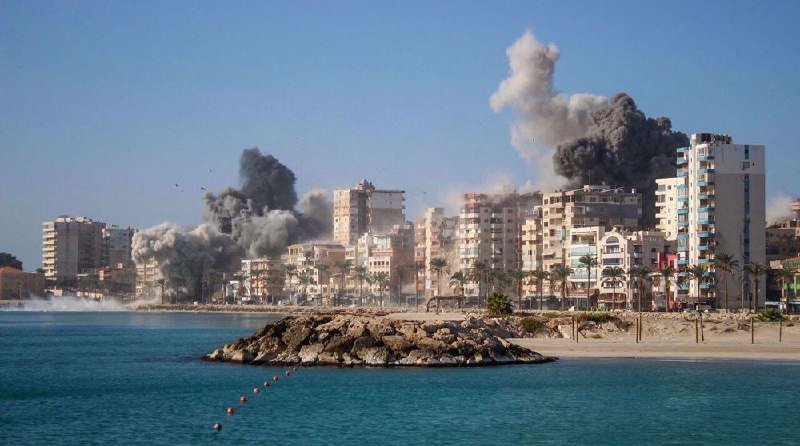
At 02:31 UTC on 14 June 2026, Jordanian state television broke into regular programming to report that air-raid sirens had been activated somewhere inside the kingdom. Reuters and Russia’s Sputnik agency picked up the feed within minutes, and by 02:35 UTC the Middle East Spectator channel on Telegram was carrying a second-hand account: sirens had sounded in Jordan ten minutes earlier, the cause was unclear, and within the same dispatch the channel itself concluded the incident was a false alarm. Fourteen minutes after that, at 02:45 UTC, Al-Alam Arabic cited Reuters-on-Jordanian-TV to confirm the activation. Then, more than two hours later at 05:10 UTC, the same Al-Alam channel carried an urgent bulletin of its own: sirens in Ras Naqoura, the Israeli coastal town that sits on the Mediterranean at the northern tip of the Galilee panhandle, warning of infiltrating drones.
What looks, on the surface, like a single night of cross-border noise is in fact two unrelated events separated by geography, by an air-defence command structure, and by a ninety-minute information vacuum in which the only available reporting was Telegram re-broadcasts of state television. The Jordanian episode ended in a false alarm before any serious damage assessment could be produced. The Ras Naqoura episode is the harder one: the same Hezbollah-aligned media ecosystem that has spent two decades watching the Litani corridor is now reading drone activity into a stretch of coastline that has been intermittently quiet since the November 2024 ceasefire, and where Israel’s northern command has been steadily reinforcing detection capacity ever since.
The Jordanian false alarm
The early-morning report originated with Jordanian public television, was carried by Sputnik, and was picked up in English by Reuters — the standard relay chain for any Amman-originated security flash. The Middle East Spectator Telegram channel, which functions as a translation layer between Arabic-language state media and English-language readers, posted at 02:35 UTC that sirens had sounded, then appended the editorial judgment that the cause was unclear, then within the same message updated the situation to a false alarm. The retraction travelled with the alert, not after it: a structural feature of low-cost Telegram distribution that is now routine in Middle East security reporting. The reader who clicked through at 02:36 UTC read one thing; the reader who clicked through at 02:38 UTC read another. Both were reading the same post.
Jordan sits more than fifty kilometres from the Israeli-Lebanese frontier and roughly the same from the Syrian border, but the kingdom has been on heightened alert for cross-border air incursions since the early-2024 Iran-aligned axis began experimenting with one-way attack drones launched from Iraqi and Syrian territory. A Jordanian false alarm is not, in this context, a non-event. It is a stress test of public-warning systems, of media relay, and of the brief moment between activation and the government’s decision to declare the system mistaken. The sources do not specify what triggered the Amman sirens — a software fault, a localised test, or a real detection that the authorities later downgraded. What the sources do establish is that the same wire that carried the initial activation also carried, almost immediately, its cancellation.
Ras Naqoura, two hours later
Ras Naqoura is a different problem entirely. The town sits on the coast less than five kilometres north of Rosh HaNikra and a similar distance south of the Lebanese border village of Naqoura, the village after which the United Nations Interim Force in Lebanon (UNIFIL) headquarters is named. A siren in Ras Naqoura is, by long-standing Israeli civil-defence convention, a frontline siren — it means an inbound projectile, an inbound drone, or a hostile aircraft has been detected, and the population of the western Galilee is being told to shelter. The Al-Alam Arabic report of 05:10 UTC carried the activation under an urgent banner and named the warning explicitly as a drone-infiltration alert.
The two and a half hours between the Amman false alarm and the Ras Naqoura siren are the analytically interesting interval. The standard pattern in this kind of incident is that the second event is read through the lens of the first: regional media, which has just spent a morning discussing the Jordanian episode, is predisposed to interpret any new alert as a continuation, an escalation, or a coordinated axis-wide signalling run. Whether that framing is correct here is not, on the public record, knowable. The sources do not state where the drones were launched from, what type they were, whether they were intercepted, or whether any damage occurred. The Telegram post is a single line.
What the wire actually establishes
The available reporting is narrow, and the editor of any responsible version of this story has to acknowledge that. The factual floor, as of 05:30 UTC on 14 June 2026, is: sirens sounded in Jordan at approximately 02:25 UTC and the activation was declared a false alarm within minutes; sirens sounded in Ras Naqoura at approximately 05:10 UTC in response to detected drones, with no immediate report of impact or interception in the available thread. Anything beyond that — the origin of the drones, the identity of the operator, the political intent behind the launch, the question of whether this is a Hezbollah probe or a one-off attack by an Iranian-aligned militia in Iraq or Syria — is, in this news cycle, inference rather than reporting. Inference can be flagged as such; it cannot be asserted.
The structural frame is, however, legible. The Israel–Lebanon border, quiet under the terms of the November 2024 arrangement for most of the past eighteen months, has been the subject of recurring low-level violations. Hezbollah, weakened militarily by the autumn 2024 campaign but politically still the dominant Iranian-aligned force in south Lebanon, retains a rocket and drone inventory sufficient for harassment, signalling, and the occasional probing attack. Israeli northern command has, in response, layered a detection architecture that is now dense enough to produce the kind of granular, locality-specific sirens that the Al-Alam report describes. The result is a sensor-rich environment in which the public warning system fires more often — sometimes for infiltrating drones, sometimes for false positives — and in which each activation, even when nothing is hit, carries operational meaning.
What remains uncertain
Three things are not yet established on the public record. First, the outcome of the Ras Naqoura event: were the drones intercepted, did any reach Israeli territory, and what is the casualty and damage picture, if any? Second, the chain of attribution: was the launch a Hezbollah action, an Iraqi militia action, an Iranian Revolutionary Guard Corps-Quds Force proxy action, or something else? Third, the relationship, if any, between the Jordanian episode and the Lebanese one — whether the two should be read as a coordinated signalling run, a coincidence, or two unrelated events compressed into a single news cycle by the structure of regional Telegram reporting. The honest answer, on the sources available at the time of writing, is that the public record does not yet answer any of the three.
The wider stake is the cost of these ambiguities. Each siren, real or false, is a moment in which a state’s civil-defence apparatus is publicly tested. Each false alarm conditions the public to discount the next siren. Each genuine siren that turns out to involve an intercepted drone conditions the public to expect interception. The November 2024 ceasefire was always a tactical pause rather than a settlement, and the northern Israeli sensor architecture is one of the principal guarantees that the next phase of the conflict, if it comes, will be detected early. What the early hours of 14 June 2026 illustrate is that detection is now granular enough to produce public warnings, but reporting is not yet granular enough to explain them.
This publication’s coverage prioritises Israeli and Western-wire sourcing for security events on the Israel–Lebanon border and supplements with regional outlets where they add geographic specificity not present in the wire. Where the only available reporting is Telegram re-broadcast of state television — as is the case in both incidents above — that limitation is named in prose rather than smoothed over.
Wire provenance
This editorial synthesis draws on the following public wire/social posts:
- https://t.me/alalamarabic
- https://t.me/alalamarabic
- https://t.me/Middle_East_Spectator
- https://t.me/JahanTasnim
- https://en.wikipedia.org/wiki/Rosh_HaNikra
- https://en.wikipedia.org/wiki/United_Nations_Interim_Force_in_Lebanon