Brunson's 45 and a 53-year wait: how the Knicks finally closed it out
Jalen Brunson scored 45 points as the New York Knicks beat the San Antonio Spurs 94-90 on Saturday to claim the franchise's first NBA championship since 1973, ending the longest title drought in the league.
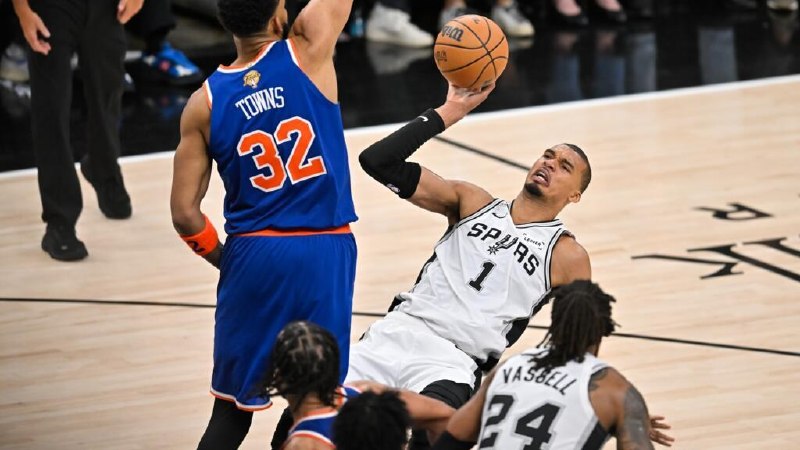
On 13 June 2026, in a building that had spent more than half a century learning to be patient, Jalen Brunson scored 45 points and the New York Knicks held off the San Antonio Spurs 94-90 to win Game 5 of the NBA Finals and the franchise's first championship since 1973. The final scoreboard, reported by France 24 and The Indian Express, ended a drought that had outlasted entire professional careers, two ownership eras, and a league that moved into a fourth country of operations while the Knicks kept waiting. The series closed 4-1.
The New York Knicks are, again, NBA champions. The result is not just a sporting footnote. It is a referendum on how a league and a city metabolise the long wait, and a reminder that the NBA's competitive map has shifted in the decade the Knicks were trying to climb back to it.
The night Brunson took over
France 24's dispatch on 14 June 2026 at 03:38 UTC gave the box score straight. Brunson scored 45; the Knicks won 94-90; the title drought ended at 53 years. The Indian Express, summarising the same result earlier the same morning, framed it in larger terms: the Knicks had "snapped" a 53-year title drought with a victory over the Spurs. The matchup was, on paper, the league's least experienced heavyweight against its most decorated dynasty of the 21st century, and Brunson's performance was the kind of individual carrying job that tends to define close-out games in the Finals — the star guard absorbing possessions, picking his spots, and refusing to let the Spurs' late runs turn the game.
The San Antonio Spurs pushed hard, as the four-game margin to that point had already suggested they would. Game 5 was tight enough that the headline was not a rout but a survival — a 90-point defensive performance, in the modern NBA, is a throwback, and the Spurs' young core, led by Victor Wembanyama, kept the league's pre-eminent two-way talent on the floor and within striking distance until the final minutes. France 24's French-language coverage, in its 14 June 2026 bulletin, made the same point: there was no miracle, but the Spurs made Brunson and the Knicks earn every possession.
What the wire emphasised — and what it didn't
The headline news was the drought. France 24 English led with "first NBA title in 53 years"; The Indian Express with "snap 53-year title drought"; France 24 French with "les New York Knicks champions face aux Spurs de Wembanyama." All three sources foregrounded the historic weight of the result, and all three put Brunson's 45 points front and centre. What none of the three dispatches in this thread was positioned to do — and this is worth saying plainly — was to place the title in any longer historical or commercial frame. The wire versions were the celebration, not the analysis.
That is the usual division of labour in the immediate aftermath of a championship. Wires optimise for the lead; the longer form, the contextualisation, comes later. The consequence is that several questions stay open in the immediate record: the assist totals, the precise fourth-quarter sequence, the injury report, the broadcast numbers, and the Spurs' perspective on how a 4-1 series is allowed to drift in a Game 5 that was, by the final margin, a one-possession game. The wire's silence on those points is not an oversight; it is a question of timing and beat.
The structural frame: how the league changed while the Knicks waited
The 53-year drought is the headline, but the gap itself is the story. From 1973 to 2026, the NBA went from a 17-team league playing in two countries to a 30-team league playing across the United States, Canada, and — starting in 2024, a development the league had long telegraphed — Mexico City as a regular-season host. The Knicks' last title was won by a roster that played in an era when home-and-home against the Boston Celtics was a national event and the Finals were a tape-delayed curiosity in much of the country. Their 2026 title was won in a league whose media-rights economics, its player-movement rules, its global footprint and its salary-cap structure have all been re-engineered at least twice.
The Spurs' appearance in this Finals is the other side of the same structural shift. The San Antonio that took the floor at Madison Square Garden in 2026 is built around a Frenchman, Victor Wembanyama, drafted first overall in 2023, and the franchise's title-or-bust reputation of the Tim Duncan era has been replaced, for now, by a development-led cycle under Gregg Popovich's successors. Wembanyama's presence, all by itself, is a marker: the league that the Knicks finally beat in 2026 is the league that the Spurs are still building. France 24's French-language bulletin made this implicit through its phrasing of the matchup, and the English-language report put the same point differently — "face aux Spurs de Wembanyama" versus "Wembanyama and the Spurs." The framing is identical: the team the Knicks beat is not the Spurs that won five titles between 1999 and 2014. It is a younger, taller, more speculative project.
The structural read, then, is this. The Knicks' 2026 title does not just close out a 53-year wait; it closes a transitional era in which the NBA's centre of gravity moved away from the Eastern Conference's traditional flagships and then partially, selectively, back. Brunson's 45 is the local story. The fact that he had to do it against Wembanyama's Spurs is the league's story.
The franchise frame: what the Knicks were, and what they became
The Knicks went into the 2026 Finals as the league's most scrutinised market. That status is not new — New York is the largest media market in North America, and the Knicks have carried the burden of that attention through a series of front-office rebuilds, coaching changes and roster overhauls since 1973. The Indian Express, in its 14 June 2026 morning dispatch, captured the simpler version of that arc: a team finally winning the title the city believed it was owed. The 2026 roster, built around a point guard in Brunson who arrived in free agency rather than the draft, is also a kind of argument about how a big-market team is supposed to win in the modern NBA: by spending, but by spending on the right player, and then letting that player carry a contender through two postseasons.
The Spurs' role in the story is, structurally, more interesting than the box score. Wembanyama is the league's most visible international superstar at exactly the moment the NBA is trying to prove that the international game — the French national team, the Australian pipeline, the African academy system — is now the engine of the league's talent base. That the Knicks had to beat the Spurs, in this particular Finals, to end their drought, is a piece of scheduling luck that doubles as a generational marker. The next several Knicks-Spurs meetings will be read, in retrospect, as the line where one era ended and another began.
Counterpoint: what the wire still doesn't know
It is worth being honest about what the available reporting does and does not establish. The wire versions confirm the final score, Brunson's 45 points, the 53-year frame, the Spurs as the opponent, and Wembanyama's centrality to the Spurs' identity. They do not establish, from the thread evidence, the precise fourth-quarter sequence, the Spurs' shot distribution, the officiating record, the injury status of either team, the Finals MVP voting, or the network's broadcast and viewership figures. A reader building a more complete picture from this reporting alone will have to wait for follow-up coverage, and any analysis published in the next 48 hours is likely to be built on wire boxes and a handful of post-game quotes from the two principal news conferences.
The counterpoint to the celebratory frame is also worth surfacing. The Knicks closed a 4-1 series that, by the Game 5 score, was a one-possession game in the final minutes. A 4-1 result in a series this close is, in another telling, a one-possession Finals that tilted the Knicks' way five times out of five. Both readings are correct. Brunson's 45 and the four prior Knicks wins in this series make the result a 4-1; the 94-90 in Game 5 makes it a coin-flip win that the Knicks happened to win more often than not.
Stakes: what the title does, and to whom
The 2026 NBA title has at least three concrete downstream effects. First, the Knicks' 2026-27 season will be played under a different roster-construction problem: they are now defending champions, with the cap mechanics and the target on their backs that come with that status. Second, the Spurs, who came into the Finals as a young team, leave it with a Finals loss and the kind of experience that tends to accelerate the development of a 22-year-old centre of Wembanyama's profile. Third, the NBA's competitive map shifts in ways that are likely to be visible in next year's Finals pricing and in the league's international-broadcast economics: a Knicks title is, by itself, a marketing asset in the league's largest market, and a Spurs Finals appearance reinforces the league's international growth thesis.
There is also a quieter stake, and it is the one most relevant to a 53-year wait. The Knicks' 1973 championship was the team's second in three years, won by a roster that included Willis Reed, Walt Frazier and Earl Monroe. The 2026 championship will be remembered, first, as Brunson's 45, and then, over time, as the team that ended the longest active title drought in major American professional sports. The French and Indian wire services that covered it in the small hours of 14 June 2026 are correct to lead with the number. It is, simply, the number that matters.
How Monexus framed this vs the wire: the wires led with the drought, the score, and Brunson's line; this piece treats the drought as the headline and the Spurs' identity — Wembanyama, the development cycle, the international project — as the structural frame that the wire versions did not have room to set up.
Wire provenance
This editorial synthesis draws on the following public wire/social posts:
- https://t.me/france24_en
- https://t.me/france24_fr
- https://t.me/france24_fr
- https://t.me/IndianExpress