Knicks end 53-year drought in San Antonio as Wembanyama's finals run falls short
New York clinched its first title since 1973 with a 94-90 Game 5 win in San Antonio, denying Wembanyama a championship in his first finals appearance.
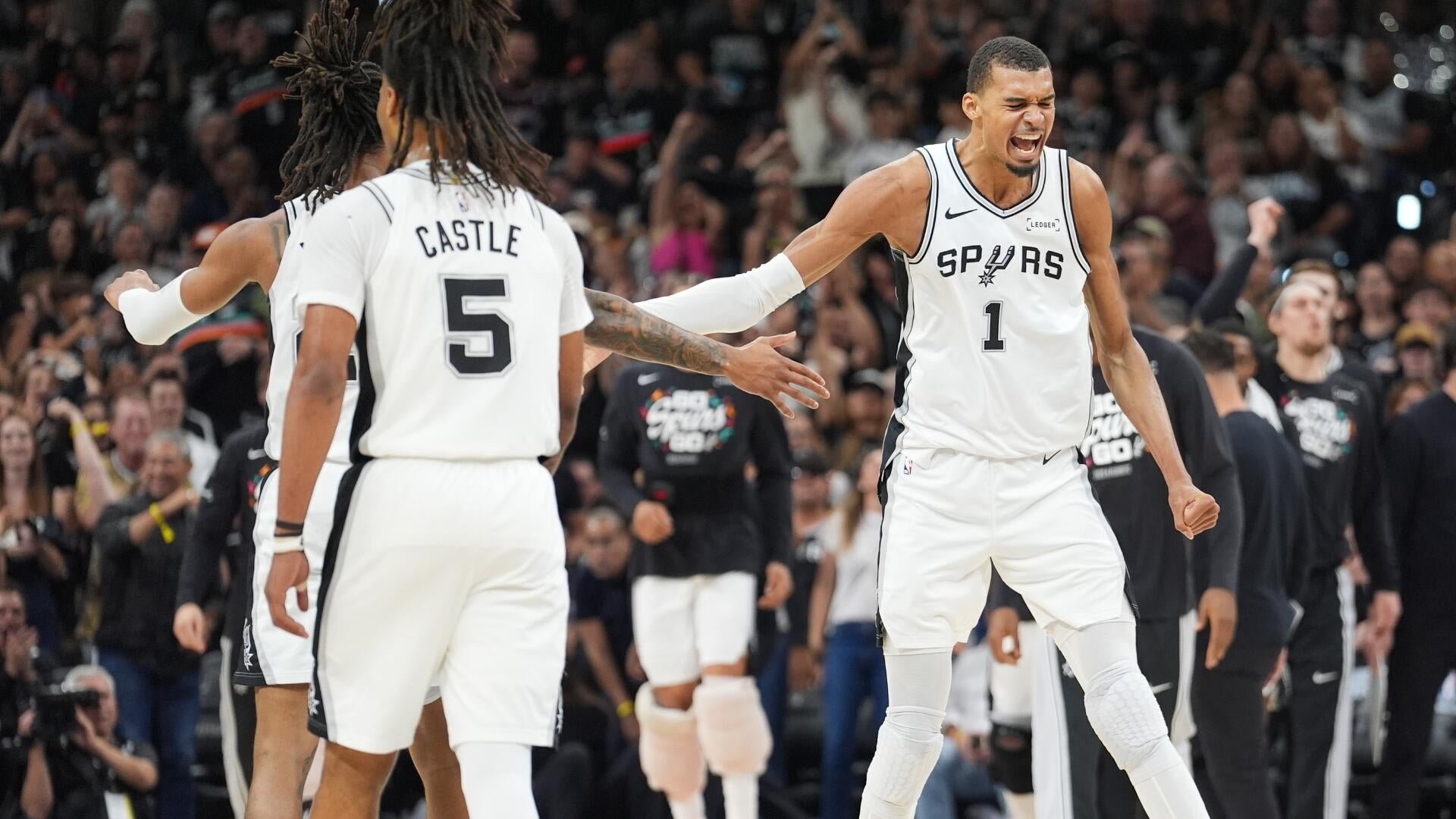
The New York Knicks are NBA champions for the first time in 53 years, closing out the San Antonio Spurs 94-90 in Game 5 of the 2026 Finals on the road at the Frost Bank Center on Saturday, 14 June 2026. The result — confirmed by the BBC at 04:59 UTC — ends the second-longest title drought in the league and hands the Spurs a series defeat in five games after New York had taken a 3-1 lead. Victor Wembanyama, in his first Finals appearance, finished the night on the wrong end of the box score but with a team-high 27.8 points per game across the series, a number the NBALive feed flagged ahead of tip-off at 8:30pm ET on ABC.
The arithmetic is simple and the symbolism is loud. New York has been the league's most scrutinised franchise for most of the last two decades. San Antonio, the model small-market organisation that built three titles around Tim Duncan, Tony Parker and Manu Ginóbili, picked first overall in 2023 and has spent three seasons accelerating a rebuild around a 7-foot-4 talent the league has not seen the like of. The Finals result is not just a championship; it is a referendum on which team-building model — veteran accumulation or player-first patience — actually finishes the job.
How Game 5 actually broke
San Antonio had home court and a building wired for one of the loudest crowds in the league, and the Spurs arrived at the arena in the late evening of 13 June (UTC) with Wembanyama as the centre of attention. NBALive's arrival clips dropped at 22:10 UTC for Wemby, 22:39 UTC for the Knicks, and 22:57 UTC for the Spurs as a group. Tip-off went at 8:30pm ET, the league's standard prime-time Finals window. The final score, 94-90, was tight enough to be a four-point game in the box score and a closer one emotionally: a four-point Finals clincher is rarely comfortable.
The series script followed the lead-in. New York stole Game 1 on the road, split Game 2, then took both games in New York to push the Spurs to the brink at 3-1. NBALive's pre-game post at 23:33 UTC on 13 June carried the line: "KNICKS (3-1) SPURS. GAME 5. 8:30pm/et on ABC." That was the standing before tip. CBS Sports had framed the night around prop markets — its 22:20 UTC piece ran a SportsLine model note targeting three NBA Finals props for Game 5 — which tells you where the league's broadcast partners thought attention would sit: on the margins, not the script. The script held.
Wembanyama's series is the subplot the league will sell all summer
Wemby is 22 years old, two seasons removed from his first All-NBA nod, and now one Finals appearance into his career. His 27.8 points per game across the series led San Antonio and, by the loose standards of rookie-and-second-year wings in their first Finals, was a credible top-line number. The NBALive post at 06:02 UTC on 14 June — after the trophy had been handed out in San Antonio — captured his postgame framing: "This is the biggest lesson of my life, as a team there is no better experience than what we just lived… as fuel to motivate him and the Spurs." That is the right tone for a team that just got outclassed on the margins, and it is the tone the league will run all summer as it tries to convert a five-game loss into next October's television inventory.
The counter-narrative is also real and worth naming. The Spurs were the second-youngest team to reach the Finals in the last 25 years by most reasonable roster-age measures, and the gap between them and a 53-year-drought-ending Knicks roster was, in rotation minutes, a championship. The Spurs were not supposed to be here in 2026 by most preseason models; their appearance in the Finals is, on its own, a positive outlier for a franchise that finished outside the play-in as recently as the 2023-24 season.
The structural frame: a league that wants parity and keeps rewarding patience
What the result actually confirms is a pattern the league's television partners have spent a decade pricing in. The Spurs' title windows from 1999 through 2014 were built on the most patient draft-and-develop model the modern NBA has seen, and the 2026 roster is a re-run of the same template with a once-in-a-generation centre replacing a once-in-a-generation power forward. The Knicks, by contrast, won this title on the back of a 3-1 series lead earned by accumulating veteran minutes — a model that is less romanticised but, in 2026, more reliable in a seven-game setting.
That tension is the structural story the league is now sitting with. The most-watched Finals storyline of the past two decades has been the Spurs' organisational patience, and the 2026 series is the cleanest test yet of whether that model, with the right No. 1 pick, can win a title in a league where star players swap teams more freely than they did in 2014. The answer in 2026 is no — but the question is not going away, because Wembanyama is 22 and under contract.
Stakes: what changes in New York, and what changes in San Antonio
In New York, the result changes a media cycle. The Knicks' last title came in 1973, a year most of their current ticket base was not alive for; the framing in local coverage will run toward restoration, redemption, and the closing of a half-century file. The Indian Express wire at 04:52 UTC on 14 June ran the same line: "NBA Finals: New York Knicks defeat San Antonio Spurs to snap 53-year title drought." That headline will dominate New York sports media for the next 72 hours, and the league will lean into the historical weight of it because Finals ratings on a 3-1 closeout are the broadcast partner's worst-case scenario beaten by a tight game.
In San Antonio, the result changes almost nothing about the long-term plan and changes everything about the next eight months. The Spurs are not going to fire their coach, are not going to trade Wembanyama, and are not going to deviate from the developmental model that got them here. What they will do is spend the offseason hunting the second and third stars that turn a Finals team into a Finals winner. The 27.8 points per game across the series is the floor of what Wembanyama is going to be, not the ceiling, and the Spurs know that better than anyone.
The single remaining uncertainty is the offseason. New York is a cap-sheet team that will face repeater-tax questions the morning after the parade; San Antonio is a draft-and-develop team that needs to convert cap space into a second creator. The Finals is over, but the actual roster decisions that decide next year's bracket are still ahead.
Desk note: Monexus framed Game 5 as the close of a structural argument about team-building models, not as a coronation piece. The wire outlets covered it as a New York story; the structural read is that the 2026 Finals tested whether patience or accumulation wins a title in the modern CBA, and the answer, narrowly, is accumulation — with the caveat that the losing model still has the best player in the series and a longer runway.
Wire provenance
This editorial synthesis draws on the following public wire/social posts:
- https://t.me/NBALive/1027
- https://t.me/NBALive/1029
- https://t.me/NBALive/1031
- https://t.me/NBALive/1034