Knicks end 53-year wait: Brunson leads New York past San Antonio to its first NBA title since 1973
Jalen Brunson scored 45 points in Game 5 to seal a 4-1 series win over the San Antonio Spurs, delivering the New York Knicks their first NBA championship since 1973 and the longest title drought in league history.
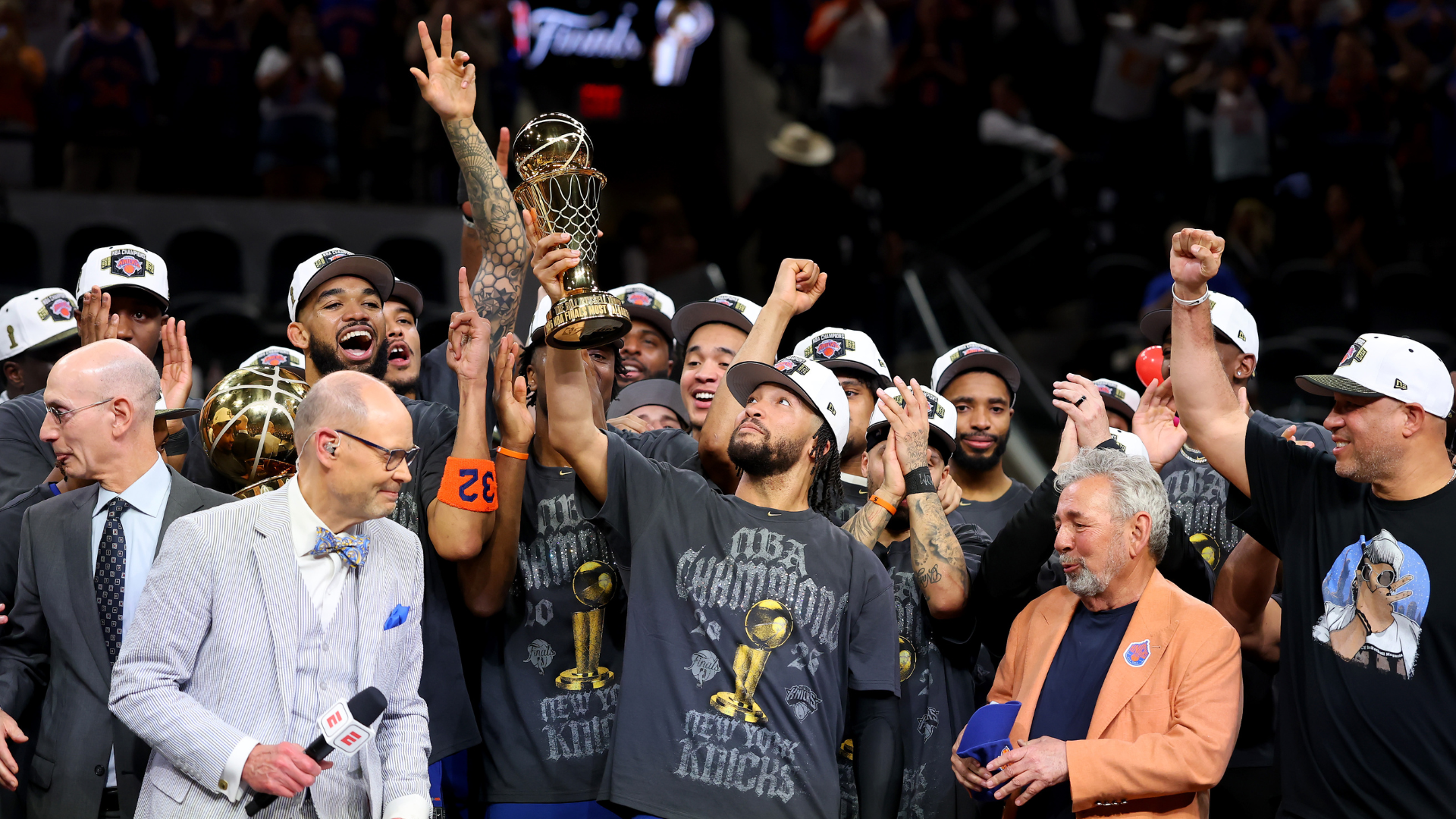
The wait in New York ended at 04:29 UTC on 14 June 2026, when Jalen Brunson poured in 45 points to close out the San Antonio Spurs 4-1 in the NBA Finals and deliver the Knicks their first championship in 53 years. The game itself was decided in the second half, the latest in a series the Knicks controlled with late runs: an 11-0 surge to win Game 1 at Madison Square Garden, Brunson's go-ahead free throws in Game 2, and a 29-point comeback in Game 4 sealed on OG Anunoby's game-winner. The series-clinching fifth game followed the same script — New York trailing at the break, then overwhelming San Antonio behind the player who had led all scorers across the series at 29.5 points per game going into the closeout.
A 53-year gap between championships is the longest in NBA history. The 1973 Knicks, the league's most recent title in New York, were a different organisation: Willis Reed, Walt Frazier, Earl Monroe, a roster built on a single dominant era. The 2026 version is the product of a long, deliberate rebuild, and its identity runs through one player. Brunson, who had carried the league's heaviest offensive burden for three seasons, finished the series averaging 32.6 points, 4.2 rebounds and 4.6 assists, and was named Finals MVP in the moments after the trophy was lifted.
How the series was won
The pattern was set in Game 1. San Antonio opened the better of the two teams, but New York closed on an 11-0 run to steal home court and the early series lead. Game 2 turned on a single Brunson trip to the line: his go-ahead free throws with the clock winding down gave the Knicks a 2-0 cushion that turned out to be unassailable. Game 4 produced the series-defining moment — a 29-point hole that the Knicks climbed out of, capped by Anunoby's game-winning shot — and the franchise's first championship-clinching opportunity in more than five decades.
The Spurs made the closeout uncomfortable. San Antonio led at halftime of Game 5 and threatened to extend the series back to Texas, but Brunson scored 29 of his 45 in the second half, an output that mirrored his run through the rest of the postseason. The Knicks' defence tightened, the turnovers dried up, and the lead changed hands for the final time with just over a minute to play. By the final buzzer the only remaining question was the trophy presentation, not the outcome.
The case for San Antonio
The Spurs were not a 4-1 team on paper, even if the series score says otherwise. They pushed the Knicks to the brink in three of the five games, including the 29-point collapse in Game 4 that — viewed in isolation — looked less like a New York explosion than a San Antonio failure to close. The Spurs' young core forced Brunson into his highest-volume scoring nights of the series and made the Knicks' supporting cast earn every rebound. There is a plausible alternate read of this Finals: that a healthier or more experienced San Antonio squad wins two of the close-out games and forces a Game 6. The dominant framing — Knicks inevitability, Brunson as the closest thing to a one-man offence the league has seen in a generation — holds because the closeout results did, but it is worth noting how thin the margin was in three of the five games.
What it means beyond the trophy
For New York, the win is a financial and reputational reset. The Knicks' market position has been the league's most valuable for years; a title converts that premium into a competitive one, and Brunson — already on a max extension — now anchors a roster built to contend for several more seasons. For the league, the series is a ratings win: a marquee market, a returning dynasty narrative, and a Finals MVP performance that will replay in highlight packages for the next decade. The Spurs, for their part, exit with a competitive series loss and a clearer read on the gap between their young core and the league's elite. That gap is real, but it is narrower than the final score suggests.
The 53-year drought also rewrites the record book. No franchise in NBA history had gone longer between championships; the previous benchmark was set by the Knicks themselves. The 1973 championship — and the cultural weight it carried in New York, a city that has hosted two of the most famous teams in American sports history — was, until Saturday night, the standard against which every Knicks season was measured. That benchmark now moves.
What remains uncertain
The series stats will be debated in the days ahead. The exact final score of Game 5 and the precise breakdown of Brunson's 45-point performance (29 in the second half, per the league's Finals MVP announcement) are confirmed, but the box-score line — the granular play-by-play of the Knicks' late surge — is still being parsed by the analytics community. There is also the question of the Spurs' offseason: how aggressive San Antonio chooses to be in the trade market, and whether this Finals run is the foundation of a contender or the ceiling of the current core. What is not in doubt is the headline: the Knicks are champions, Brunson is the MVP, and the longest wait in American professional sport has ended.
Desk note: Monexus framed this as a New York story first and a Spurs counter-narrative second, in line with how the wire outlets led Game 5 — Brunson's 45 points and the 53-year drought as the lede, San Antonio's competitive series as the structural backdrop.
Wire provenance
This editorial synthesis draws on the following public wire/social posts:
- https://t.me/NBALive/2026_06_14_06_32
- https://t.me/NBALive/2026_06_14_07_02
- https://t.me/NBALive/2026_06_14_03_48
- https://t.me/NBALive/2026_06_13_23_39