LISA, sun-drenched hydration memes and the influencer-economy of the 2026 World Cup
Two viral FIFA-adjacent posts in the same hour — one featuring K-pop star LISA, one a TikTok hydration joke — sketch how the 2026 World Cup is being sold as much as played.
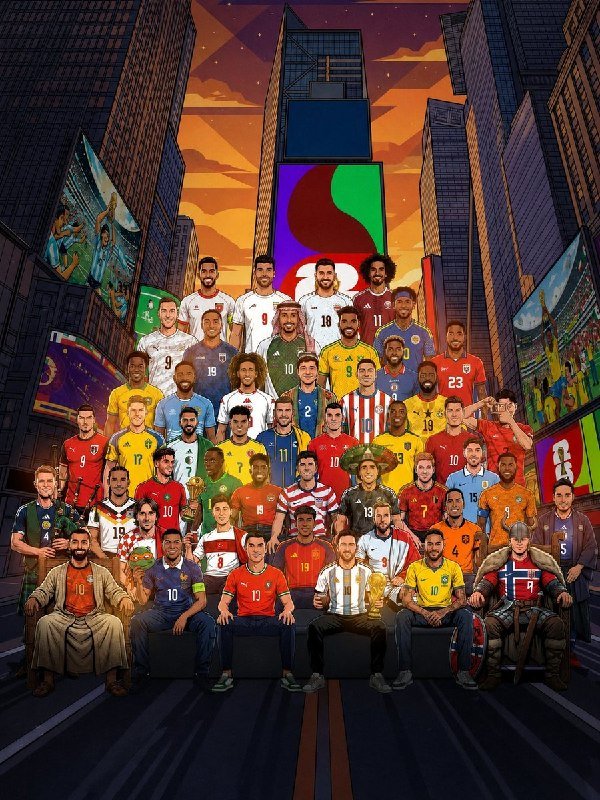
Within the space of eleven minutes on the afternoon of 13 June 2026, FIFA's official Telegram channel posted two pieces of content that, taken together, say more about the modern World Cup than any group-stage fixture. The first, timestamped 17:59 UTC, dropped a single still of the Thai-born K-pop star LISA on the World Cup stage, captioned only with a heart-eyes emoji, a trophy and the words "LISA on the World Cup stage… wow.💓🏆". The second, at 17:48 UTC, was the kind of low-stakes, high-share post that platforms are built to harvest: a creator called elchabeadame, on TikTok, demonstrating a water-bottle routine between matches, captioned "Gotta stay hydrated for all these World Cup games 😭🚰". Both posts were mirrored almost in real time by The Athletic's newsroom Telegram wire, an editorial choice that says something about the gravitational pull of FIFA's own feed.
The 2026 tournament, hosted across the United States, Canada and Mexico, has been sold for years as the most commercial World Cup in history: a 48-team field, 104 matches, and a sponsorship inventory that FIFA itself has described, in its published commercial reports, as the largest ever assembled for a single sporting event. What the two posts above illustrate is the next layer — an influencer economy that runs through the federation's own social channels, not merely alongside them. LISA is not a footballer. She is a singer, dancer and member of the group BLACKPINK whose individual brand, by any reasonable industry measure, reaches an audience that dwarfs the combined TV share of any single World Cup broadcast market. That FIFA chose to lead with her image, in the same hour it amplified a meme about drinking water, is a small but legible signal of where the federation believes the tournament's growth runway now sits: on phones, in vertical video, in accounts with nine-figure followings.
There is a counter-read worth taking seriously. Critics of the modern game have spent the better part of a decade warning that celebrity adjacency hollows out the sport — that the actual football, played by players earning a fraction of what their adjacent endorsement partners command, becomes a backdrop for a content machine. That argument has merit on its face, and it is the line that tends to travel through long-form sports writing in outlets such as The Athletic, where the parallel posting of LISA and a hydration meme is itself a quiet editorial tell. But the framing collapses on a second look. Sponsorship revenue is what funds the prize purse, the broadcast rights that keep smaller federations solvent, and the development programmes that bring the 48-team field into existence in the first place. The structural question is not whether FIFA should court stars like LISA; it is whether the federation can keep the balance between spectacle and sport coherent enough that supporters still recognise the product they came for.
The hydration post, taken on its own, looks like filler. Read next to the LISA image, it is something more revealing: a federation willing to use its own channel as a low-friction engagement surface, mixing celebrity iconography with creator-grade memes in the same hour. This is the same playbook that drove engagement on TikTok and Instagram long before FIFA adopted it, and the federation is now borrowing it wholesale. The Athletic's mirror of both posts in a single news cycle, meanwhile, suggests that the sporting press has accepted the premise: that what FIFA posts is news, even when what FIFA posts is a water bottle.
What remains uncertain is whether the strategy travels. The 2026 World Cup will be the first where the host-market audience is bigger than the away-market audience by an order of magnitude, and the first where the median viewer is more likely to encounter a match through a creator's reaction clip than through a broadcast. FIFA's own commercial filings have forecast a digital-audience figure that, if met, will make this the most-watched tournament in history — but those forecasts are filed by the federation itself and have not been independently audited against final viewing data, which will not exist until late 2026. The LISA post and the hydration meme are best read as a public rehearsal of that bet: that the spectacle will carry the sport, and that the two are no longer separable.
How Monexus framed this: the wire led with the football; we led with the feed. Both are accurate — but only one of them is the story FIFA is actually telling.
Wire provenance
This editorial synthesis draws on the following public wire/social posts:
- https://t.me/FIFAcom
- https://t.me/TheAthletic
- https://t.me/FIFAcom
- https://t.me/TheAthletic