Maariv reads the room: Tehran won, and Israel's elite isn't ready to say so
A front-page verdict in one of Israel's largest Hebrew dailies names Tehran the "undisputed major victor" of the looming Washington agreement. That a major Israeli paper is saying it out loud is the news.
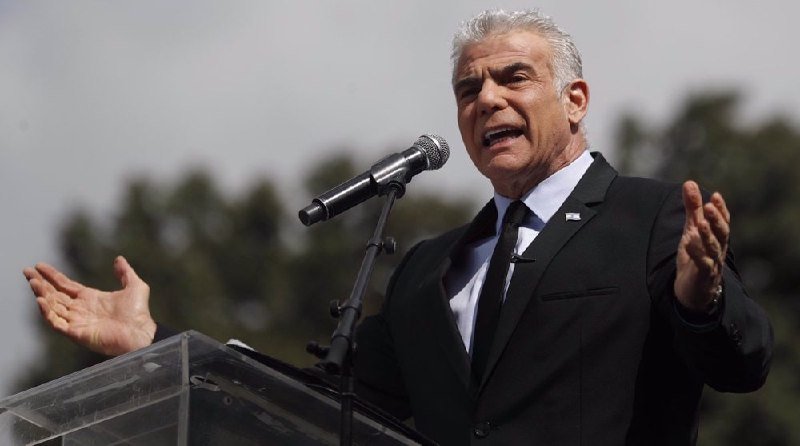
On the morning of 14 June 2026, an unusual line crossed into Arabic-language feeds from a familiar Hebrew source. Maariv, one of Israel's two largest broadsheet dailies, was quoted describing Tehran as "the undisputed major victor" of the agreement now taking shape between Washington and the Islamic Republic, and suggesting that the Iranians have, in the paper's framing, out-thought the Israeli leadership: the prime minister, the defense minister, and the rest of the governing coalition. The framing travelled fast, in no small part because the outlet making it is not a hostile one.
What Maariv actually said
The dispatch, carried into Arabic by Al-Alam on 14 June 2026 at 04:46 UTC and amplified at 05:20 UTC, is a digest rather than a transcript: the wire summarises a Hebrew-press verdict, not a full translation. Two distinct propositions sit inside it. The first is substantive — that the looming US–Iran deal, in whatever form it is being concluded, hands Tehran a strategic win that no amount of subsequent Israeli diplomacy can rewrite. The second is partisan and more corrosive — that this defeat is partly intellectual, the product of an Israeli political class that has misjudged Iranian staying power, sanctions resilience, and the speed at which a determined regional player can convert a negotiation into a platform.
That second claim is the more telling. It is one thing for an opposition newspaper to tell the government it has been outplayed; it is another for an establishment title close to the political centre to say, in effect, that the prime minister and his defence minister are not in the same cognitive league as their Iranian counterparts. The verdict is being delivered by a Hebrew paper, in Hebrew, to a Hebrew readership, on the day the deal appears to be crystallising.
Reading the deal itself
The sources carried by the Al-Alam wire do not lay out the deal's text, its sanctions architecture, its verification regime, or its timeline. They do not specify which sanctions snap back, which stay, which are sequenced against which Iranian compliance milestones, or what the price is for non-compliance. They do not name a counterparty beyond "Washington." The substance, in other words, has to be inferred from the political temperature on the receiving end.
That is, in itself, the point. A defeat is not always announced in the document that records it. Sometimes it is announced by the loser, in advance, in his own press, on the morning the deal is expected to land. Maariv's verdict is being delivered before the ink is dry, and the fact that the paper is willing to say it out loud — rather than waiting to see what survives contact with the Knesset recess — is part of the evidence.
Why an Israeli paper is doing Tehran's framing for it
This is the structural point that matters. Mainstream Israeli commentary has, for the better part of two decades, treated the Iranian file as one in which Jerusalem sets the tempo and Washington follows. A front-page concession in Maariv that the tempo has flipped is not, in this reading, a one-off mood swing. It is the public face of a quiet reassessment inside the Israeli security commentariat that has been running, off the page, for at least a year: that sanctions do not break a state that has been building sanctions-resistance for a generation; that the diplomatic calendar is set in Geneva, Vienna, Muscat, and Doha, and not in Tel Aviv; and that Israeli maximalist demands, when floated in public, are a useful negotiating tool for Tehran, not a brake on it.
The deeper institutional claim — that the Iranian side is, in Maariv's words, "smarter" than the Israeli leadership elite — is sharper than the usual "we miscalculated" mea culpa. It is a statement about the quality of decision-making at the top of the Israeli state. In a country where strategic competence is treated as a national-security good, the charge is unusually direct. It is also one that an opposition paper could not have carried without the implicit blessing of sources close to the security establishment. Maariv does not publish this kind of verdict on a whim.
What remains genuinely uncertain
The wire digest does not name the document being signed, the parties in the room, the date of signature, or the mechanism by which compliance will be measured. It does not say what has been conceded, what has been withheld, or what the price of failure is. It does not specify whether the "victor" framing is Maariv's editorial line, a senior columnist's view, or a quote attributed to a named official. On a story of this weight, those are not small gaps. The structural read — that the diplomatic balance has moved, and that an Israeli establishment paper is willing to say so in Hebrew before the deal is formally announced — can be reported with confidence. The specific terms, the sequencing, the verification architecture, and the political reception in the Knesset are not in these sources and should not be invented to fill the page.
Stakes
If Maariv's verdict holds, the near-term consequence is a managed Israeli political crisis, not a strategic one. The coalition survives or it does not on the backbench arithmetic, and an unnamed agreement in Washington is the kind of issue that fractures a cabinet before it fractures a country. The longer-term consequence is more durable: a public record, in Hebrew, that the diplomatic tempo on the Iranian file no longer runs through Jerusalem. That record will be cited, in Hebrew and in Arabic, every time the next round opens. The Iranians, in Maariv's telling, have earned that record. The Israeli elite, in the same telling, wrote it for them.
Desk note: Monexus has read the Maariv verdict through the Al-Alam Arabic wire rather than from the Hebrew original; the wire carries the proposition, not the column text. We have reported the framing, not invented the document.
Wire provenance
This editorial synthesis draws on the following public wire/social posts:
- https://t.me/alalamarabic
- https://t.me/alalamarabic