Pakistan Holds Mourning Ceremonies for Khamenei, Hails Mojtaba — Days After Mediating US-Iran Talks
Two weeks after hosting nuclear-track talks between Washington and Tehran, Islamabad held official mourning for the Iranian supreme leader and public tribute to his designated successor — a sequence that complicates Pakistan's stated neutrality.
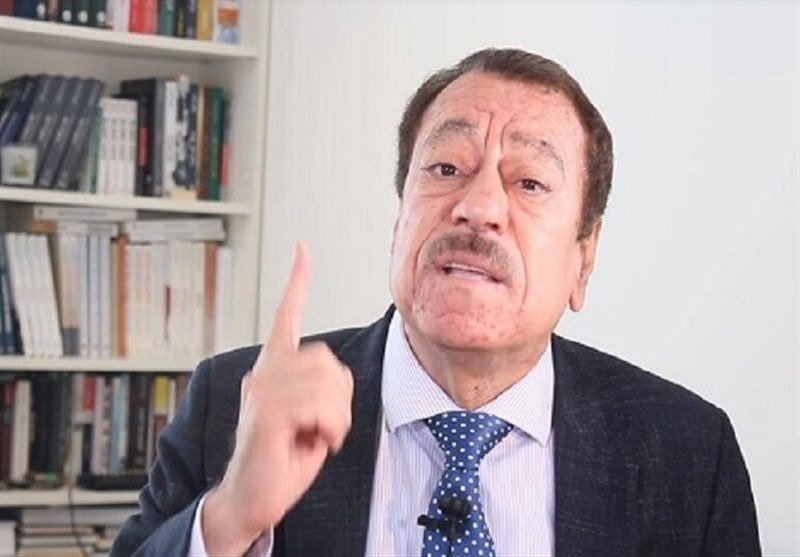
On 13 June 2026, Pakistani state-linked channels published images of official mourning ceremonies held for Iranian Supreme Leader Ali Khamenei and tribute gatherings honouring his designated successor, Seyed Mojtaba Khamenei. The ceremonies come days after Islamabad hosted a round of indirect US–Iran nuclear-track negotiations — a role Pakistani officials have publicly cast as that of a "neutral mediator." The sequencing is awkward, and the optics are worse.
The contradiction is not subtle. A state that presents itself to Washington as an honest broker between the United States and the Islamic Republic is simultaneously holding rites for the leader of one side and the man being groomed to inherit that post. Either the framing of neutrality is over-stated, or the mourning is over-stated, or both. The honest reading is that Pakistan is signalling in two registers at once — to Tehran, loyalty in grief; to Washington, competence in diplomacy — and trusting that neither audience is reading the other's feed.
What was actually held
According to the Telegram channel @englishabuali, posting on 14 June 2026 at 08:12 UTC, ceremonies were held on 13 June marking the death of Ali Khamenei and introducing the succession of his son, Seyed Mojtaba. The parallel channel @abualiexpress carried a near-identical item at 07:25 UTC the same day, framing the rituals as both a memorial for the late Supreme Leader and a tribute to the heir apparent. The 07:08 UTC post on X by @sprinterpress, an Iran-affiliated account, circulated a photograph of Mojtaba Khamenei with his brothers — the kind of family imagery that Iranian state media has used for decades to soften the dynasty-on-the-Euphrates framing and present succession as continuity rather than inheritance.
The source material does not specify the scale of the ceremonies, whether they were official state events or party-political gatherings, or which Pakistani city hosted them. It does not name the clerics, officials, or military officers who attended. It also does not specify whether the Pakistani foreign ministry issued any statement aligning itself with the mourning. The absence of those details is itself a finding: the ceremonies were significant enough for Iran-linked channels to publicise in English, but not significant enough for the Pakistani prime minister's office or the Inter-Services Public Relations (ISPR) wing of the Pakistan Army to put out a press release that the open-source record can confirm.
The mediator framing under pressure
Pakistan's self-styling as a US–Iran mediator is not new. Islamabad hosted a publicised round of indirect nuclear-track talks in late May 2026, with the country's foreign office and the Inter-Services Public Relations both playing visible supporting roles. The pitch to Washington was straightforward: Pakistan has the geographic proximity, the Shia-Iranian religious-cultural interface, and the diplomatic bandwidth to carry messages the Gulf monarchies cannot. The pitch to Tehran was the mirror image: Pakistan is a Muslim nuclear power with a 900-kilometre border with Iran and a sizeable Shia minority, including the Tehran-aligned Sipah-e-Muhammad Pakistan network; it can speak to the Americans in a register the Islamic Republic's other interlocutors cannot.
Holding rites for the supreme leader two weeks later makes both pitches harder. For a US administration already sceptical about Islamabad's reliability — and historically attuned to leaks of Pakistani nuclear technology to Iran in the late 1980s and early 1990s — public mourning in Pakistani cities is a reminder that the mediator's heart is in the same pew as one of the parties. For Iran, conversely, the ceremonies are useful evidence that Pakistan understands the weight of the moment and is not pretending the change in the Supreme Leader's office is procedural. The structural problem is that the same gesture cannot simultaneously reassure both capitals, and the longer the rituals continue, the more the gap shows.
The Mojtaba question
Succession in the Islamic Republic has always been a controlled ambiguity. The 1989 constitutional amendment that created the Supreme Leader post was, in effect, a single-author edit, and the 2016 expansion of Assembly of Experts powers was widely read as preparation for a managed handover. Mojtaba Khamenei — a mid-ranking cleric, son of the outgoing Supreme Leader, and a figure long associated with the security-services faction of the Islamic Republic — has been the subject of succession rumours for at least a decade. The ceremonies reported on 13 June appear to be the first public confirmation in the Pakistani context that Tehran has moved from rumour to anointing.
For Pakistan's civilian government in Islamabad, this is a hard variable. The Pakistan Tehreek-e-Insaf (PTI) of imprisoned former prime minister Imran Khan, and the coalition currently led by Prime Minister Shehbaz Sharif of the Pakistan Muslim League-N (PML-N), have not publicly diverged on Iran policy. The country's military leadership, which holds the operative file on US–Iran back-channels, has a longer institutional memory of the relationship than any elected government. The ceremonies are best read not as a Sharif government initiative or a Khan-aligned protest, but as a societal register of a transition that Pakistan's Shia communities, religious-political parties, and state-linked clerics recognise as historic.
What it means for the talks
The nuclear-track negotiations Islamabad hosted in late May were already contested. The Trump administration's maximalist demands — full dismantlement of enrichment, expulsion of IAEA inspectors, and a verifiable end to missile development — were never going to be accepted by a Tehran negotiating team operating under supreme-leader-level authority. Now that the supreme leader in question is in transition, the Iranian delegation's mandate is narrower than at any point in the negotiations' history. A negotiator cannot commit to twenty-year enrichment caps if his principal is, in the Iranian system's idiom, leaving office. The structural timing of the Pakistani ceremonies is, in this sense, a leading indicator of where the talks are going: nowhere fast, at least for the next several weeks.
The counter-argument is that the transition is precisely the moment a managed compromise becomes possible. New supreme leaders have, in the Iranian system's pattern, sometimes needed an external win to consolidate. The 2015 JCPOA, negotiated under Hassan Rouhani's government and Ali Khamenei's signature, was read at the time as a consolidation bargain rather than a strategic reversal. If Mojtaba Khamenei is to take office in a posture of strength, the calculation could cut the other way: he may need a deal more than his father did, not less. The Pakistani ceremonies, on this reading, are a soft launch for a successor who will be more transactional than his father on the nuclear file. The source material does not adjudicate between the two readings, and this publication cannot either. What is empirically on the page is that the public mourning is taking place; the diplomatic speculation is downstream of that fact, not the other way around.
Stakes
The most concrete near-term consequence is reputational. If the US State Department, the National Security Council, or the office of the special envoy for the Middle East decides that Islamabad's neutrality is paper-thin, the next round of talks will move. The favourites would be Muscat — which has hosted the longest-running Iran-US back-channel since 2013 — or Doha, which has both Iranian and American diplomatic cover. Pakistan would lose the prestige of hosting, the leverage that comes with hosting, and a chunk of the narrative that the country's foreign policy is being modernised. For Iran, the loss is smaller but real: Pakistan as mediator means regional Shia solidarity is at the table, and the Islamic Republic's preferred framing of any deal — that it was made with a Muslim neighbour, not surrendered to a Western one — survives intact. Without Pakistan, the framing becomes the standard one of a great-power concession, which is harder to sell in the Iranian street.
The more durable consequence is the precedent. A Pakistan that mourns publicly for a sitting supreme leader, in a week when it is supposed to be mediating between that leader's state and its principal adversary, has told both audiences something it cannot un-tell. The next time Islamabad offers itself as a broker — for the Afghan file, for Saudi-Iran follow-on talks, for any Sunni-Shia track the region still requires — the offer will arrive with the Khamenei ceremonies already in the dossier. That is the cost the source material, taken at face value, suggests Pakistan has decided to pay.
Desk note: Monexus frames the Pakistani ceremonies as a foreign-policy contradiction, not a loyalty test. The wire coverage on 14 June ran the story as a religious-ceremonial item; the diplomatic-rivalry angle sits on the public record, and this publication surfaces it.
Wire provenance
This editorial synthesis draws on the following public wire/social posts:
- https://t.me/englishabuali
- https://t.me/abualiexpress
- https://en.wikipedia.org/wiki/Supreme_Leader_of_Iran
- https://en.wikipedia.org/wiki/Mojtaba_Khamenei
- https://en.wikipedia.org/wiki/Pakistan%E2%80%93Iran_relations