The Pentagon Wants Anthropic Out. The Market Says That's Wishful Thinking.
A prediction market is giving Anthropic an 11% chance of closing a Pentagon deal by month's end — a number that says more about Washington's AI civil war than about Anthropic's prospects.
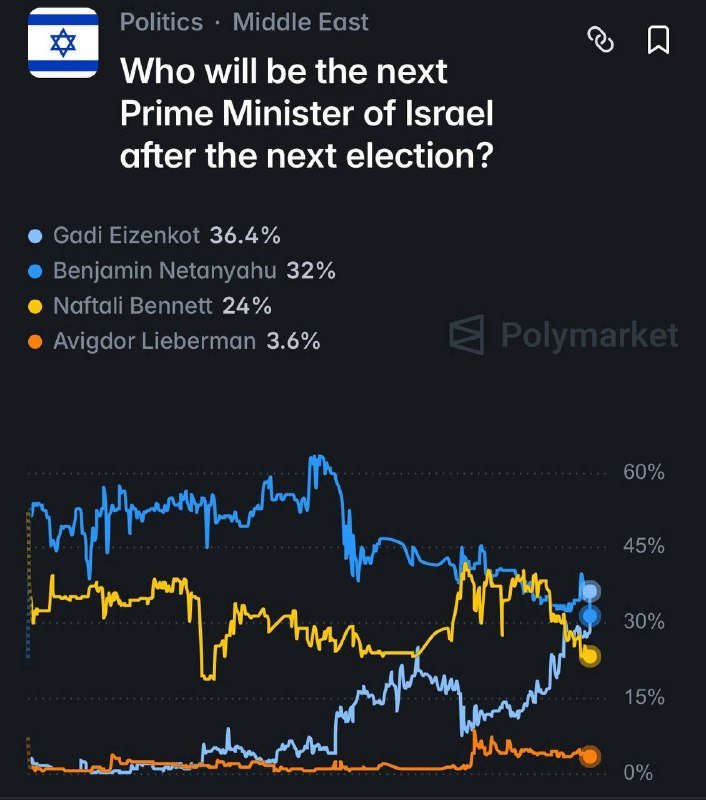
The Pentagon's relationship with Anthropic is now a live bet on a prediction market — and the market is not buying what Defense Secretary Pete Hegseth is selling. As of 21:44 UTC on 13 June 2026, Polymarket was pricing the odds of an Anthropic–Pentagon deal by the end of the month at 11%, a figure that has held remarkably steady against a backdrop of escalating rhetoric from the Department of War (the Pentagon's rebranded public-facing name in this administration).
The salient detail is not the number. It is the gap between the number and the political theatre. Hegseth said on 13 June that "every passing day" vindicates the decision to remove Anthropic from Pentagon systems, framing the expulsion as already settled. Polymarket disagrees, but only mildly. The contract has not collapsed to single digits, which means real money thinks a last-minute reversal remains plausible.
What Hegseth actually said
Hegseth's statement, posted publicly on 13 June 2026, is the clearest articulation yet of the Defense Department's posture: that the relationship with Anthropic is severed, that the severance was correct, and that the passage of time itself is the proof. The phrasing matters. By invoking "every passing day," Hegseth is pre-empting the obvious counter-argument — that Anthropic might still land a contract before the calendar turns. He is closing the rhetorical door that a deal would otherwise walk through.
This is the language of a department that has already moved on, not one that is posturing ahead of negotiations.
What Polymarket is actually pricing
An 11% implied probability is not zero. It is also not a tail-risk number — those live in the 1–3% range when the political signalling is this uniform. The contract is implicitly asking: given the current state of play, what is the realistic chance that between 14 June and 30 June 2026, a contractual instrument between Anthropic and the Department of War gets signed?
For that to happen, one of several things would need to occur: a political reversal inside the administration; a quiet carve-out (a narrow-use licensing arrangement, a research-only contract, an exception for classified workloads); or a face-saving compromise that lets both sides claim a win. Polymarket traders are evidently pricing the first two as meaningfully more likely than the third.
The interesting structural question is who is on the other side of those bets. The contract's 11% price is not an abstract consensus — it is the marginal trader's view, after accounting for everyone who already thinks the deal is dead. Someone, somewhere, is willing to pay for a non-trivial slice of the tail.
The structural frame
The Pentagon–Anthropic fight is no longer about a specific procurement. It has become a proxy war over which AI labs get privileged access to the US national-security state, and on what terms. The administration's broader posture has been to consolidate AI procurement among a smaller set of preferred vendors, with the explicit framing that frontier model deployment in defence contexts is a matter of competitive advantage against China. Anthropic, along with a small number of peers, occupies an uncomfortable middle position: too capable to ignore, too independent to control easily.
Prediction markets, for their part, are increasingly being used as a real-time thermometer for political decisions that official channels are slow to confirm. An 11% number is a kind of disciplined humility — a refusal to treat the absence of a deal as proof that no deal will arrive, but also a refusal to confuse a public slap-down with a closed door.
The serious part
The stakes here are not symbolic. If the Pentagon's current posture hardens into policy, the practical consequence is that frontier US AI development gets routed through a narrower vendor set, with all the supply-chain, single-point-of-failure, and procurement-capture risks that implies. If the door reopens — even partially — the precedent matters more than the contract: it would signal that even an administration that has publicly demonised a frontier lab can be moved by structural necessity.
The Polymarket line is, in this sense, a small instrument with a large information content. Watch whether it moves. If it drifts toward 20%, something is shifting inside the building. If it collapses below 5%, Hegseth's framing becomes the consensus view, and the market is telling you the political question is over even if the contracts have not yet been signed.
This publication framed the Polymarket data as a measure of policy probability rather than a forecast of corporate outcome, distinguishing the question of whether a deal gets signed from the question of whether the underlying access arrangement survives the month.