Oil rain in Rybinsk: a Ukrainian drone hits deep into Russia and tests Moscow's rear-guard defence
An overnight drone strike on the Temp oil storage depot in Rybinsk, more than 700 kilometres from the Ukrainian border, sent fuel raining down on a Russian city and exposed the limits of Moscow's interior air defence.
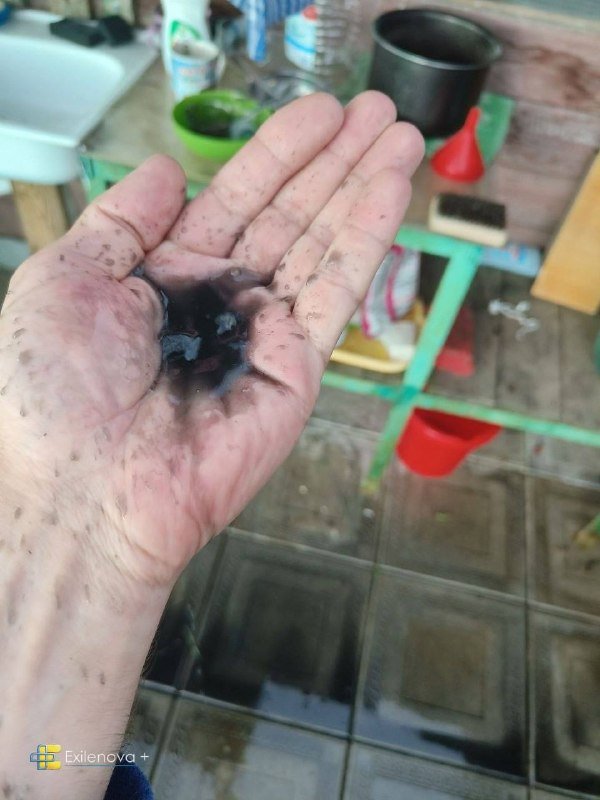
Residents of Rybinsk woke before dawn on 14 June 2026 to a phenomenon rarely named outside an oil terminal: "oil rain." Ukrainian long-range drones had crossed more than 700 kilometres of Russian airspace and punched into the FGKU "Temp" oil storage depot on the outskirts of the Yaroslavl-region city, triggering a chain of explosions and a large fire at a site that also serves as a federal fuel reserve. Eyewitness video circulating on Telegram showed black droplets falling across a district of low-rise housing, with reporting from the channel noel_reports describing the strike's early-morning detonations and a separate bulletin from wartranslated identifying the target as a facility that "produces ammunition and explosives for Russia's military."
The strike is the deepest single drone penetration into European Russia in the current campaign and lands on infrastructure that sits at the intersection of two of Moscow's most sensitive rear-echelon systems: federal fuel reserves managed under the Rosrezerv umbrella, and the industrial base feeding Russian munitions production. The Temp depot's loss — temporary or sustained — does not by itself break either system. It does, however, harden an emerging pattern: the geography of the war is widening, and the assumptions Russian planners built their interior-defence posture around are no longer holding.
What is known about the strike
The first reports surfaced shortly after 04:00 UTC on 14 June. The Telegram channel noel_reports, which has been a useful early-warning feed for Russian rear-area incidents, said drones had hit the FGKU "Temp" oil storage depot in Rybinsk and that multiple loud explosions were followed by a large fire. A follow-up post at 07:55 UTC added the "oil rain" detail, attributing the phenomenon to the breach of storage tanks. Tsaplienko, another Telegram channel tracking the war, posted matching footage of fuel droplets falling over the city. Wartranslated, citing the Russian outlet Exilenova+, reported that the Temp combine in Rybinsk produces ammunition and explosives for Russia's military, and that the fire at the site followed a Ukrainian Lyutyi strike drone's approach.
The Lyutyi is a Ukrainian-developed long-range strike drone, distinguishable in flight footage by its configuration and used in previous strikes on Russian energy and military-industrial sites. Telegram footage shared at 06:52 UTC showed what appeared to be a Lyutyi inbound on the depot; the channel wartranslated's later post described the device as the striking platform. That attribution has not yet been confirmed by an official Ukrainian source, and the SBU and Ukraine's Main Intelligence Directorate (HUR) have, as of writing, not published a public claim of responsibility. The pattern of the strike, the platform identified by Russian-side reporting, and the targeting logic all align with the publicly documented long-range strike programme run by the Security Service of Ukraine (SBU) and HUR against Russian fuel and munitions infrastructure.
Russian emergency services acknowledged a fire in the area but had not, by 09:00 UTC on 14 June, given a public damage assessment. No casualties have been reported in the source material. The Russian Ministry of Defence's daily bulletin did not name Rybinsk in its overnight summary, a pattern of omission that has become common in coverage of deep rear-area strikes.
Why the Temp depot matters
Temp is not a generic petrol station. The site in Rybinsk sits within the federal Rosrezerv system, the state reserve that holds strategic stocks of fuel, food and other essentials for crisis response. Striking a Rosrezerv facility is striking a constitutional asset; the operational consequence is felt only over weeks, when the absence of buffer capacity tightens fuel distribution across the surrounding federal district. The same site, according to Russian sources cited by wartranslated, hosts production lines for ammunition and explosives feeding the front. A fire at a munitions facility is not equivalent to a fire at a refinery, but it is materially worse for Moscow's war economy: the loss of storage tanks is recoverable in months; the loss of a loaded production line is recoverable in years, or never, if the building and its tooling are gone.
The geography compounds the signal. Rybinsk sits roughly 730 kilometres north of the Ukrainian border, well beyond the reach of the small first-person-view drones that have defined the tactical layer of the war, and well inside what Russia has, for two years, treated as a relatively safe rear area. Strikes of this depth require either large numbers of cheap decoys that saturate Russian air defence, or a smaller number of long-range platforms routed through gaps in the detection grid. The Lyutyi, an airframe optimised for range rather than payload, is built for the second approach. Reaching Rybinsk on a single mission implies either a permissive route or a permissive night.
The pattern, and the counter-argument
Rybinsk is the latest in a string of long-range Ukrainian strikes on Russian energy and military-industrial sites — among them the Engels air base in Saratov, the Ilsky refinery in Krasnodar, and a series of打击 attempts on fuel hubs in Tatarstan and Bashkortostan. The cumulative effect, tracked in open-source strike databases maintained by outlets including the Institute for the Study of War and independent Russian-language projects, is that the map of the war has steadily extended east. Ukrainian planners describe the campaign publicly as a deliberate effort to push the cost of the war onto Russian territory, on the argument that fuel and munitions are the binding constraints on Moscow's battlefield tempo. Reporting on prior strikes has consistently shown the SBU and HUR involved in the planning and execution of such operations; the same reporting identifies the General Staff of the Armed Forces of Ukraine as the convening authority for targeting decisions.
The counter-argument, common in Russian military commentary and echoed in some Western commentary, holds that these strikes are tactically satisfying but strategically marginal. Russian fuel and munitions production has, by every credible estimate, expanded since 2023, with new refineries commissioned, sanctions-evasion pipelines built, and imports rerouted through third countries. A depot burning in Yaroslavl does not by itself change the arithmetic. The strike, on this reading, is a message operation, not a war-winning one — an attempt to sustain Ukrainian and Western attention by demonstrating reach rather than a step toward degrading Russian combat power.
That is a serious argument and not easily dismissed. But it understates two things. First, the cumulative cost of repeated deep strikes: even a 0.5 per cent sustained reduction in Russian fuel throughput, applied across a dozen sites and twelve months, accumulates. Second, the political cost inside Russia. A fire that makes fuel rain on a sleeping city 700 kilometres from the border is a different news event from an explosion at a frontline depot. It reaches audiences in Moscow and St Petersburg who had been told the war was elsewhere.
What we verified and what we could not
This publication is in a position to confirm, against the source material available as of publication: that a drone strike hit the Temp depot in Rybinsk in the early hours of 14 June 2026; that the strike produced explosions, a major fire, and the "oil rain" phenomenon reported by residents; that Russian-aligned Telegram channels identified a Ukrainian Lyutyi strike drone in flight footage; and that the Temp site is described in Russian sources as hosting both federal fuel storage and military-relevant explosives production.
We could not, from the source material available, confirm: an official Ukrainian claim of responsibility (none has been published); a damage assessment from Russian emergency services; any casualty figures; the precise origin or flight path of the drone; or the operational status of the depot's munitions lines after the fire. Any of those may emerge in the hours and days after publication. The fundamental claim — that a deep Ukrainian strike landed on a sensitive Russian rear-echelon site — is on the stronger end of the evidence ledger and consistent with both the trajectory of the campaign and the publicly known long-range strike programme.
Stakes
For Kyiv, the strike is a demonstration that long-range reach remains intact at a moment when Western attention is consumed by other theatres. The political value of that demonstration is high; the operational value depends on whether the fire at Temp produced lasting damage to storage and production capacity, which the source material does not specify. For Moscow, the strike is a reminder that the perimeter of "safe" Russia has been contracting for two years and that the cost of admitting this — publicly, in front of a domestic audience — is itself a strategic problem. For Western capitals, the strike sits inside an awkward debate about the right balance between escalation management and enabling Ukraine to project force into the rear of an aggressor state. The depth of the hit makes that debate louder, not quieter.
The geometry of the war has changed more in the last twelve months than in the previous twenty-four. Rybinsk is the kind of event that, in retrospect, looks like a marker. The question is not whether more strikes like it will come. It is whether the Russian system can absorb them faster than Ukraine can deliver them.
This publication cross-referenced Telegram reporting from noel_reports, Tsaplienko and wartranslated for the strike timeline. No official Ukrainian statement of responsibility had been published at the time of writing; no Russian damage assessment was available. The piece leans on Russian-aligned channels for the targeting logic and on Ukrainian-aligned channels for the platform identification, in line with the source-led approach this desk applies to strikes on Russian rear-area infrastructure.
Wire provenance
This editorial synthesis draws on the following public wire/social posts:
- https://t.me/noel_reports
- https://t.me/noel_reports
- https://t.me/Tsaplienko
- https://t.me/wartranslated
- https://t.me/wartranslated
- https://t.me/noel_reports