Scotland end 36-year World Cup wait as McGinn downs Haiti in Boston
John McGinn's scrappy first-half strike gave Scotland a 1-0 win over Haiti in Boston, their first World Cup victory since 1990 and the Tartan Army's return to the tournament after a 28-year absence.
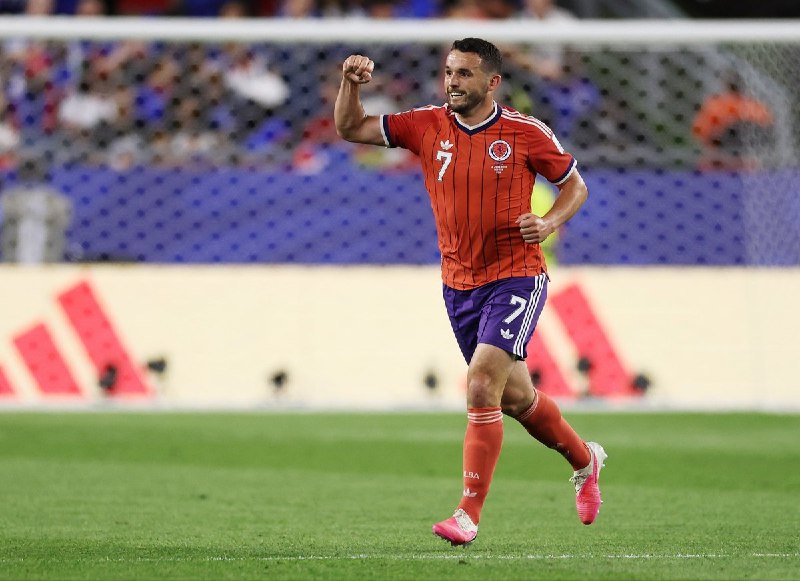
John McGinn's deflected first-half goal gave Scotland a 1-0 win over Haiti at Boston Stadium late on 13 June 2026, ending a 36-year winless run at a men's World Cup and delivering the Steve Clarke era the result it had been built for. The Aston Villa midfielder's scuffed strike, which he later described as something he could not even begin to take credit for, separated a nervy, attritional Group C opener in which the Caribbean underdogs more than held their own.
A 1-0 scoreline flatters no one and condemns no one. For a Scotland side returning to the World Cup after a 28-year absence, the three points were the only currency that mattered. For Haiti, making their first appearance at the tournament since 1974, the performance offered genuine encouragement that the gap to the seeded side was not the chasm the rankings suggested.
The match
Haiti, roared on by a sizeable Boston diaspora, started with the kind of directness that has long been the calling card of Caribbean football. Scotland absorbed it, then struck on the counter. McGinn's goal came just after the half-hour, a half-clearance from inside the box that he met on the half-volley, the ball ricocheting off a Haiti defender and looping beyond the goalkeeper. He told the post-match broadcast he was beaming with pride and hoped children around Scotland felt the same.
The second half was a sterner examination. Haiti pressed for an equaliser, the Boston crowd grew restless, and Clarke's side retreated into a shape that owed more to tournament arithmetic than to attacking ambition. The clean sheet held, the substitutions were conservative, and the closing minutes were managed rather than dominated. It is the kind of win that rarely flatters the highlight reels but routinely decides group stages.
Clarke, asked how he felt, kept his answer as flat as the performance had been: it was a must-win game and they had won it. There was no giddiness, and none on offer.
The wider Group C picture
The result, confirmed by the early hours of 14 June 2026, leaves Group C delicately poised. FIFA's official tournament feed, mirrored by The Athletic, had earlier noted that the section was all level in Group B in the same update window, an indication that the opening 48 hours of the expanded 48-team tournament are producing the kind of compressed, every-point-matters tension the format was designed to amplify. Scotland now sit at the top of Group C with a result in hand; the calculators come out against their next two opponents.
For Haiti, the path is narrower but not yet closed. A draw in either of their remaining fixtures would give them a fighting chance of advancing as one of the best third-placed sides, the structural escape hatch built into the format. The first half in Boston suggested they have the organisation and the forward line to make that conversation real.
What the scenes in Boston told us
The pre-match atmosphere carried more weight than the result. The Scottish players and supporters sang Flower of Scotland inside a World Cup stadium for the first time in 28 years, a moment the broadcast captured with the deliberate framing of a national broadcast. The Haiti anthem, sung by a squad drawn heavily from the diaspora in North America and France, carried its own weight: this is a country that has had very little to celebrate at home in recent years, and a 1-0 defeat in Boston does not diminish what the appearance itself represented.
The Boston Stadium itself, hosting its first match of World Cup 2026, served as a reminder that this tournament is, structurally, a North American one. Three host nations, sixteen host cities, and a venue roll-call designed to turn a month of football into a civic showcase. That is the political economy the on-field story now sits inside: a result in a Group C opener, watched closely in Edinburgh and Port-au-Prince, and noted in passing by everyone else.
Stakes and the road ahead
Scotland now have the kind of platform that turns a tournament from a story into a campaign. A win against the section's presumed weakest side, in the venue the federation targeted as a winnable opener, is exactly the kind of result that buys a head coach two things: time in front of the press, and oxygen in the group. Clarke used neither phrase, but both are real.
Haiti's longer view is bleaker in the short term and more interesting in the long one. A young squad, built through the diaspora pipeline, with a generation of players now in their first World Cup. The 1-0 loss will sting; the experience will outlast it.
What remains uncertain is the depth of both squads. Scotland's second-half shape suggested Clarke does not yet trust his forward options to lead the line against higher-grade opposition. Haiti's defensive organisation held against one seed but will face a different kind of examination against the second. Group C is, for now, exactly as open as the wire suggested it would be at 04:00 UTC on 14 June 2026.
This article was filed from Monexus's sports desk using on-the-wire pool reporting. Where a factual claim rests on a single outlet's framing, that outlet is named in line.
Wire provenance
This editorial synthesis draws on the following public wire/social posts:
- https://t.me/FIFAcom
- https://t.me/TheAthletic
- https://t.me/FIFAcom
- https://t.me/FIFAcom