Scotland ends 28-year World Cup drought with goal against Haiti in Group C opener
Scotland scores its first World Cup goal since 1998 as Haiti returns to the tournament for the first time since 1974, with both sides opening Group C play in the United States.
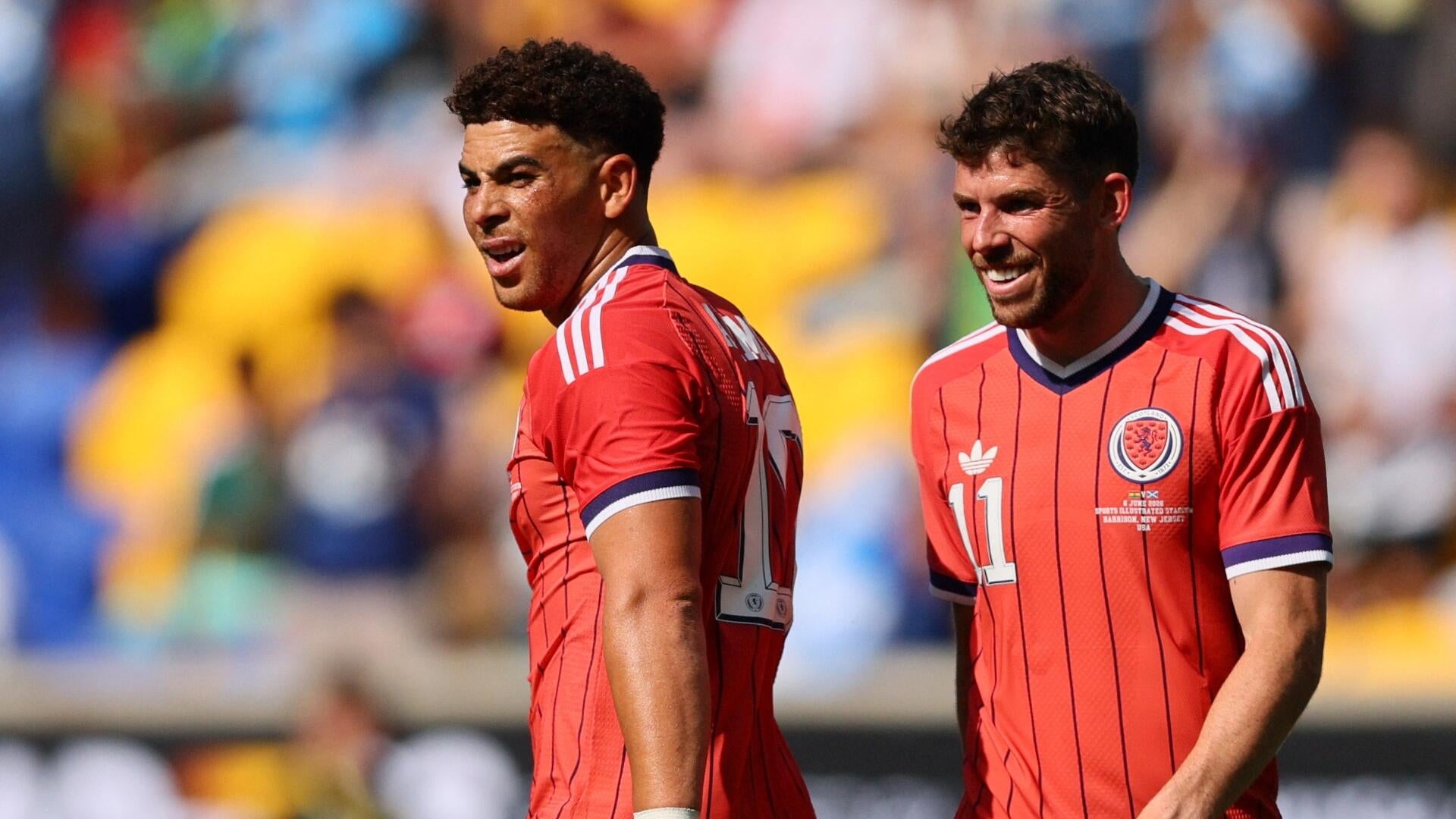
Scotland struck its first FIFA World Cup goal since 1998 on Saturday night, breaking a 28-year scoring drought inside the opening Group C fixture against Haiti in the United States. The strike, confirmed by FIFA's official account shortly after kickoff at 01:46 UTC on 14 June 2026, marks a tangible return for a side that has spent nearly three decades outside the tournament proper.
The moment is significant less for the goal itself than for what it represents in the calendar of a national team. Scotland had not played at a World Cup since France 1998. In the interim, the side endured a string of failed qualification campaigns, narrow playoff defeats, and the kind of heartbreak that, in smaller footballing nations, calcifies into national mythology. A single goal, in the first match back, does not resolve any of that history — but it does break a particular silence.
A return, not a coronation
FIFA's matchday framing was direct. "Scotland and Haiti make their return to the FIFA World Cup with their first appearances since 1998 and 1974 respectively," the organisation posted on its official channel at 01:46 UTC on 14 June. The symmetry of two long-absent teams meeting in the group-stage opener is the kind of storyline the tournament's organisers visibly value. It also flattens a substantive gap in the two programmes' recent trajectories. Scotland arrives with a generation of players developed inside the Premier League, the Eredivisie, and the Bundesliga. Haiti, returning after 52 years, has had to construct its squad largely through the diaspora circuit and the lower tiers of European and North American football.
The Athletic's pre-match build, posted at 18:00 UTC on 13 June, treated the contest as a competitive Group C fixture rather than a ceremonial one. "Who gets the win?" the outlet asked, alongside FIFA's own promo. That framing was echoed in Spanish by teleSUR English, which noted in its pre-kickoff note at 00:47 UTC on 14 June that both sides were "looking to take an early step toward the knockout stage." A Group C opener against a fellow qualifier is, in the cold arithmetic of the tournament, one of the most valuable three-point opportunities available. Both teams will be aware of that before they are aware of the historical weight.
The structural picture
World Cup qualification for both nations tells a story about the uneven geography of the global game. Scotland's 28-year absence is a product of a brutally competitive UEFA pathway, in which a nation ranked in the world's top 40 must navigate a single-elimination playoff bracket and the small-sample variance that comes with two-legged ties. The team's path back was, in sporting terms, narrow — a series of results that could have gone either way in the final minutes of qualifying. Haiti's 52-year absence is a different proposition altogether. The Caribbean federation has had to manage a World Cup campaign against the backdrop of profound political and security instability at home, with a federation infrastructure that has been, at various points in recent years, partially suspended by FIFA itself. To have a senior side in the United States this summer is itself a quiet institutional achievement.
The broader context is the expanded 48-team format, which has mechanically widened the door. More teams mean more returns, more debuts, and more fixtures in which a nation like Scotland can find itself back on the scoresheet for the first time in a generation. That is a real and good thing for the game's global reach. It also means the achievement is, in structural terms, easier to attain than the achievement Scotland last managed in 1998. Both observations are true.
Stakes and what to watch
For Scotland, the immediate question is whether the goal is the start of a run or a moment. The side's depth chart suggests it can compete with most of Group C, but the tournament's compression — three group games, then a knockout round that admits no draw — does not leave room for slow starts. A result against Haiti, on opening night, is the foundation that a credible campaign is built on. For Haiti, the inverse is true: the side has nothing to lose in the framing of the tournament and everything to lose in the framing of a federation that needs visible competitive returns to justify the institutional effort that has gone into simply being here. The match, on its smallest reading, is a fixture. On its largest, it is a referendum on what each of these footballing projects has been building toward since the previous century.
What remains unresolved, on the evidence available at kickoff and in the immediate aftermath, is the full sequence of events in the match itself. FIFA's official account confirmed the goal and the broader return narrative, teleSUR English framed the build-up, and The Athletic treated the contest as a competitive Group C fixture. The detailed statistics of the match — the goalscorer, the minute, the full-time result — are not contained in the source material available to Monexus at the time of writing. Those details, when they arrive, will reshape the texture of the story. The frame, however, is set: two long-absent teams, back on the global stage, opening their account.
How Monexus framed this vs the wire: the wire services treated the Haiti–Scotland opener as a Group C competitive fixture; Monexus centred the historical return — the first Scotland goal since 1998, Haiti's first appearance since 1974 — and read that frame against the structural change of the expanded 48-team format.
Wire provenance
This editorial synthesis draws on the following public wire/social posts:
- https://t.me/FIFAcom
- https://t.me/FIFAcom
- https://t.me/FIFAcom
- https://t.me/TheAthletic