Scotland returns to the World Cup stage after 28 years, facing Haiti in Boston curtain-raiser
Twenty-eight years after France 98, Scotland step back onto a World Cup pitch at Boston's Gillette Stadium, where Haiti — returning after a 52-year absence of their own — await in the tournament's first Group C fixture.
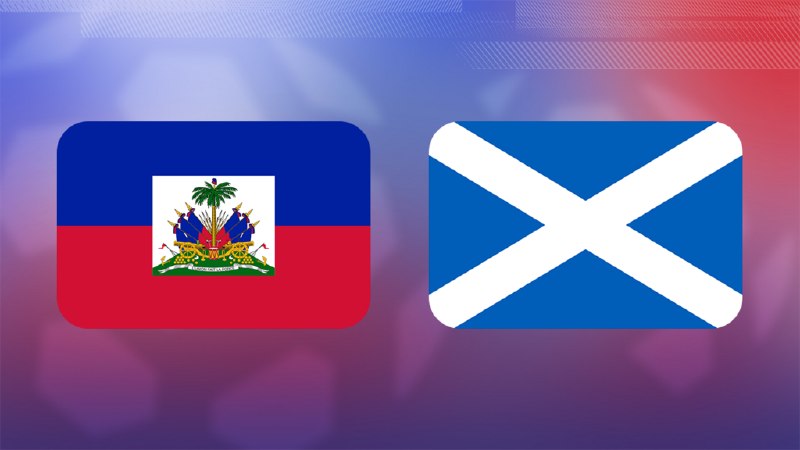
The last time Scotland's players stood on a World Cup pitch, Tony Blair had not yet moved into Downing Street, the iMac was still a year from launch, and a 17-year-old James McFadden was three years away from his senior debut. Twenty-eight years on, the stands at Boston's Gillette Stadium filled with Saltires and "Flower of Scotland" rang out in a venue built for American football — the first time the anthem had been heard at a World Cup match since France 98, and the first time this 65,878-seat stadium had hosted a game in the 2026 tournament (BBC Sport, 2026-06-14). The opponent, a Haitian side returning to the World Cup for the first time since 1974, supplied the second narrative thread of a fixture that FIFA's official channels had already framed as a meeting of two long-absent returnees (FIFA, via Telegram, 2026-06-13).
What looked, on paper, like a footnote Group C opener had become, by kickoff at 01:03 UTC on 14 June, the most emotionally loaded of the tournament's opening 48 hours. Scotland had not merely failed to qualify in the intervening six cycles — they had failed, with bruising regularity, in the playoffs, in the seeding pots, and once in the most public manner of all at Hampden Park. The 28-year gap carries weight beyond sentiment: a generation of Scottish players retired without a World Cup appearance, and the squad that travelled to North America is the first in living memory to carry the national expectation of playing for keeps in a major tournament on foreign soil.
A return neither side was built to expect
Haiti's return carries its own arithmetic. Their previous appearance, in West Germany 1974, was the only time Les Grenadiers had reached the World Cup — and it ended in three group-stage defeats without a goal. The 52-year gap between appearances is the longest in World Cup history for a returning nation (CBS Sports, 2026-06-13). On the field, the squad is anchored by midfielders in the Belgian and French domestic systems, and the federation's preparations were complicated through 2024 and 2025 by the security situation in Port-au-Prince, with several training camps relocated abroad. FIFA's framing of the Boston match as a meeting of two "long-awaited returns" was, in that sense, not marketing copy but a precise description of the fixture's pre-match texture (FIFA, via Telegram, 2026-06-13).
For Scotland, the gap ended with a November 2025 playoff victory that, in the language of the Scottish press, was treated as the lifting of a generational curse. The qualifier path was lit by a Hampden crowd that BBC Sport described as carrying the night almost as loudly as the players, and the squad that arrived in the United States is built around captain Andy Robertson, midfielder John McGinn, and a forward line featuring Che Adams and Lawrence Shankland.
A stadium that was not built for this
Gillette Stadium — home of the NFL's New England Patriots, capacity 65,878, opened in 2002 — is one of eleven venues hosting matches in the 2026 tournament, the first World Cup held across three host nations (the United States, Canada, and Mexico). The Athletic's match preview, syndicated via Telegram on the eve of kickoff, echoed FIFA's framing of Boston as a stage for returnees (The Athletic, via Telegram, 2026-06-13). The stadium's first tournament fixture had been scheduled for the group stage; the tournament's organising committee had, throughout 2025, marketed the venue around the Scotland–Haiti opener precisely because the dramatic stakes were already in place before a ball was kicked.
The surface is artificial — FieldTurf, the same surface used by the Patriots and MLS's New England Revolution. National-team coaches tend to downplay the difference in pre-match comments; in practice, ball roll and bounce on modern FieldTurf are measurably faster than on natural grass, and at least one goal in the tournament's opening weekend, on similar surfaces in Mexico City and Inglewood, was attributed by post-match analysts to the quicker pitch. The football's response in Boston would be one of the small variables watched by Group C's two other entrants, Brazil and Morocco, who meet in the day's late kickoff.
What the result, whatever it is, will not settle
The Scottish support inside the stadium will, win or lose, claim the night for the journey alone. A 28-year absence frames any opening result in unusually large brackets: defeat will not retroactively delegitimise the campaign, and victory will not resolve the structural question of how a UEFA nation ranked outside the world's top 25 at the time of the draw was placed in a group with the Seleção. That mismatch — Scotland, the lowest-seeded European entrant, drawn against the tournament favourites in a 48-team field with no third-place escape from a brutal group — was the subtext of every preview CBS Sports filed in the 36 hours before kickoff (CBS Sports, 2026-06-13).
For Haiti, the Boston night carries a parallel subtext. Their federation has, across the past two cycles, argued publicly that FIFA's ranking methodology under-weights Caribbean and Central American performances, and the draw that placed them against Scotland, Brazil, and Morocco was read in Port-au-Prince press coverage as a confirmation of that complaint. The team's objective, expressed in federation briefings earlier in 2026, is to take points from at least one of the three matches. That is a long way from a win — and a long way from the 1974 squad, which left the tournament scoreless and three goals conceded from three games.
Stakes, in two directions
Theournament that began in Mexico City on 11 June has, by the time the Boston final whistle sounds, already produced the first set of upset narratives: an opening-day draw between the United States and Wales, a late winner for Argentina against Iceland, and a Japan side whose pre-tournament form has carried into the group. Scotland and Haiti are the inheritors of a Group C that the seeding pots did them no favours. The Sporting calculus — three points from Boston, then absorb Brazil — is austere. The cultural calculus is the opposite. For one night, in a stadium built for a different sport, two footballing nations who had been told, repeatedly, that the World Cup was not for them will hear their anthems played on it. That is the headline. The group standings, by morning UTC, will tell the rest.
This publication framed the Boston match as the return of two long-absent footballing nations — a frame FIFA itself adopted in its pre-match Telegram post (2026-06-13) — and treated the seeding-mismatch subtext as a structural backdrop rather than the lead. The wire services led on form and lineups; Monexus led on the 28- and 52-year absences that the match, whatever the scoreline, already settled.
Wire provenance
This editorial synthesis draws on the following public wire/social posts:
- https://t.me/FIFAcom
- https://t.me/TheAthletic
- https://t.me/GeoPWatch