Smotrich's Beirut ultimatum and the language of deterrence
Israel's far-right finance minister is publicly testing the so-called 'suburb equation' — the implicit rule that Hezbollah fire from Lebanon invites destruction of Beirut's southern suburbs. The ultimatum is rhetoric. The pattern around it is policy.
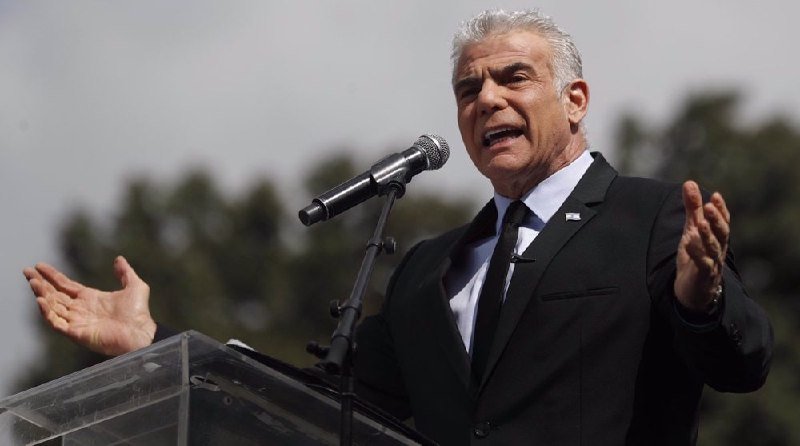
At 06:08 UTC on 14 June 2026, Israeli Finance Minister Bezalel Smotrich declared that rocket fire from Lebanon toward northern Israeli towns was a live test of what he called the "suburb equation" — the implicit rule, first articulated by Prime Minister Benjamin Netanyahu, that strikes on the Israeli home front must be answered by the demolition of buildings in the southern suburbs of Beirut. Two minutes later he framed the equation as something that "must be implemented firmly." By 06:11 UTC he was calling for demolitions to begin that same day.
The phrasing matters because it is not improvisation. It is the public recitation of a doctrine — one that ties domestic Israeli tolerance for disruption on its own border to the threat of mass destruction in a dense civilian district of a neighbouring capital. The ultimatum is rhetoric; the equation is policy.
What Smotrich actually said
The three statements, carried by al-Alam Arabic's urgent ticker, escalate in sequence. The first frames cross-border shooting as a test. The second names the test by its brand. The third sets a deadline: today. Read together, they amount to a minister of a sitting government publicly conditioning the destruction of a foreign capital's neighbourhoods on the behaviour of an armed non-state actor that does not answer to him.
That distinction is where most wire coverage flattens the story. The equation is not new — it traces back to the 2006 Lebanon war and the explicit Israeli signalling that the southern suburbs, the densely populated stronghold of Hezbollah, would be the price of any rocket campaign aimed at Haifa or beyond. What is new is the level at which it is being invoked, in real time, by a cabinet member whose portfolio is the economy, not the military.
The structural frame
The "suburb equation" is best understood as a deterrence script, not a contingency plan. It converts a tactical exchange of fire into a strategic demonstration: the cost of hitting Israeli towns is not paid in kind on the border, where Hezbollah's rockets are buried, but in the urban tissue of a capital where civilians live. That asymmetry — dispersed guerrilla fire answered by concentrated state demolition — is the equation's whole point. It is also why the language of "must be implemented" sits uneasily inside the conventions of modern urban warfare, which have spent two decades trying to move beyond treating civilian infrastructure as a receivable invoice.
There is a second, quieter move in the rhetoric. By tying Israeli restraint to Lebanese infrastructure, the equation reframes a bilateral security contest as a hostage relationship between Hezbollah and the suburbs. The suburbs are not a party; they are a price. Smotrich's statement, in this reading, is not addressed to Hassan Nasrallah's successor as much as it is to the governments, journalists and aid agencies who would, in the event of demolitions, write the first 48 hours of the story.
The counter-read
There is a coherent Israeli security case for the equation, and it is worth stating. Northern Israeli communities have spent decades under intermittent rocket and missile threat, and the period since October 2023 has forced the evacuation of multiple towns within range of Hezbollah and Palestinian faction fire. The political demand that any return of those communities be underwritten by a credible threat of escalation is not absurd on its face; it mirrors the logic any government would apply in similar circumstances.
But the counter-read does not extend as far as Smotrich took it. A finance minister publicly setting a demolition deadline for a foreign suburb is a different category of act from a defence minister warning an adversary of consequences, and the difference is not symbolic. It tells the Lebanese state, explicitly, that Israeli policy in the most combustible bilateral file on its northern border is being shaped by a coalition partner with a known ideological agenda toward the broader regional file — including the question of what shape, if any, a post-conflict Lebanese state would take.
Stakes
If the equation is implemented, the precedent extends well beyond Lebanon. Hezbollah is one node in an Iran-aligned network that includes factions in Syria, Iraq and Yemen. A demonstrated willingness to flatten a capital district in response to border fire tells every node in that network what the price of harassing Israeli civilians actually is. The same equation, transplanted, would license comparable rhetoric from capitals that have, so far, been more restrained than Israel in their public framing of deterrence.
That is the structural reason the language matters even when no demolitions follow. Deterrence scripts only work if they are believed, and they are believed when the actors who recite them are seen as plausibly able and willing to execute. On 14 June 2026, a senior Israeli minister told the world he is both.
What remains uncertain
The thread items do not specify the scale, location, or military operational status of the cross-border fire Smotrich cited. They do not record an Israeli military response at the time of writing, nor a Hezbollah claim of responsibility. The framing is one-sided: the equation is being invoked; the equation has not, on the evidence available here, yet been carried out. The next test is whether the deadline survives contact with the next round of cross-border fire, and on which side of the border the first consequential shot lands.
Desk note: Monexus is treating Smotrich's statements as policy language, not as breaking military news. The wire was led with the urgency; the analysis is led with the equation.
Wire provenance
This editorial synthesis draws on the following public wire/social posts:
- https://t.me/alalamarabic
- https://t.me/alalamarabic
- https://t.me/alalamarabic