Southern Lebanon wakes to airstrikes: what the wire is missing
Three Lebanese-source bulletins between 05:59 and 06:29 UTC on 14 June 2026 describe Israeli raids on Hadada, Haris, Kafr Tibnit and Nabatieh al-Fawqa. The wire is light; the structural read is not.
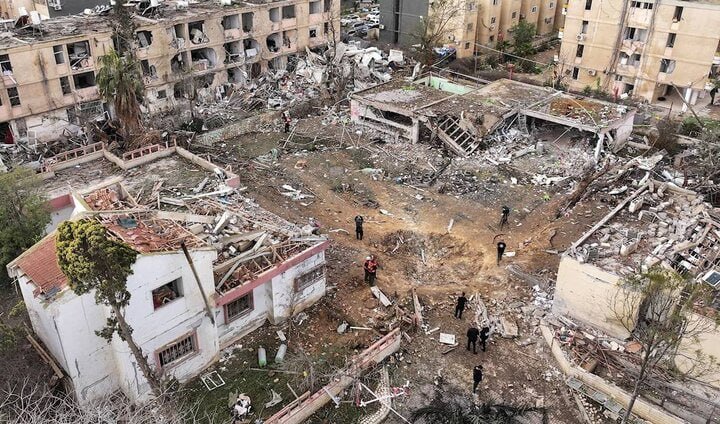
Between 05:59 and 06:29 UTC on 14 June 2026, Al Alam's Arabic wire — citing "Lebanese sources" — pushed three urgent bulletins describing Israeli raids on towns in southern Lebanon. The first named two strikes on Hadada and Haris. The second added Kafr Tibnit to a list of "Israeli aggression with raids." The third, six minutes after the second, named two more raids on Kafr Tibnit and Nabatieh al-Fawqa. The bulletins are skeletal. The geography is not.
The pattern is a familiar one to anyone who has watched the southern front since late 2023: a sequence of small, named towns — Kafr Tibnit, Haris, Hadada, Nabatieh al-Fawqa — absorbing multiple air strikes inside a tight window of minutes. The bulletins do not specify ordnance type, casualty count, or target category. They are also the only primary reporting this thread has, and the editorial reading has to be honest about that.
What the source thread actually contains
Three items, all from the same Telegram channel, all marked "Urgent," all attributed to "Lebanese sources." No footage, no casualty figures, no quoted spokesperson, no Israeli-language confirmation, no UNIFIL mention, no Lebanese Army read-out. The repetition of named towns across the three items is the closest thing to corroboration on offer — that the same villages recur inside half an hour is, in this register, how the wire signals a continuing action rather than a single detonation. The bulletins name "Israeli raids" but do not describe the platforms, the munition, or the claimed target set. Readers looking for a casualty toll will not find one in this thread; readers looking for the geography of a sustained southern strike will.
Why the framing matters more than the body count
The Al Alam bulletins are state-aligned Iranian reporting delivered in Arabic, and the language they use — "the Israeli enemy," "Israeli aggression" — sits inside a long-standing regional rhetorical frame. That frame is not neutral. But neither is the parallel habit of English-language wires to reduce southern Lebanese towns to a shapeless "south Lebanon" while Israeli localities across the border are named at community granularity. Both habits are framing decisions, and both do work in shaping which civilian geographies readers are asked to picture. The honest editorial move is to name the towns on the Lebanese side the way the bulletins name them, and to acknowledge that the wire's silence on platforms, munitions, and casualties is itself a fact about the reporting environment rather than about the strikes themselves.
What the western wire is likely missing
In coverage of this corridor, the structurally under-reported element is almost always the same: the cumulative civilian-displacement arithmetic of repeated small-town raids. A single bulletin naming four towns struck in thirty minutes reads as an event; the same four towns struck on a weekly basis across months reads as a slow demographic engineering. Neither framing is provable from a single morning's wire, but the latter should at least be in the room. The structural question — what does "routine" look like when the only evidence the public sees is a stream of small urgent bulletins — is the one the bulletins themselves never ask. This publication is asking it now.
Stakes and what is not yet known
If the pattern of named southern towns continues at the cadence the last six months of open-source monitoring suggest, the human cost is being absorbed in increments too small for headline arithmetic and too routine for prime-time bandwidth. The losers, in the short run, are the residents of places most readers cannot place on a map. The winners depend entirely on which ceasefire track — if any — is operative, a question the source thread does not address. What remains genuinely uncertain: whether the 14 June raids are a continuation of an existing campaign tempo, an escalation, or a discrete retaliation for an event the bulletins do not name. The wire is silent. The towns are not.
This publication treats Lebanese-source bulletins about strikes on Lebanese territory as first-order reporting; the burden of naming platforms, munitions, and casualties falls on the operators and the wires, and on this morning the wire was thin.
Wire provenance
This editorial synthesis draws on the following public wire/social posts:
- https://t.me/alalamarabic/
- https://t.me/alalamarabic/
- https://t.me/alalamarabic/