The Iran Deal Israel Wasn't Told About
Israel's right-wing coalition is publicly furious over a US-Iran agreement it says it learned about from cable news. The episode exposes how little the deal's loudest critics actually shaped it.
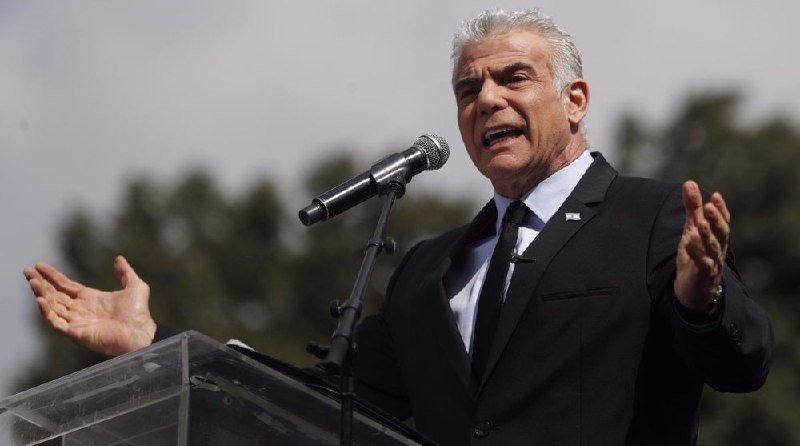
On 13 June 2026, a US-brokered agreement with Iran that President Donald Trump declared "a great deal" landed in Israeli inboxes with the diplomatic equivalent of a ransom note. The terms, scope, and timing had not been shared with Jerusalem in advance. Israeli ministers responded within hours with a vocabulary that, in regional reporting, reads as controlled fury: "Trump fooled us."
The episode is more than a leak. It is the most visible fracture yet between an American administration pursuing a transactional settlement of the nuclear file and an Israeli political class that has spent two decades positioning itself as the indispensable external veto on any deal with Tehran. The gap between those two postures — and the public posturing that gap now requires — is the story.
The shape of the deal, as advertised
Trump's own framing, posted to his social account and recirculated by political outlets on 13 June 2026, is the deal's most concise summary: "This is the deal. It's a great deal, and it's time to end this war." The line carries a triple claim — that the agreement exists, that its terms are favourable, and that the alternative is a continuation of hostilities Washington no longer wishes to underwrite. The word "war" is doing heavy lifting. It dignifies the standoff with Iran into a conflict the United States can plausibly claim to be ending, and it pre-empts the Israeli objection that any deal is surrender.
The Israeli counter-reading, surfaced the same day by Telegram channels including TSN_ua, is the opposite of surrender. From Jerusalem's vantage, a deal struck without Israeli input is a deal struck against Israeli interests. The phrase "Trump fooled us" — blunt enough to be reported as direct quote, angry enough to be denied by ministers who nonetheless did not deny the substance — is the language of an ally that expected consultation and received a fait accompli.
What Israel actually objects to
Strip the rhetoric away and three concrete Israeli objections are discernible from the reporting. First, the enrichment question: Israeli governments of every stripe have insisted that any verifiable deal must end Iranian enrichment capability, not merely cap it. Second, the timing question: a deal concluded in the middle of an Israeli domestic-political cycle, with a governing coalition dependent on far-right partners for survival, guarantees the deal will be attacked from inside the Knesset regardless of its technical merits. Third, the consultation question: the absence of pre-publication coordination reads, in Jerusalem, as a downgrade of the bilateral relationship from partner to client.
The third objection is the one with the longest half-life. Israeli security planning for two decades has been built on the assumption that the United States would not move on Iran without Israeli buy-in. That assumption is now visibly strained.
The domestic overhang
The anger is not, primarily, about Iran. It is about the photograph of the signing. An Israeli government that spent the post-October 2023 period projecting deterrence and competence is now being cast, in its own press, as a government surprised on a file it claims to own. The coalition's harder edges — ministers who have publicly rejected any enrichment, any inspection regime, and any sunset clause — are cornered into one of two positions: denounce the deal and accept the diplomatic isolation that follows, or stay silent and accept the political isolation that follows. The Telegram report registers the first reflex; the silence that has followed in some quarters suggests the second reflex is also in play.
There is also a Washington dimension that the Israeli complaints do not foreground. A federal judge has, separately, blocked the Trump administration from proceeding with a $1.8 billion "anti-weaponization fund" — a ruling reported on 12 June 2026, with a domestic political class now openly asking whether the executive branch has the latitude to make consequential Middle East commitments while constrained at home. Israeli ministers demanding more consultation are demanding it of an administration whose capacity to consult is itself being narrowed by court order and by an increasingly fractious domestic environment.
What this exposes about the regional order
The most under-reported aspect of the week is not the deal's text but the alignment it presupposes. A US-Iran agreement that proceeds without Israeli input assumes a Middle East in which Washington's strategic autonomy is a feature, not a bug. Israeli objections assume the older Middle East, in which the bilateral relationship is the architecture and other parties are tenants. The deal, whatever its final terms, is being negotiated in a different building.
That shift does not happen because the Trump administration is uniquely indifferent to Israeli concerns. It happens because the costs of a permanent standoff with Iran are now being priced differently in Washington than they have been priced at any point since 2015. Israeli ministers can object; they cannot, at this distance, veto. The "fooled us" line is the sound of that limit being tested publicly for the first time.
What remains uncertain
The sources do not specify the deal's actual text, the verification architecture, or the timeline for implementation. Iranian state-aligned outlets have not, in the reporting available, endorsed or rejected the framework; Israeli opposition voices have, in the same reporting window, been more measured than coalition ministers. A deal announced on social media is not yet a deal implemented by inspectors. The window between the two — and whether Israeli objections harden into active countermeasures or soften into formal dissent — is the live question this publication is tracking.
Desk note: Monexus treated the Israeli reaction as reported grievance, not as the deal's verdict. The piece distinguishes what is known (the announcement, the consultation gap, the Israeli public response) from what is contested (the substance, the durability, the regional reaction beyond Jerusalem).
Wire provenance
This editorial synthesis draws on the following public wire/social posts:
- https://t.me/TSN_ua