Two aerial targets over the north: what a quiet Sunday tells us about the new normal on the Israel–Lebanon line
The IDF confirmed two suspicious aerial targets crossing from Lebanon into northern Israel on 14 June 2026, with no casualties. The incident is small. The pattern it sits inside is not.
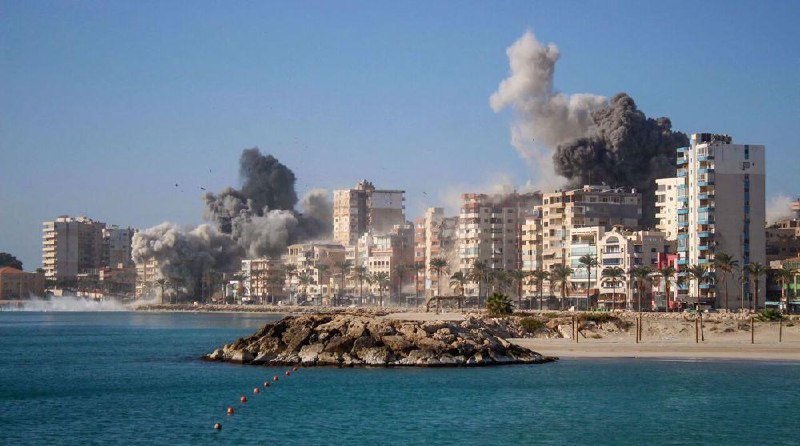
At 05:27 UTC on 14 June 2026, the Israel Defense Forces confirmed in an official statement that two "suspicious aerial targets" had been detected in Israeli territory near the border with Lebanon, following sirens activated across several areas in the north. The IDF added that there were no casualties. The alert, the impact reports, and the IDF's on-record confirmation all arrived within a single news cycle — a tightly choreographed sequence that has itself become part of the story.
This publication is not in the business of manufacturing alarm from thin material. Two projectiles, intercepted or fell, no injuries, a Sunday morning statement — that is the raw fact set, traceable to a single IDF release. But small incidents on this frontier have a habit of accumulating into something larger than their arithmetic suggests, and the right question to ask of the 14 June alert is what kind of baseline it is now part of.
The immediate picture
The IDF's statement, distributed at 05:27 UTC and reported the same minute by Israeli correspondents, identified the targets as "suspicious aerial targets" rather than missiles, drones, or mortar shells. The Spokesperson's unit used identical language across channels, a deliberate choice that signals uncertainty about the platform type rather than diplomatic ambiguity. Israeli air defence did not, in the material available at the time of writing, announce interceptions, which raises the open question of whether the two targets came down of their own accord, were engaged, or were decoys accompanying something else. The IDF statement that there were "no casualties" refers to personnel on the ground; the statement does not address structural damage or impact location in any detail available to readers outside the IDF press pipeline.
What the framing leaves out
Israeli security communications, by long practice, lead with the defensive posture: sirens activated, sensors worked, no casualties. That framing is accurate, and Israeli civilian protection is a legitimate first-order concern. But the same framing routinely subordinates three things worth surfacing.
First, the term "suspicious aerial targets" is doing real work. It keeps open the question of provenance — whether the launch originated from Lebanese territory, from a non-state actor, from a state-adjacent militia, or from a drone that drifted across the line — without committing the IDF to a chain-of-custody claim it cannot yet defend in public. Coverage that lifts the IDF wording verbatim inherits that ambiguity without naming it.
Second, the absence of interceptions reported in the IDF's English-language channels does not necessarily mean none occurred. Israeli air defence has, since 2024, increasingly preferred to withhold operational details about which systems fired and against what, partly to preserve ambiguity in the eyes of the other side. A reader relying solely on the wire statement would not know this context.
Third, the wider northern front is no longer a single front. Reports of hostile aircraft infiltration in "several areas" of the north, in the IDF's own phrasing, suggests a wider pattern rather than a localised launch cell. Whether that pattern is escalating, holding, or cooling is a question the IDF's terse Sunday statement is not designed to answer.
The structural read
In a contest where neither side can afford a strategic surprise and both sides have reasons to keep the temperature below the ignition point, a steady drumbeat of low-yield incidents is itself the equilibrium. Two projectiles that don't hurt anyone are useful: they signal capability, they test the other's sensor and response chain, they consume interceptor stock, and they generate a press cycle that consumes political capital on both sides of the border. This is the texture of an active, managed frontier — not a war in the conventional sense, not a peace in any meaningful sense, and not a status quo that the regional architecture is set up to resolve.
The structural point, in plain language, is that small incidents on the Israel–Lebanon line now function as a continuous signalling channel. The 14 June alert reads less like an event and more like one frame in a long-running film. Reading the frame out of context — either as the start of an escalation or as a residual of a concluded one — misreads the medium.
What remains uncertain, and what to watch
Three things are not knowable from the IDF's statement and the immediate wire cycle around it. The platform type of the two targets — drone, missile, mortar-borne improvised device, or something else — is not specified. The launch origin, whether inside Lebanon, from the Syrian-Lebanese border, or further afield, is not specified. And the political attribution — Hezbollah-aligned factions, a Palestinian faction operating from Lebanese airspace, an Iranian-supplied proxy, or a non-state actor with no patron — is also not specified in the public record at the time of writing.
The reasonable assumption is that the IDF's operational debrief in the hours and days ahead will tighten, not loosen, the public account. Israeli correspondents with deep access, including the channels that carried the 05:27 UTC alert, will likely publish follow-up reporting with more granular detail. Readers who care about the distinction between an incident and a campaign should watch for whether the IDF re-uses the "suspicious aerial targets" language across the week, or whether the vocabulary sharpens.
A small Sunday morning incident is, on its own, exactly what the IDF said it was. The argument this publication is making is narrower than the wire framing invites: that the most honest read of two projectiles crossing into northern Israel, with sirens and no casualties, is to take the IDF's no-casualty claim at face value — and to also note that the equilibrium producing such incidents is not a peace, and the pattern is not a coincidence.
This piece leads with the IDF's own English-language statement and Israeli wire correspondents who carried it in real time, and reads the incident against the wider pattern of low-yield activity on the northern frontier. Where the IDF statement leaves provenance, platform type, and political attribution unspecified, the article says so rather than imputing.
Wire provenance
This editorial synthesis draws on the following public wire/social posts:
- https://t.me/idfofficial
- https://t.me/abualiexpress
- https://t.me/amitsegal
- https://en.wikipedia.org/wiki/Israel%E2%80%93Lebanon_border