A Tanker in the Channel: How Britain's Move Against Russia's Shadow Fleet Reshapes the Sanctions War
British forces have intercepted a UK-sanctioned tanker accused of carrying Russian oil through the English Channel. The operation, ordered personally by Keir Starmer, marks an escalation in Europe's attempt to choke off the revenue Moscow uses to wage war.
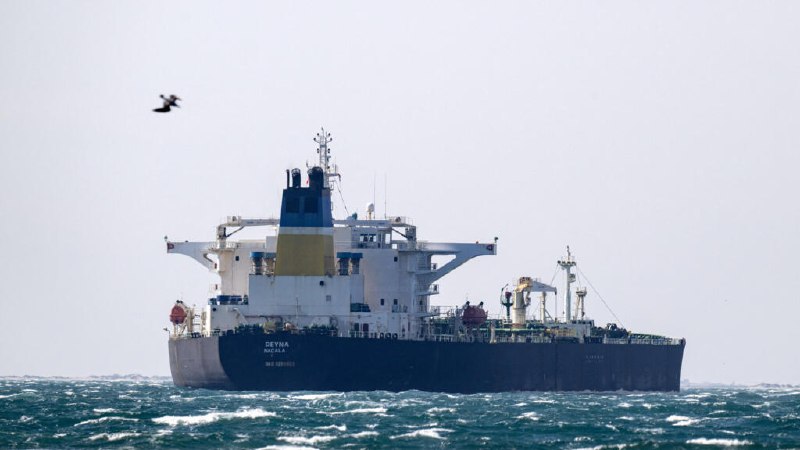
In the early hours of 14 June 2026, Royal Navy and British border-forces personnel intercepted a UK-sanctioned oil tanker in the English Channel that London says belongs to the network of unmarked, re-flagged and shell-owned vessels Moscow has used to keep crude flowing to buyers despite the G7 price cap. Prime Minister Keir Starmer said he had personally ordered the operation, framing it as a direct strike at the financial plumbing of Russia's war effort. The interception is the highest-profile British boarding of a Russian-linked vessel since the sanctions regime tightened in late 2023, and the first time a serving prime minister has publicly attached his name to such an action at sea.
The episode lands at a moment when Europe's enforcement of energy sanctions has begun to look, for the first time, as much about ships and crews as about banks and invoices. For four years the focus was on paper — on insurers, on the price cap, on letters of credit. What changed on Sunday is a captain, a deck and a hull.
The interception, in plain terms
France 24 reported on 14 June 2026 that British forces intercepted a UK-sanctioned oil tanker accused of belonging to what has been dubbed Russia's "shadow fleet" in the English Channel on Sunday, with the country's defence ministry characterising the action as part of a broader effort to enforce sanctions. The Telegram channel WarTranslated, posting the prime minister's statement, quoted Starmer as saying British forces had stopped "a tanker linked to Russia's shadow fleet trying to cross the English Channel this morning." Euronews's wire summary, posted before 08:00 UTC, said Starmer had ordered the armed forces to intercept the vessel as it attempted to pass through the Channel, with the early-hours timing framed by the prime minister as deliberate.
Three things are worth holding onto through the day's spin cycle. First, the tanker was already on the UK sanctions list, meaning London was not making a fresh designation on the bridge of the ship but enforcing a designation already in force. Second, the interception took place in British or French territorial waters of the Channel — the geography is not incidental; jurisdiction is the entire point. Third, the boarding was not a routine coastguard call. The personal involvement of a serving prime minister signals an intent to put a politically visible price on attempted sanctions evasion, not merely to penalise it administratively after the fact.
The vessel's name, ownership chain, port of origin, last port of call, and the buyer of its cargo are not detailed in the immediate wire reporting. That is normal for the first 24 hours of a maritime incident of this kind: insurers, flag-state authorities and the ship's registered owners have lawyers, and governments have reasons to ration detail until the cargo manifest is verified. Monexus will update the record as those details surface.
The shadow fleet, in scale
The phrase "shadow fleet" is shorthand for a sprawling, deliberately opaque shipping network that emerged after December 2022, when the G7, the EU and Australia imposed a $60-per-barle price cap on Russian seaborne crude, enforced primarily through shipping, insurance and port services. Vessels in the network typically obscure beneficial ownership, sail under flags of convenience, disable or spoof their automatic identification systems (AIS) when convenient, and re-flag at speed. Their job is to move Russian crude — and increasingly Russian products such as naphtha and fuel oil — to buyers in Asia, the Mediterranean and, until recently, parts of Africa, while staying outside the reach of Western service providers.
Estimates of the fleet's size vary, and this publication has not seen a single, current, public count in the 14 June wire reporting. The broader pattern, however, is well documented elsewhere: at various points over the past 18 months, industry trackers have placed the number of tankers engaged in such trades in the high hundreds, with the shadow share of Russia's seaborne crude exports growing as the conventional Greek-, Maltese- and Cypriot-owned tonnage pulled back under compliance pressure. The economic logic is straightforward. Russian Urals has traded at a discount to Brent for most of the post-cap period. A vessel that can move Urals from a Baltic or Black Sea terminal to a buyer in India or Turkey at a discount, without being refused insurance or port entry on the way, captures that discount as margin. Multiply by roughly 3-4 million barrels a day of seaborne crude and the revenue stream becomes the size of a small national budget.
What the British interception is intended to do is change the risk arithmetic of that calculation. The price cap works as long as the cost of compliance is lower than the discount. The moment a tanker and its crew face detention, criminal referral, and a politically visible boarding, the cost of one voyage can exceed the margin on many.
Why now, and what is actually new
The dominant Western frame is that this is escalation in the right direction — a long-overdue move from paperwork to steel. The case for that reading is straightforward. Maritime enforcement of the cap has lagged the political rhetoric around it. EU member states, including France, Belgium and Spain, have seized individual vessels and proceeded with port-state control actions, and the United Kingdom sanctioned dozens of specific tankers throughout 2024 and 2025. But the boardings have been episodic, geographically scattered and almost always followed by slow legal resolution. The result has been a steady drumbeat of analysis suggesting that the cap was leaking — that is, that significant volumes of Russian crude were moving at prices well above $60 per barrel but with the documentation manufactured to look compliant.
The counter-frame, more often heard from Moscow and from the network of analysts, shipbrokers and tanker owners who profit from the trade, is that the cap is a distortion of the free market, that the shadow fleet is a rational market response, and that aggressive enforcement simply hands more business to jurisdictions — from parts of West Africa to the Gulf — that have no interest in Western sanctions policy. Russian state-aligned commentary has long argued that the cap inflates global prices and harms Global South importers, an argument with some structural merit: Indian and Turkish refiners have been the largest single destinations for discounted Russian crude, and a tighter enforcement regime does push the price they pay back upward.
Monexus's read is that the British move is a calculated bet that political salience, not technical compliance, is the binding constraint. The cap will not be enforced by accountants. It will be enforced, if at all, by the willingness of NATO and EU navies to detain hulls and to file the paperwork that follows. Sunday's interception is a signal that at least one of those navies — and the political leadership above it — is now prepared to be visible in doing so.
Structural frame: the seaward edge of the financial war
The most useful way to read this story is as the seaward edge of a sanctions architecture that was always going to migrate, eventually, off the spreadsheets. When the cap was designed, the assumption was that control over insurance and over dollar-clearing would be sufficient. London is the world's leading centre of marine insurance through the International Underwriting Association and the Lloyd's market; the United States controls dollar clearing. The theory was that controlling the back office would control the fleet.
Three years on, the theory has a gap. The shadow fleet's defining feature is precisely that it is built to operate outside the back office — with non-Western insurers, non-dollar settlements where possible, opaque ownership and AIS manipulation to avoid identification. The cap was always a financial choke point. The shadow fleet is a financial circumvention industry. What the British interception marks is the explicit decision to move the contest from the back office to the deck.
This shift has three structural consequences worth flagging. First, the political cost of enforcement rises. Detaining a vessel is a public act. The captain is a real person, the cargo is real oil, and the buyer is a named refinery. There will be court cases in the UK, counter-claims from the flag state, and diplomatic friction. Second, the maritime risk premium for compliant shipping rises, and with it the world price of moving sanctioned oil — a cost that, in the short term, may be passed partly to non-Western importers. Third, the precedent lowers the political barrier to similar boardings elsewhere, including in the Baltic, the Danish straits, and the Mediterranean approaches to the Bosphorus.
The wider game: G7 enforcement, Indian buyers, and the oil price
The shadow fleet does not exist to satisfy a Russian preference for secrecy. It exists because there are buyers willing to take Russian crude, at a discount, through non-standard logistics. The largest of those buyers sit in the Indian public-sector refining complex — companies such as Indian Oil Corporation, Bharat Petroleum and Hindustan Petroleum — and in private Indian refiners such as Reliance Industries, alongside Turkish, Chinese and some Middle Eastern processors. As long as the discount is real, the trade has a destination.
Sunday's interception does not change the demand side. It changes the supply-side risk. A tanker captain and her insurer, weighing a voyage from Primorsk or Novorossiysk to Sikka or Mundra, will now price in a non-trivial probability of detention in European waters, with the legal costs, the cargo's potential seizure, and the public attention that follows. That is a cost the cap never quite imposed. Some voyages will still go ahead; some ships will still spoof their transponders; some shadow tonnage will be sold to operators in jurisdictions the UK cannot reach. But the expected return on each voyage has narrowed.
A plausible second-order consequence: Russia, facing tighter enforcement, has an incentive to push more crude through pipelines rather than tankers, particularly to China via the Power of Siberia system for gas and through the ESPO and other pipeline corridors for oil. That shift reduces the revenue that the price-cap architecture was designed to constrain and tightens the gravitational pull of the Chinese market on Russian hydrocarbons. It is a trade-off between two sanctions goals — denying Russia revenue, and denying China cheap energy — and it is not obvious that the British move tilts that trade-off in the West's favour.
What the sources agree on, and what they do not
Across the 14 June reporting, the core facts are stable. A UK-sanctioned tanker, linked to Russia's shadow fleet, was intercepted in the English Channel in the early hours of 14 June 2026. Prime Minister Keir Starmer ordered the operation and has publicly claimed credit for it. The British defence ministry is characterising the action as sanctions enforcement. The tanker's name, flag at the time of interception, ownership structure, last port of call, and the specific legal basis for the boarding are not yet on the public record in the immediate wire reporting, and Monexus has not seen them in any of the source items reviewed for this piece.
The reporting does not yet specify what the UK's specific next steps are: whether the cargo will be seized, whether the crew will be detained, whether the vessel will be moved to a British port, and whether criminal charges will follow. These are decisions that can take days to surface in this kind of case, and that often arrive in fragments. The story is not over at the time of writing.
This publication treats Sunday's interception as the visible tip of a longer enforcement shift from financial paperwork to physical presence at sea. The legal, diplomatic and market consequences will unfold in ports and courtrooms, not in the soundbites of the day they happen.
Wire provenance
This editorial synthesis draws on the following public wire/social posts:
- https://t.me/france24_en
- https://t.me/osintlive
- https://twitter.com/wartranslated/status/206605880
- https://t.me/euronews
- https://t.me/wartranslated