Peace by press release: reading the Pakistan-brokered US-Iran text
A prime minister's 24-hour deadline and a bitcoin bid above $64,000 are doing the work a signed agreement has not yet done.
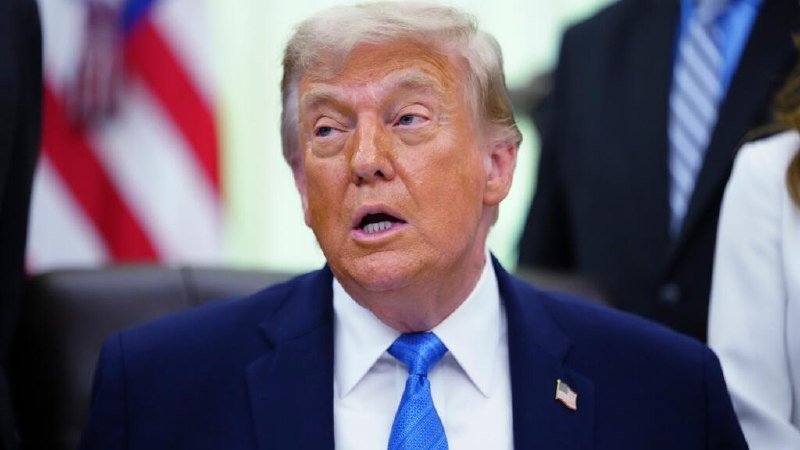
On 13 June 2026, at 16:29 UTC, a post on X by the account Unusual Whales carried a one-line claim from Pakistan's prime minister: a US-Iran peace deal was expected to be signed within 24 hours. The headline moved first through financial markets and crypto desks, then through diplomatic wires. A separate post from the same account, timestamped 12 June 2026 at 18:31 UTC, had already announced that Iran and the United States had reached a "final agreed-upon text" for the deal, with Prime Minister Shehbaz Sharif as the named broker. By Saturday morning, CoinDesk reported bitcoin trading above $64,000, attributing the move in part to "growing optimism around geopolitical developments" tied to the announcement.
The pattern is familiar even if the players are not. Diplomatic breakthroughs in the Middle East are routinely priced into oil, gold, and risk assets before any text is published, before sanctions architecture is adjusted, and before the parties that will live with the deal have read it. What is unusual here is the broker. Pakistan, a nuclear-armed state with deep ties to both Washington and Tehran, has been unusually visible in the mediation. Whether that visibility reflects a substantive Pakistani role or a communications channel that suited both sides, the public record so far cannot settle.
The text that does not yet exist
As of 14 June 2026, no link to the agreed-upon text has been published by the Iranian foreign ministry, the US State Department, or the Pakistani prime minister's office. The announcement travelled through a single X account and was relayed by financial-news wires, not by the negotiating parties themselves. That matters. The standard for confirming a deal is that the document is on a government letterhead, that the parties acknowledge it in their own words, and that implementing agencies — the Treasury OFAC desk, the State Department Bureau of Near Eastern Affairs, the Iranian negotiating team in Muscat or Doha — say what it contains. None of that has happened on the public record cited in the source material.
A counter-reading: prime ministers sometimes do the announcing precisely because the deal is real and the other parties want cover. The Pakistani channel gives Tehran a face-saving frame, gives Washington a non-direct attribution, and gives both sides a way to walk back specifics later. That is the optimistic interpretation, and it cannot be ruled out by the evidence available.
A bitcoin bid that did the diplomatic work
The most concrete effect of the announcement, on the timeline reported, is financial. CoinDesk's 13 June 2026 report describes bitcoin trading above $64,000 with "strongest ETF inflows in a month" alongside the geopolitical optimism. The framing in that report is the giveaway: geopolitical de-escalation is being sold as a tailwind for risk assets, with crude-by implication expected to soften and emerging-market capital flows expected to stabilise. None of those channels is purely financial. Sanctions enforcement on Iranian oil exports, the status of frozen Iranian funds in third countries, and the central-bank-of-Iran access to the SWIFT system are the actual economic levers a deal would move. Bitcoin is a thermometer, not a treatment.
The structural point is older than the deal itself: when a diplomatic event moves a decentralised asset by thousands of dollars within hours, the relevant question is which actors with material information were positioned before the announcement, not whether the announcement is true.
What a deal would actually do
If a signed text does materialise, the policy questions the public record does not yet answer are the ones that determine whether it holds. The most consequential is the fate of the IAEA inspection regime at Iranian nuclear facilities, which has been degraded since 2021. The second is the sanctions architecture — which measures would be suspended, which entities would be delisted, and on what timeline. The third is the question of Iranian oil export volumes and the customer list, which has shifted toward Chinese refiners in recent years and toward discreet sales via ship-to-ship transfers in the Gulf of Oman. A deal that loosens enforcement on the second without resolving the first would be a price move, not a peace.
For the Gulf states, the calculus is asymmetric. Saudi Arabia and the UAE have spent three years hedging across the US-China divide and building their own diplomatic channels with Tehran. A US-Iran deal brokered through Pakistan, of all capitals, is a signal that Washington is willing to use non-traditional intermediaries. That is a competence claim as much as a policy one.
What remains uncertain
The sources do not specify the location of any signing ceremony, the names of the Iranian and US lead negotiators on the final text, or the date on which the text will be released. The "within 24 hours" window announced on 13 June is, by the time of publication on 14 June, functionally lapsed. Both Tehran and Washington have, in past cycles, let similar windows pass. The single most useful next data point is publication of the text itself, not further statements about it.
Desk note: Monexus is treating the 12–13 June 2026 announcements as a mediation claim, not as a confirmed agreement, pending publication of the underlying text by the Iranian foreign ministry or the US State Department. The financial-market reaction is reported as fact; the diplomatic substance is reported as claimed.
Wire provenance
This editorial synthesis draws on the following public wire/social posts:
- https://t.me/unusual_whales/196244
- https://t.me/unusual_whales/195872